COCA-COLA
ICONIC BRANDS
BOTTLED BRILLIANCE
From a pharmacy tonic to the world’s most iconic global beverage brand
Compiled by Tamara Rebeira
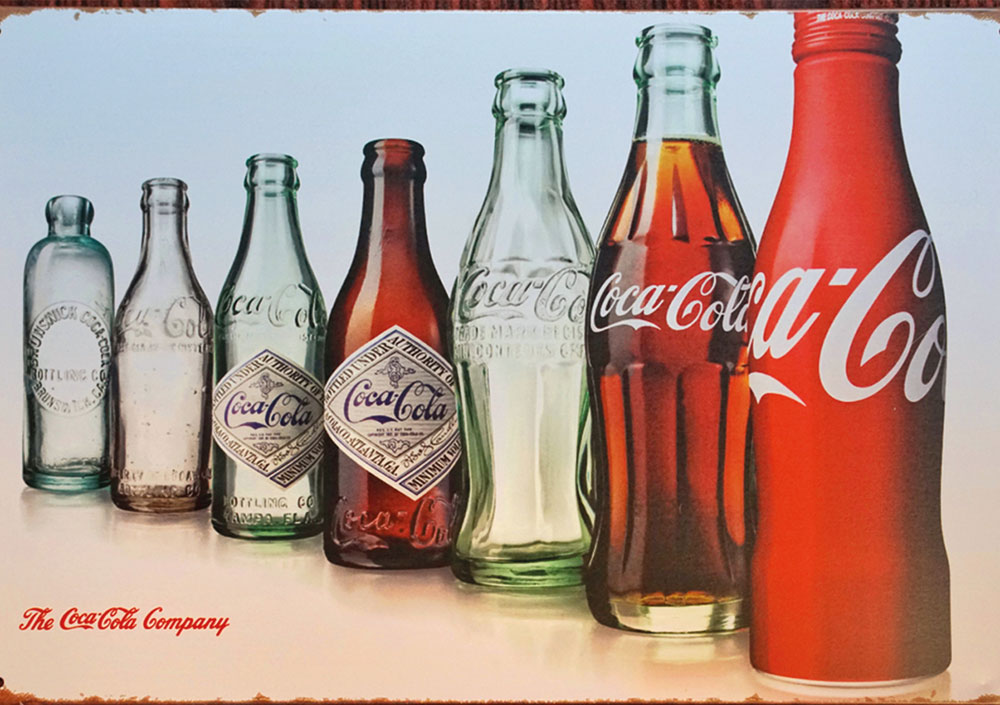
The story of Coca-Cola is a tale of American ingenuity and enterprise, beginning in the late 19th century with a pharmacist and a simple idea. It has since evolved into a global titan, so much so that its logo and distinctive bottle are recognisable in every corner of the world.
From its humble origins to where it stands today, the company’s journey is a testament to both the vision of its founders and adaptability of the corporate giant’s modern leadership.
SPARK OF AN IDEA The Coca-Cola story begins in 1886 with a curious pharmacist named Dr. John Stith Pemberton, who lived in Atlanta, Georgia.
After being wounded in the war, Pemberton became addicted to morphine and his quest for a non-addictive pain reliever led him to experiment with various botanical ingredients. In 1885, as Atlanta faced a wave of temperance legislation, Pemberton was forced to create a non-alcoholic version of his popular French wine coca tonic.
In May 1886, he perfected a syrup – a mixture of a coca extract and kola nut. He took a jug of the new syrup to Jacobs’ Pharmacy, where it was mixed with carbonated water and sold for five cents a glass as a soda fountain drink.
The result was unlike anything consumers had tasted before. Originally marketed as a temperance drink – and a tonic for fatigue, indigestion and headaches – the beverage was dubbed ‘Coca-Cola’ by Pemberton’s bookkeeper Frank M. Robinson, who also penned the brand’s iconic script logo. And it is still in use today.
Although Pemberton would not live to see the global empire his invention would become, his creation set in motion one of the most remarkable brand journeys in history. Struggling with his health and finances, he sold parts of his business to various partners.
Just before his death in 1888, he sold his remaining interest to Asa Griggs Candler, another Atlanta pharmacist and businessman. And it was Candler who would acquire full control of the company and lay the groundwork for the Coca-Cola empire.
FROM PHARMACY TO FAME By the turn of the 20th century, the drink had become a staple in American culture with its message of happiness and refreshment spreading through billboards and murals.
The contour glass bottle introduced in 1915 was designed to be recognisable even in the dark – a packaging innovation that would become one of the most iconic designs in history.
During World War II, Coca-Cola provided drinks to US troops overseas; and by doing so, it established overseas bottling plants that would eventually serve postwar civilian markets. This marked the beginning of Coca-Cola’s transformation into a global phenomenon.
Today, Coca-Cola is present in over 200 countries with more than 1.9 billion servings consumed daily. Its brand family has expanded to include Diet Coke, Coca-Cola Zero Sugar, Coca-Cola Light and an array of regionally tailored flavours, demonstrating the company’s ability to innovate while preserving its core identity.
As tastes and societal values have shifted, so has Coca-Cola.
The brand has taken bold steps towards environmental sustainability, committing to a ‘world without waste’ by aiming to collect and recycle the equivalent of every bottle and can it sells by 2030.
And the company continues to innovate in packaging, pushing forward initiatives in recyclable materials, reduced plastic use and refillable systems.
RESPONSIBLE INNOVATION The legacy of innovation and adaptation continues today under the leadership of James Quincey, who serves as the Chairman and Chief Executive Officer of The Coca-Cola Company.
Quincey’s leadership marks a significant shift in the organisation’s strategy, moving the company beyond its iconic flagship soda to become a total beverage company.
Recognising evolving consumer tastes and the global decline of sugary drink consumption, Quincey has championed a strategy of diversification and innovation. This involves expanding the company’s portfolio to include a wider range of products such as juices, teas, coffees and bottled water.
Quincey encourages diverse perspectives and empowers his teams to opt for courageous choices, creating a culture that is less risk averse than in the past. He is also a vocal advocate of sustainability, leading the company’s ambitious goal to collect and recycle the equivalent of every bottle it sells by 2030.
And he emphasises that the company must be built for the next century, not merely the next quarter – and that its purpose is to ‘refresh the world and make a difference.’
LEGACY IN EVERY SIP Today, Coca-Cola is a sprawling global enterprise with a portfolio of over 200 brands sold in more than 200 countries and territories. While the classic Coca-Cola remains its most famous product, the company’s portfolio includes beloved brands including Sprite and Fanta among others.
The journey from a small Atlanta pharmacy to a global powerhouse highlights a central theme: the ability to evolve. Pemberton created the original product but it was Candler’s business savvy outlook that built the foundation.
In the modern era, it is Quincey’s strategic vision that is steering the company through a complex and rapidly changing consumer landscape.
“Today, Coca-Cola is a sprawling global enterprise with a portfolio of over 200 brands sold in more than 200 countries and territories”