BUSINESS SENTIMENT
PRE-BUDGET CONFIDENCE STEADIES
The unique index edged up ahead of the 12 November presentation of Budget 2027
Incessant rain, flash floods and landslides dominated the month’s headlines as inclement weather affected most parts of the island. In Greater Colombo, roads were inundated within hours, exposing stark deficiencies in drainage infrastructure, and raising questions about maintenance, waste disposal and civic responsibility.
Beyond the disruptions caused by the weather, household finances remained under pressure. According to the Department of Census and Statistics (DCS), the official per capita national poverty line rose to Rs. 17,742 a month in September, underscoring the challenge of meeting basic living costs.
Thankfully, the Public Utilities Commission of Sri Lanka’s (PUCSL) decision to leave electricity tariffs unchanged for the fourth quarter provided some relief. Meanwhile, queues outside some filling stations prompted the Ceylon Petroleum Corporation (CPC) to assure the public that there was no fuel shortage.
Taxation also remained in sharp focus. While high taxes remain a prime burning issue in business circles, approximately four million Sri Lankan adults have reportedly yet to obtain a Taxpayer Identification Number (TIN) and register with the Inland Revenue Department (IRD).
Against this background, attention turned to the 2027 budget, which President Anura Kumara Dissanayake said would include PAYE tax revisions.
He highlighted the private sector’s economic contribution and the government’s consideration of its employees’ financial wellbeing.
Meanwhile, the country’s external position showed some signs of improvement.
Official reserve assets rose by 3.2 percent to US$ 7,086 million in October as Sri Lanka approaches the completion of debt restructuring and considers returning to international capital markets.
Yet, global uncertainty persists.
The IMF noted that global growth had weathered the Middle East conflict better than anticipated over the preceding six months but warned that dwindling emergency oil stocks and mounting pressure on government budgets could test the world economy.
For Sri Lanka therefore, the outlook rests on more than fiscal progress alone.
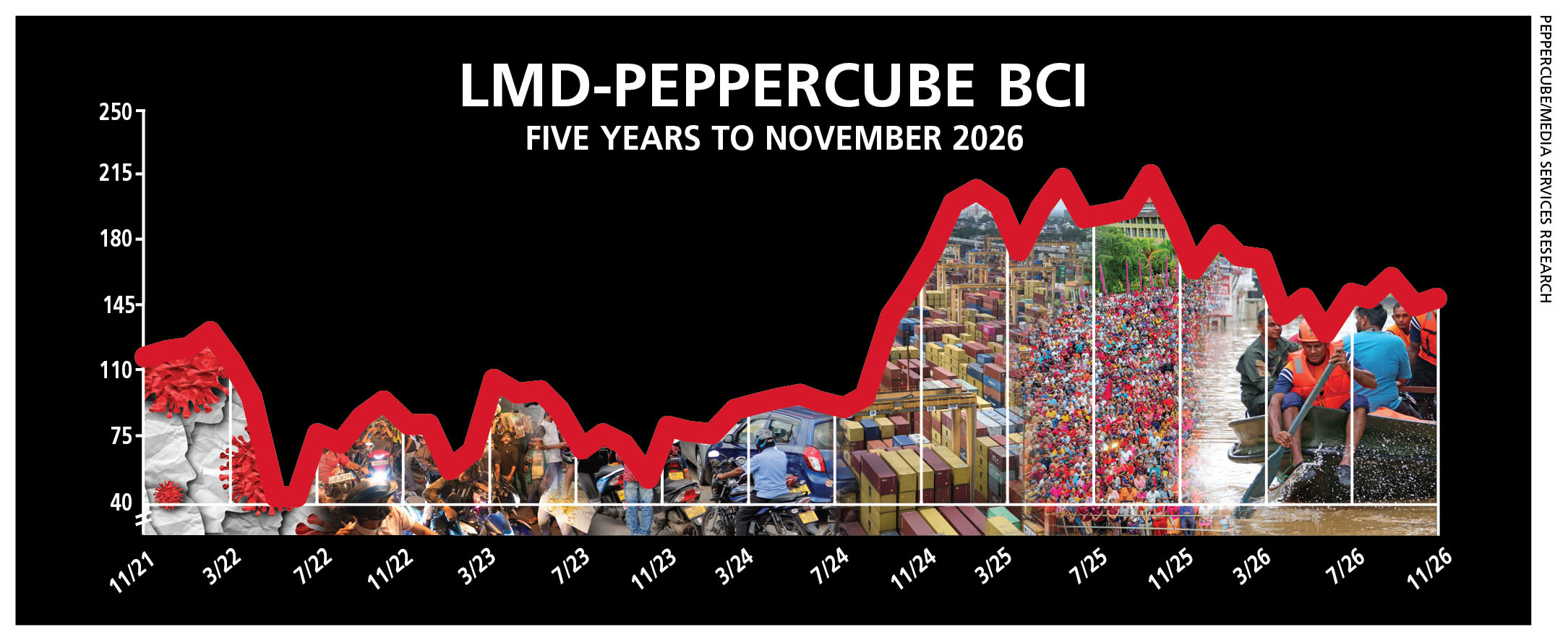
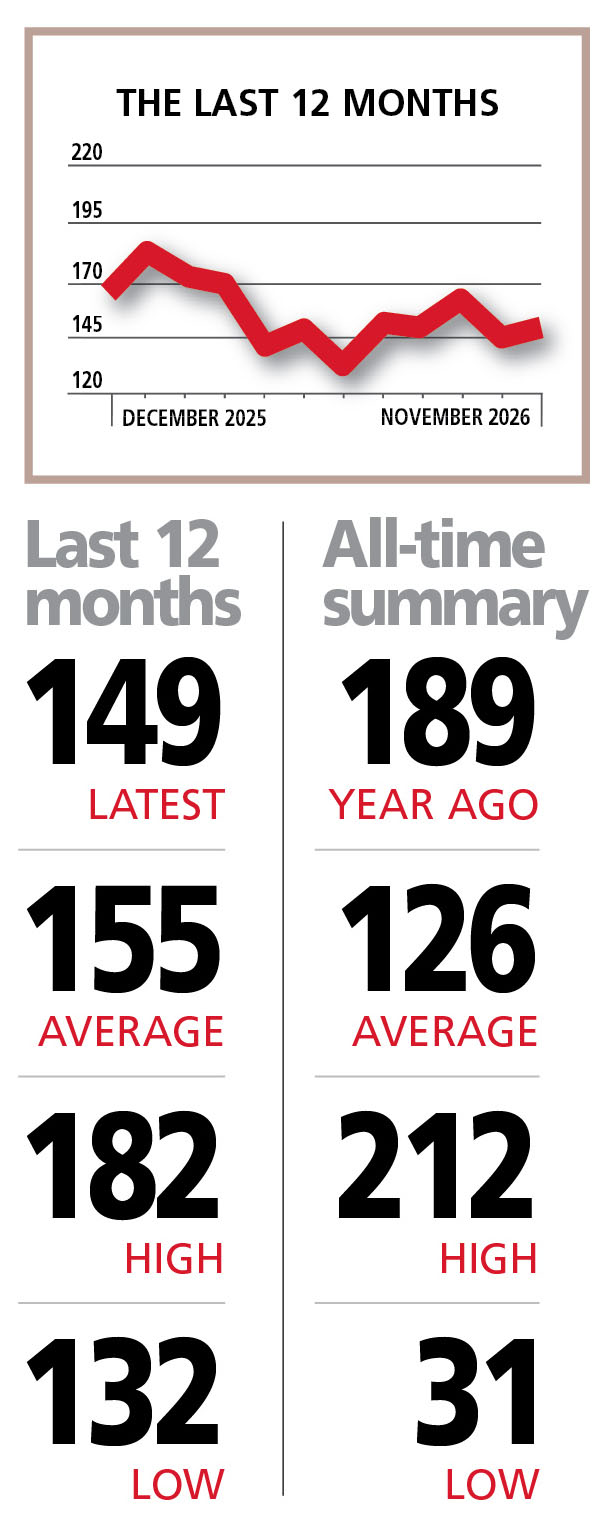
THE INDEX In November, the LMD-PEPPERCUBE Business Confidence Index (BCI) rose by four points to register 149 – up from 145 in the preceding month.
The barometer stands 23 points above its historic median of 126 but remains six points below the 12 month average of 155 and 40 notches short of the 189 recorded a year ago.
According to PepperCube Consultants, business confidence regained some ground following October’s decline, although the outlook remains mixed.
PROJECTIONS November’s modest uptick suggests that businesses were cautiously hopeful ahead of the budget.
Whether this translates into a sustained improvement will depend on the clarity of the government’s policy direction and how businesspeople perceive the measures outlined in the 12 November budget.
Their verdict will come next month – but even if there’s another spike in the index, the strain on finances and an uncertain global outlook may limit the extent of any improvement.
– LMD