AAT SRI LANKA CONFERENCE 2026: “TRUST IS THE ULTIMATE CURRENCY OF EVERY PROFESSION” — SURESH SRINIVASAN
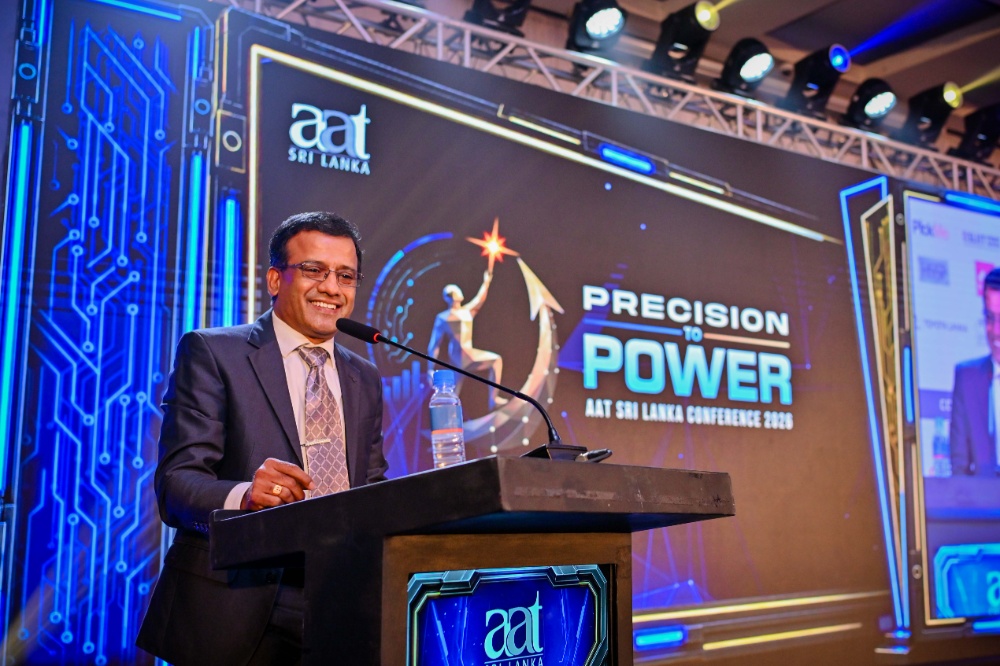
Most things in life diminish as we give them away. Money becomes less, time becomes less, and possessions become less. But two things multiply when we share them: love and knowledge.
That was the opening reflection from Suresh Srinivasan, Group CEO of the Capital Maharaja Group, who delivered the Chief Guest address at the AAT Sri Lanka Conference 2026. It set the tone for an address centred on a simple but powerful message: technical excellence has enduring value only when it is underpinned by integrity.
Held under the theme Precision to Power on 8 and 9 September at Waters Edge, Battaramulla, the conference brought together industry leaders, professionals and students for two days of knowledge-sharing, collaboration and discussion on the future of the accounting profession.
Across sessions on entrepreneurship, governance, data-driven decision-making and transformative leadership, Srinivasan posed a question that connected them all: how do we navigate change and turn it into sustainable business growth?
“I certainly don’t have all the answers,” he told delegates. “But my career has taught me a few lessons through successes, setbacks and, quite often, mistakes.”
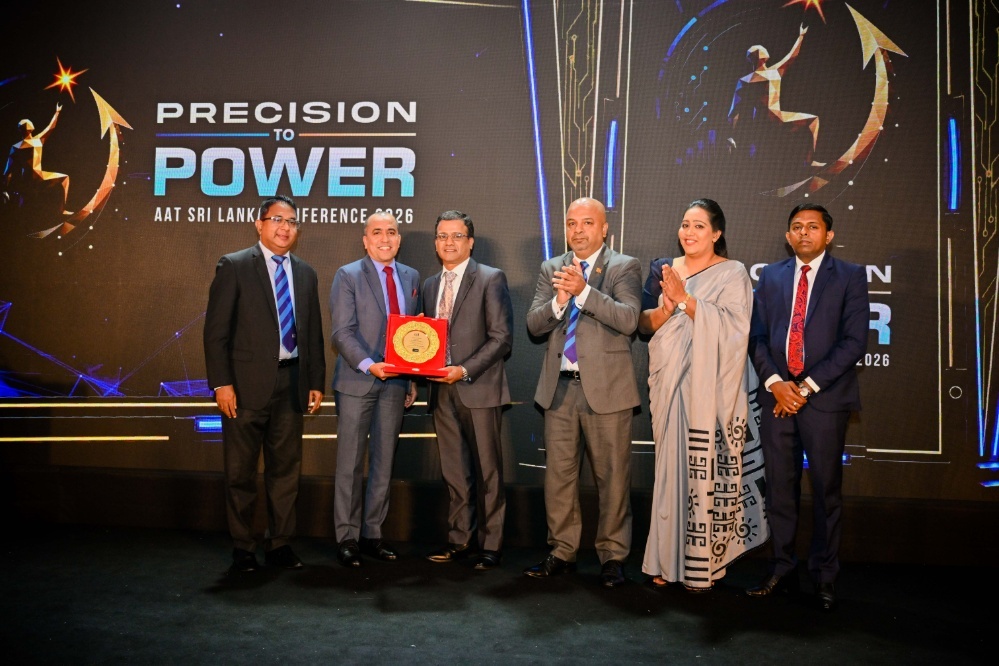
Mr. Tishanga Kumarasinghe – Chief Executive Officer AAT Sri Lanka,Dr. Chamara Bandara – President AAT Sri Lanka,Mr. Suresh Srinivasan – Group CEO of the Capital Maharaja Group,Mr.Dayal Abhayasinghe – Vise President AAT Sri Lanka,Ms.Himali Dasanayake – Chief Operating Officer AAT Sri Lanka,Mr.Isuru Kalhara – Chairmen Conference Committee AAT Sri Lanka/ Council Member AAT Sri Lanka
Values learned by watching, not by reading
Srinivasan traced his beginnings to a humble family in southern India, where his father worked as a government employee for 40 years and retired with modest earnings. What his father gave the family, he said, was worth far more than wealth: honesty, integrity and a sense of responsibility to give back to society.
“Long before I learned about integrity through a professional code of ethics, I learned it by watching my father live,” he said.
Those values, he added, went on to shape both his life and his career.
A setback that taught him how to learn
He then turned to a story from his school years. Until Grade Eight, he had been the top student and had, in his words, “reached a very modest conclusion: clearly, I am extremely intelligent.”
Then a more capable classmate arrived and began excelling at almost everything.
“Life decided it was time for my first independent audit,” he said. “I had become good at memorising; he had learned how to understand and apply.”
The turning point came with his O-Level results. His father, confident that his son would be among the state’s top performers, bought an evening newspaper, something he rarely did, only to find the other boy listed as the state topper with 471 out of 500. Srinivasan’s own score was 417.
“In a room full of accounting professionals, I don’t need to explain that a small transposition can have a material impact,” he said, drawing laughter from the audience.
But it was his father’s response that stayed with him: “At least now you see what you can do.”
Two years later, he performed strongly at A-Level, “not because I suddenly became intelligent, but because I learned how to learn.”
The lesson, he said, was simple: a setback is not the end of the story. We learn, adapt and continue.
Leadership begins when you own the outcome
After completing a degree in mechanical engineering and a brief spell at National Aluminium, an honest self-assessment steered Srinivasan towards industrial engineering and consulting, eventually leading to a long stint at Britannia.
There, he was offered an operational role that others had declined, running packaging operations involving hundreds of employees, strong union representation and considerable operational complexity.
Management challenged him: “You have been making so many recommendations as an internal consultant; why don’t you take the role and prove that all your recommendations actually work?”
He said yes.
“Anyone in consulting will understand that a recommendation looks extremely attractive until your name appears as the first person responsible,” he reflected.
“That one ‘yes’ changed my career and taught me that leadership begins when we are willing to own the outcomes”, Srinivasan shared.
Believing in someone when they have stopped believing in themselves
At the age of 40, while at CavinKare, Srinivasan faced a serious health challenge that affected his confidence to such an extent that he considered taking a university position at a fraction of his salary.
His boss refused to let him walk away.
“Suresh, we simply need you. Take time to recover and come back.”
Weeks later, the same leader entrusted him with responsibility for the entire supply chain, from farm to fork.
“At a time when I was losing confidence in myself, someone else still believed in me,” he said. “For him, it was a five-minute conversation, but for me, it changed the entire course of my life.”
The experience taught him another enduring lesson about leadership: sometimes it is about seeing potential in people when they have stopped seeing it in themselves.
“So what? What next?”
In 2014, Srinivasan joined E.I.D. Parry, where one of his major assignments was to revive a sugar refining business that had remained dormant for several years and carried significant investment and inventory.
“It was one of the biggest challenges of my career. There was no playbook,” he recalled.
Within 22 months, the team transformed the business from a significant loss-making position to break-even.
Rather than dwelling on past setbacks, he embraced a simple but powerful philosophy: “So what? What next?”
That mindset also characterised the broader transformation of the sugar business. The team moved beyond a predominantly commodity-based approach towards value-added consumer offerings, including refined, brown, low-calorie and low-GI sugar.
The transformation significantly expanded the retail business and contributed to turning a heavily loss-making operation into a profitable one.
For Srinivasan, the experience reinforced a fundamental principle: innovation creates sustainable value only when it is supported by strong governance and disciplined execution.
The one line no accounting standard requires
Closing his address, Srinivasan offered a measure of success that, he said, no accounting standard would ever mandate:
“At the end of our careers, we will all have a personal balance sheet showing assets and wealth, but there is one line no accounting standard will require us to disclose: how many people are better off because we were part of their journey?”
Technology will continue to change, and the pace of change will only accelerate, he said. But the fundamentals remain constant: integrity, objectivity, professional competence, confidentiality and professional behaviour.
“These foundations build trust, which is the ultimate currency of every profession. That is how we move from precision to power.”
He left delegates with a final reflection:
“Achievements tell the world how far we have come, but our values determine what we become along the way. Work hard for a better standard of living, but hold firm to your values for a better quality of life.”
And, returning to the thought with which he began:
“Two things multiply when shared: love and knowledge.”