SILK ROAD CITY
Wish you were here
The centre of cultures
Sandip Hor visits the capital of Kyrgyzstan
At first glance, Bishkek may seem an unlikely gateway to adventure. Kyrgyzstan’s capital is a broad, leafy city of Soviet era apartment blocks, tree lined avenues and busy bazaars.
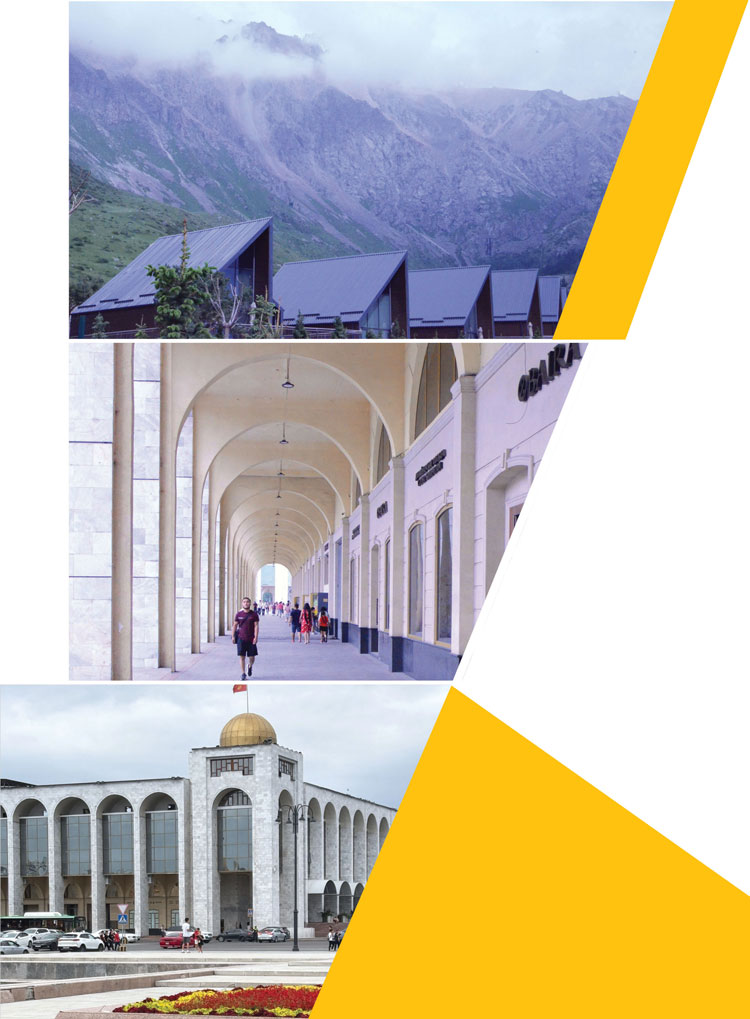
Yet, beyond its streets rise the snow-capped peaks of the Tian Shan system of mountain ranges. That contrast of urban energy framed by dramatic mountains is the essence of Bishkek.
Set at around 800 metres above sea level in the Chüy Valley, Bishkek is one of Central Asia’s greenest capitals – with wide boulevards and canals, as well as mature oaks, poplars and elms that provide welcome shade.
Bishkek’s location also explains much of its history as the valley lies along the route that connects China, Central Asia and the wider Silk Road network.
Human settlement in the area stretches back thousands of years. Archaeological discoveries point to Stone Age communities, followed by Bronze Age settlements and later, the Saka and Usun peoples.
Medieval Bishkek’s surroundings became part of the Silk Road network with the nearby city of Balasagun evolving into an important hub.
In the early 19th century, Bishkek was the site of a small fortress built by the Khan of Kokand. Russian forces captured it in 1862 and called it Pishpek… and it remained a quiet town for many years.
During the Soviet period, it was renamed Frunze after Bolshevik military commander Mikhail Frunze and became the capital of the Kirghiz Soviet Socialist Republic. Following Kyrgyzstan’s independence in 1991, the city reclaimed the name Bishkek.
Today, it is a city where nomadic traditions, Silk Road history, Soviet legacies and modern Central Asian life meet beneath the grand mountain peaks.
WHERE TO STAY As Bishkek is becoming popular in the tourism circuit, several hotels of international standard have opened their doors. The Damas International Hotel offers a convenient location, good service and value for money.
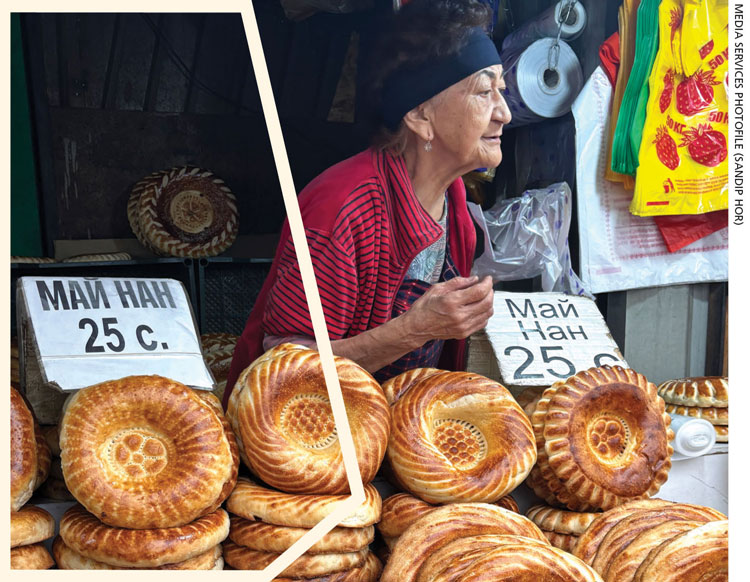
WHAT TO EAT Kyrgyz food is meat based and rooted in the nomadic traditions of Central Asia. Although the national dish is beshbarmak, which features finely chopped boiled meat, beef, lamb or horse served with hand cut flat noodles and onion bath, the rice dish known as plov is more popular. It’s cooked in a large cauldron with meat and shredded carrots. Both dishes are generally washed down with kymyz (fermented horse milk).
WHAT TO BUY Traditional felt handicrafts are widely available here. The most popular are the white felt hats worn by local men and handmade carpets with intricate nomadic patterns.
WHERE TO GO Today, the city’s layered history is visible everywhere. The starting point for most visitors is the Ala-Too Square, which is the ceremonial heart of the city – it is dominated by a statue of Manas, the legendary hero of Kyrgyzstan.
This area, which is dotted with grand Soviet era architecture and monuments, is neo-brutalist in style with picturesque qualities.
Nearby is a giant statue of Lenin and the National Historical Museum offers a broader introduction to Kyrgyz history. Not far from there is Oak Park, which provides an escape from traffic and the heat.
Bishkek is one of Central Asia’s greenest capitals – with wide boulevards and canals, as well as mature oaks, poplars and elms that provide welcome shade
Visitors to the lively Osh Bazaar will experience a riot of colour and sound, as dried fruit and spices sit alongside bread, household goods, traditional clothing and felt handicrafts.
Only 45 minutes south is the Ala-Archa National Park – a spectacular alpine valley with clear rivers, forests, meadows and glacier covered peaks. The trails make the park ideal for both casual visitors and experienced hikers.
History lovers can travel east to Burana Tower, which is the surviving minaret of medieval Balasagun. Surrounded by stone balbals (anthropomorphic stone statues) and archaeological remains, the tower is a striking reminder that the landscape around Bishkek was once part of the ancient Silk Road.