YOUTH FORUM
Compiled by Nicola Jayasundera
A VISION FOR THE FUTURE
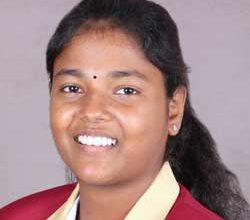
Chaniru Amarasinghe calls for equal opportunities and responsible leadership
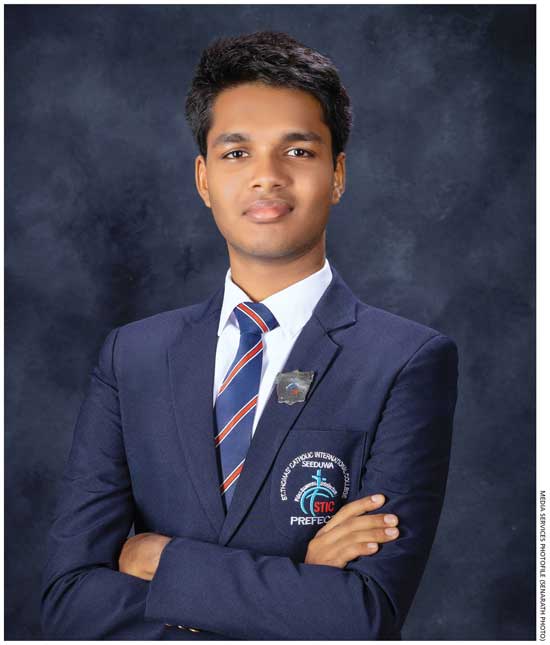
Q: What’s the good, the bad and the ugly in Sri Lanka?
A: The good is in our people. Despite recent economic and political challenges, Sri Lankans have continued to work hard, support one another and remain resilient.
We also have tremendous talent, beautiful landscapes, ancient cities and a rich cultural heritage, giving this small island enormous potential.
The bad is unequal opportunity. There remains a gap between what students learn in classrooms and the practical skills expected in workplaces. The cost of living continues to pressure families while many educated youth leave as they don’t see opportunities to build their futures.
And the ugly is our acceptance of these problems as simply ‘the way things are.’ The misuse and loss of public funds is another serious concern. Financial misconduct wastes resources intended for the public and erodes trust in our institutions.
Q: And what are the challenges facing the nation at this time?
A: The country must maintain economic stability while ensuring that recovery is felt in people’s everyday lives, over merely being reflected in statistics.
We also need to address unequal access to education and opportunities, particularly beyond Colombo, and the continuing loss of skilled people through brain drain.
Most importantly, we need long-term national plans that survive changes in government rather than being restarted with every election cycle.
Q: What are the challenges facing young people in Sri Lanka today?
A: Young people face academic pressures and often feel that examination results determine their future. We also need to address the normalisation of alcohol and drug use, and other harmful behaviours, along with pressures created by social media. Young people need more opportunities to express their views on decisions that affect them, particularly regarding education and careers.
Another challenge is that we have access to more information than ever before but do not always have the skills to distinguish reliable information from misinformation.
Q: So how can our youth contribute to national progress?
A: Young people don’t have to wait until they become professionals to make a difference. We can volunteer, support charities, develop technology and campaigns to address national issues, and share information responsibly.
Ultimately, being good at what we do and using our skills to serve others is itself a contribution. We should not only ask ‘what can Sri Lanka give me?’ but also ‘what can I give back to Sri Lanka?’
Q: What type of leadership do you think the world needs right now?
A: We need leaders who understand ordinary people’s struggles, do what is right even when it is unpopular, and are humble enough to acknowledge their mistakes and listen. They should have a long-term vision that extends beyond the next election cycle.
Leadership is about responsibility and service, not power or status. Great leaders should create more leaders, not simply more followers.
Q: How has the advent of AI and technology shaped your view of the future?
A: Artificial Intelligence has great potential in healthcare, research and education, from disease detection and drug discovery to personalised learning.
Young people need more opportunities to express their views on decisions that affect them, particularly regarding education and careers
I don’t believe the future is simply about AI replacing people; those who learn how to use it effectively may have an advantage. However, AI should assist human thinking, not replace critical thinking, judgement and human responsibility
Q: As a young person, what are your hopes for and concerns about the future?
A: I hope that going overseas becomes a choice rather than something young Sri Lankans feel they’re forced to do because of limited opportunities here.
And I hope for better healthcare for everyone, regardless of where people live or their income, improved mental wellbeing, greater economic stability and a better quality of life.
My concerns include brain drain, the impact of AI on employment and climate change. Above all, I worry that losing hope could become an even bigger issue as a country cannot progress if its people stop believing that progress is possible.
Q: If you could launch a project or movement in Sri Lanka, what would it be – and why?
A: I would launch a youth health awareness programme focussing on the mental and physical wellbeing of young people.
It would teach first aid, nutrition, hygiene and disease prevention, while addressing substance abuse, mental health, screen habits and responsible decision making.
Young people should learn not only how to succeed academically but also to look after themselves and support the wellbeing of those around them.