
FOCUS ON WIDENING THE TAX BASE
Q: Sri Lanka’s tax revenue rose to 15.4 percent of GDP in 2025 – its highest level since 1997. Having made progress in revenue mobilisation, should the focus now shift from raising or expanding taxes, towards widening the tax base?
A: The country’s tax to GDP ratio has improved significantly, reaching 15.4 percent from a low of 7.3 percent in 2022.
However, much of the increase last year came from a handful of sources including a 49 percent rise in value added tax on imports, a 20 percent increase in domestic VAT and exceptional vehicle excise collections following the lifting of import restrictions. Vehicle related taxes alone accounted for nearly 2.8 percent of GDP – an important but largely one-off boost rather than a long-term structural improvement.
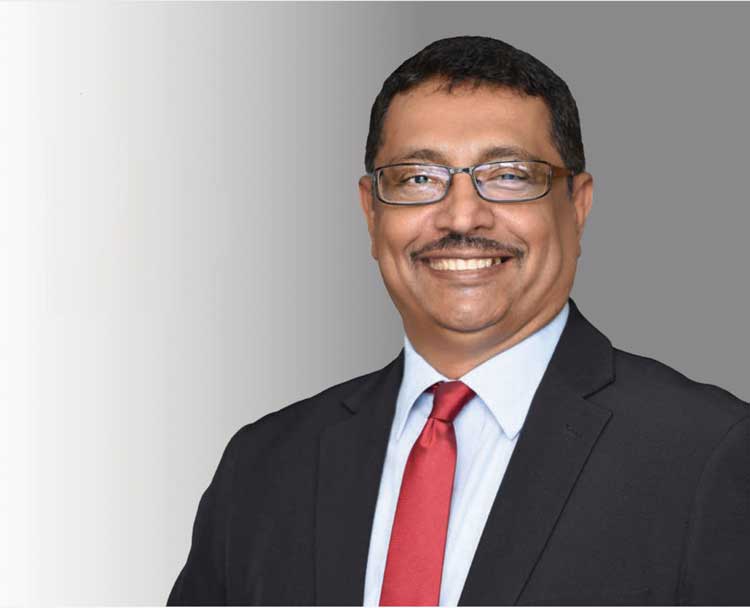
The priority should shift from repeatedly raising tax rates to broadening the tax base
Suresh Perera
The priority should shift from repeatedly raising tax rates to broadening the tax base. Sri Lanka remains below its medium-term tax revenue target of 20 percent of GDP and further increases in withholding tax (WHT), corporate or capital gains taxes would burden the same compliant taxpayers. A more sustainable approach is to bring untaxed or undertaxed economic activity into the tax net.
Five areas deserve focus…
First, cryptocurrency transactions remain largely outside the Inland Revenue Act. While crypto service providers are now covered by VAT rules, clear provisions on trading gains, valuation methods and reporting obligations are still lacking. Limited legislative amendments could address these gaps.
Second, substantial revenue is lost through offshore betting and gaming platforms. Although tax rates on licensed operators have increased and a Gambling Regulatory Authority is being established, much betting activity reportedly occurs through unlicensed foreign operators. Payment monitoring and regulatory blocking powers would likely be more effective than further tax increases.

Third, Sri Lanka lacks rules to tax offshore indirect transfers, except those involving companies with substantial real estate holdings. This enables foreign investors to sell overseas holding companies deriving substantial value from Sri Lankan assets without incurring local capital gains tax. A framework similar to India’s post-Vodafone reforms could close this loophole. A reverse charge mechanism should replace the business to business (B2B) carve out to improve digital VAT collection.
Fourth, VAT collections on business to consumer (B2C) digital services remains weak because online marketplaces are not clearly responsible for collecting the tax. Making marketplace operators liable would significantly improve compliance and collection.
And finally, we should prioritise introducing a qualified domestic minimum top-up tax (QDMTT) under pillar two. Without it, tax incentives for large multinational groups may simply allow other countries to collect the resulting top-up tax. These measures would widen the tax base, reduce revenue leakage and support a more resilient tax system without further burdening compliant taxpayers.
Q: How can more individuals and businesses be brought into the formal tax net without placing an even greater burden – through what many commentators feel are harsh mea-sures – on those who are already compliant?
A: The most effective way to widen the country’s tax net is to use available information to identify economically active persons outside the system rather than intensify audits of visible taxpayers.
Information from banks, the Department of the Registrar of Companies, Department of Motor Traffic (DMT), Registrar General’s Department, Colombo Stock Exchange (CSE) and other institutions should be matched against tax registrations and returns, to identify non-filers, undeclared income, and discrepancies between reported income and observable economic activity.
Data matching may incorporate proportionate lifestyle indicators including high value credit card expenditure, foreign travel, major property or gold purchases and substantial institutional borrowings. These should trigger a risk review rather than an automatic assessment.
A specialist analytics unit should rank cases by compliance risk, focussing audits on significant or deliberate evasion without disrupting compliant taxpayers. Published statistics should track new registrations, returns filed and revenue collected from previously unregistered persons.
Third party reporting should support targeted registration of professionals and cash intensive businesses. Hospitals, educational institutions, digital platforms, payment processors and licensing bodies could report payments to independent professionals and service providers.
Properly designed withholding arrangements could collect part of the tax at source with corresponding credits claimed through annual returns. And SMEs entering the system should receive simplified returns, mobile friendly filing, practical guidance and reasonable first time penalty relief.
Enforcement should be graduated. Education and reminders should address genuine mistakes, while audits, penalties and prosecution should target persistent or deliberate evasion. Stronger collection must be balanced with taxpayer protection, as tax officers may exceed their statutory authority or exercise powers that cause unfair hardship.
Therefore, Sri Lanka should establish an independent tax ombudsman by statute to investigate grievances and remedy administrative overreach. This would preserve the state’s legitimate right to collect tax while ensuring lawful, proportionate, accountable and fair administration that maintains taxpayer confidence.
Q: What are the consequences of defaulting on tax instalments – and is the new system fair to voluntary taxpayers?
A: Defaulting on an advance income tax instalment carries severe consequences. Under Section 90 of the Inland Revenue Act, instalment payers must discharge their estimated liability in four quarterly payments.
Late instalments attract interest from the following day at 1.5 percent for each month or part thereof with no grace period. After 14 days, a further 10 percent penalty applies unless a valid extension has been obtained, although interest remains payable.
Non-payment does not immediately make the taxpayer legally ‘in default.’
The Commissioner General of Inland Revenue must first issue a demand notice stating the tax, interest and penalties due. Any amount unpaid 21 days after service becomes ‘tax in default.’
Thereafter, the Inland Revenue Department (IRD) may use civil recovery measures including a statutory lien over property, seizure and sale of assets, and notices requiring banks, employers or third parties holding the taxpayer money to remit those funds.
The Inland Revenue (Amendment) Act No. 11 of 2026 has made the consequences more serious.

From 1 April 2026, the Commissioner General of Inland Revenue may certify the default directly to a magistrate, who must summon the taxpayer to show cause but cannot examine the correctness of the tax assessment or postpone proceedings for more than 30 days.
If sufficient cause is not established, the unpaid tax, penalties and interest are recoverable as a court imposed fine. Continued non-payment may lead to imprisonment. A certificate cannot be issued while an administrative review or appeal is pending.
The new system strengthens revenue collection and reduces civil recovery delays but its fairness to voluntary taxpayers is debatable. Those experiencing cash flow issues may quickly face interest, penalties and quasi criminal enforcement with limited judicial scrutiny of the underlying assessment.
Fairness requires timely notices, reasonable opportunities to regularise genuine defaults, accessible review and appeal procedures, and proportionate use of magistrate’s court action.
Strong enforcement may be justified against deliberate or persistent non-payment but should not expose taxpayers to disproportionate consequences for errors or temporary financial difficulties that can be resolved administratively.
Q: And what would you say to people who feel that criminal prosecution for failure to obtain a Tax Identification Number (TIN) or file income tax returns is a draconian measure that creates a fear psychosis in society?
A: Section 185A understandably creates fear among taxpayers, as failures to file returns or provide required information could ultimately result in criminal prosecution.
A fine, imprisonment or both may seem particularly harsh where the failure was administrative rather than fraudulent.
The most effective way to widen the country’s tax net is to use available information to identify economically active persons outside the system rather than intensify audits of visible taxpayers
However, the supreme court has highlighted important safeguards. Prosecution cannot begin immediately after noncompliance. The Commissioner General of Inland Revenue must first issue a formal notice informing the taxpayer of the failure and possible legal proceedings, allowing 30 days to comply.
Criminal proceedings may begin only if the taxpayer continues to default after that warning and opportunity. The judges therefore, viewed Section 185A as targeting continued noncompliance rather than accidental or isolated omissions.
Although the provision may appear intimidating, these protections could reduce the risk of taxpayers being unexpectedly criminalised. On that basis, the court concluded that Section 185A was not inconsistent with the constitution.
Q: With the 2027 budget due to be presented in November, what tax reforms would you prioritise to make Sri Lanka’s system simpler, fairer and more predic-table?
A: To promote equity, personal income tax slabs should reflect prevailing economic conditions and ease the disproportionate burden on middle income taxpayers.
Sri Lanka must also introduce clear frameworks for taxing cryptocurrency transactions and betting and gaming activities, particularly online gaming.
Tax incentives should deliver measurable economic value through new investments, employment creation, innovation, productivity and long-term development rather than benefit businesses that merely extract value.
Suresh Perera is the Principal – Head of Tax & Regulatory of KPMG in Sri Lanka.