CORPORATE SECTOR
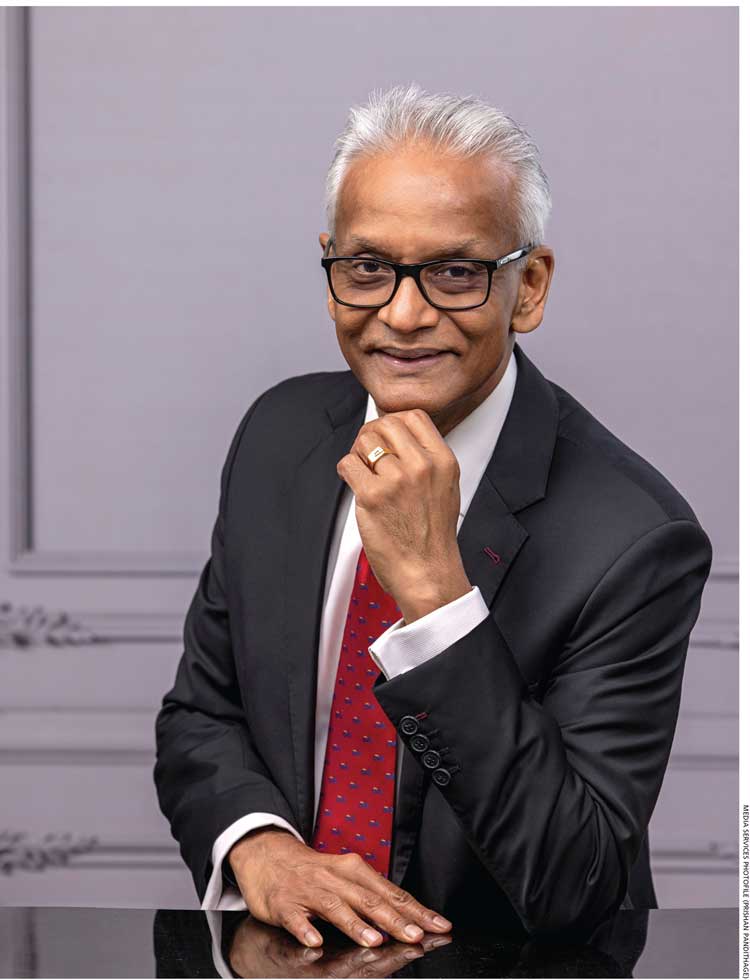
Suren Rajakarier
PARADIGMS OF GOVERNANCE
Strengthening governance to support sustainable long-term business growth
Evolution of corporate governance in Sri Lanka
The country has made meaningful progress in governance awareness; yet too often, it remains a narrow compliance exercise.
Main governance challenge facing businesses today
The biggest challenge is not the absence of rules but the tolerance of breaches, conflicts, control overrides and informal shortcuts – and what is tolerated becomes culture!
Why governance is a competitive advantage rather than a compliance requirement
Due to the importance of trust, transparency and accountability directly influencing access to capital, confidence, resilience and long-term value creation.
Practices investors look for before committing capital
A sustainable business model, transparency, accountability, strong controls and ethical leadership.
Boards being more effectivein navigating uncertainty
Reach a stage of continuous monitoring with a strong risk management and sustainability focus – challenge assumptions, stress test scenarios and ensure the business is prepared for multiple scenarios.
Why environmental, social and governance (ESG) is a business necessity
The shift happens when ESG is embedded into strategy, risk management, capital allocation and day-to-day decision making; until then, for many it’s merely a reporting exercise.
Factors that separate meaningful sustainability efforts from greenwashing
Board commitment, a sustainable business model, clear targets, measurable actions and accountability – without these, it risks becoming greenwashing.
Local businesses creating long-term value through sustainability
Long-term value comes when sustainability is embedded in strategy and improves resource efficiency, reduces social climate risks, strengthens trust, and provides access to capital and markets.
Sustainability trends shaping business over the next five years
Mandatory sustainable actions leading to stronger disclosure requirements, climate – nature risks, sustainable supply chains, credible ESG data with the use of technology and AI.
Importance of climate risk in today’s boardroom discussions
Climate risk must now be a core business and financial board level issue as it affects strategy, resilience planning, supply chains, financing, insurance and asset values.
Role of businesses in supporting economic recovery
Invest responsibly, create employment, improve productivity, strengthen exports and pay taxes fairly – and rebuild trust through ethical conduct.
Balancing profitability with social responsibility
By linking social responsibility to business strategy considering all stakeholders and focussing on long-term value.
A country is more attractive to global investors due to…
Policy consistency, macroeconomic stability, rule of law, transparent regulations, ease of doing business, and confidence that capital can be deployed and repatriated predictably.
Strengthening investor confidence in the current environment
By improving policy consistency, fiscal discipline, transparent regulation, stronger institutions, and clear execution of national reforms that demonstrate stability and predictability.
Structural reforms with the biggest impact on business growth
Reforms to attract higher quality foreign direct investments (FDIs), accelerate digital transformation, diversify exports with trade liberalisation, strengthen public finance management and modernise tax administration.
Importance of policy consistency for long-term investment
It is critical because long-term investors need predictability to commit capital.
Lessons Sri Lanka can learn from other emerging economies
They have progressed by combining macroeconomic discipline, consistent policies, export competitiveness, digital adoption, and strong institutions with disciplined execution and sustained political will.
Integrating local businesses into global value chains
Local businesses need to connect with global buyers and investors – they must also be reliable, competitive, digitally enabled, and compliant with global quality and sustainability standards.
Capabilities that Sri Lankan companies require to compete internationally
Follow local role models who have been innovative, sustainable, digitally enabled and focussed on quality.
The biggest challenge is not the absence of rules but the tolerance of breaches, conflicts, control overrides and informal shortcuts
How digital transformation is changing governance and risk management
It’s making governance and risk management more data driven, real-time and predictive, while also creating new challenges around cybersecurity, data privacy and ethical use of artificial intelligence.
Emerging risks business leaders should be preparing for
Cybersecurity, AI disruption governance, climate impact, geopolitical uncertainty, supply chain vulnerability, talent shortages and regulatory compliance.
Role of ethical leadership in building resilient organisations
It creates trust and confidence, enabling organisations to withstand unexpected challenges and adapt during uncertain times.
Suren Rajakarier is the Country Managing Partner of KPMG Sri Lanka and Maldives.