ENTREPRENEURIAL SPIRIT
Hasib Omar believes in thinking bigger to take Sri Lankan brands to the world
Q: As the founder of Moose Clothing Company, which moment in the enterprise’s journey has given you the greatest sense of personal pride – and why?
A: Becoming the official clothing partner of Sri Lanka Cricket (SLC) was probably the proudest moment for me.
Cricket is much more than a sport in Sri Lanka; it brings the whole country together. So to see a brand that we built in Sri Lanka represented on that stage, and to see our national players wearing Moose, was a very special feeling.
But for me, it wasn’t only about the visibility that came with it; it was what it represented.
Moose was launched with the belief that we could build a strong Sri Lankan consumer brand. Being entrusted with one of the most recognised sporting identities in the country gave us confidence that we were moving in the right direction – and that was the moment I realised Moose could become much bigger than what we originally imagined.
Q: Do you believe the next generation of Sri Lankan businesses will need to be more outward looking and globally ambitious than their predecessors? And if so, why?
A: Every generation has to build on what the generation before it created.
We should also remember the environment in which the previous generation of Sri Lankan businesses operated. They built companies through nearly three decades of war, a tsunami, political instability, economic crises and many other challenges.
Despite all of that, they took Sri Lankan businesses to international markets, built operations across the world, worked with some of the world’s leading companies and helped put Sri Lanka on the global business map – that’s something we sometimes don’t give enough credit for.
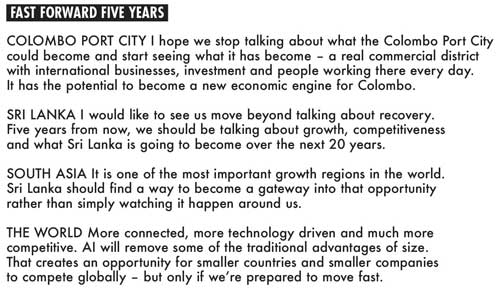
The next generation now has to take that foundation and go further. We’re starting with advantages they didn’t have. Technology has changed how quickly we can reach customers, access information and enter new markets. The world is far more connected and the barriers to building an international business are very different today.
So our ambition should naturally be bigger.
For me, being globally ambitious doesn’t mean turning away from Sri Lanka. It means building from Sri Lanka with the world in mind. That is how I look at Moose as well. Sri Lanka is our home, and where we are building and establishing the business, but I don’t want our ambition to stop at our borders.
The generation before us showed that Sri Lankan businesses can survive extraordinary challenges and still compete with the best in the world. Our responsibility is to build on what they created and see how much further we can take it.
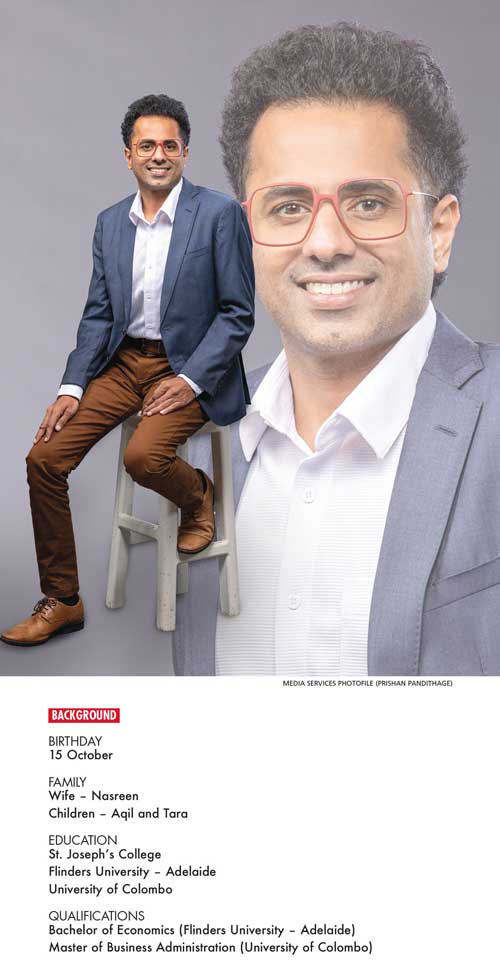
Q: What prompted you to launch Moose as a distinct brand rather than continuing along an established path within the wider family business?
A: I wanted to build something that could stand on its own but at the same time, add to the legacy that was already there.
I have been fortunate to hail from a family with a long history in business. Previous generations built businesses, created employment and established a reputation over many decades. I have always respected that – and I have never felt that I needed to move away from it simply to prove a point.
For me, the bigger question was: what can I add to it?
I wanted to take everything I’d been exposed to and learnt over the years, and see if I could create something new – build a brand, put a team around it, make mistakes, compete in the market and create something that customers genuinely wanted to buy. Moose gave me that opportunity.
We had to build the brand, the product, the distribution, the team and most importantly, the trust of the consumer. There was no guarantee it would work and we have made plenty of mistakes along the way.
Coming from an established business family certainly gives you opportunities and I’d never pretend otherwise. A surname may open a door; but it cannot make a customer buy your product a second time. You have to earn that.
I don’t see Moose as stepping away from a family legacy. I see it as my opportunity to add another chapter to it – and hopefully leave something stronger for the generation that comes after us.
Q: How can a Sri Lankan consumer brand use AI to understand its customers without compromising their privacy or losing the human connection that builds loyalty?
A: First, we need to separate artificial intelligence from data collection because they’re two different things.
Businesses have been collecting data long before AI became part of the conversation. Every time a product is sold, we know what was bought, where it was bought, what size or colour sold best and at what time. Websites, loyalty programmes and digital platforms also generate data, whether we use AI or not.
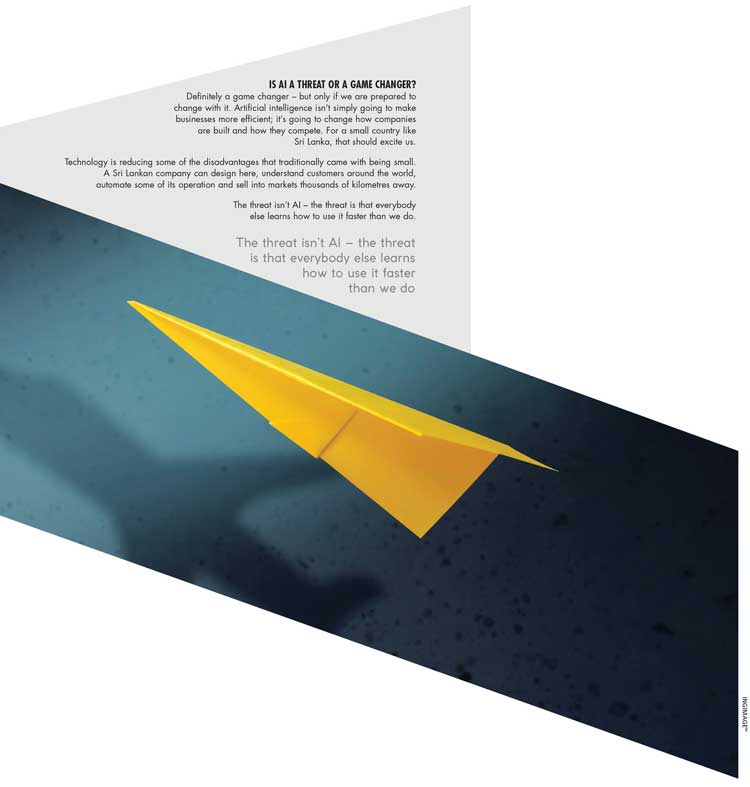
The real opportunity with AI is what we can do with that information.
For a brand like Moose, we have a huge amount of data across our stores, online business and different sales channels. AI can help us understand that data much better – and much faster. It can identify patterns that we may not immediately see – what is selling in Colombo compared to Kandy or Galle, which sizes we are running out of, what products are frequently bought together or even where demand may be heading next.
That can help us make better decisions on everything from product development and inventory, to merchandising and marketing.
Privacy is still extremely important. There has to be a clear line between understanding customer behaviour and collecting personal information unnecessarily. I don’t think you need to know everything about an individual to understand your consumer.
Sri Lanka doesn’t lack ability – but sometimes we simply need to think bigger
AI should support the human side of the business, not replace it.
Fashion is very personal. People still want to walk into a store, touch a product, speak to someone and feel a connection with a brand. AI gives us the ability to understand the information we already have much better. What we do with that understanding is still a human decision.
Q: What does Sri Lanka need to address most urgently to enable local brands to compete internationally – policy consistency, access to capital, technology, skills or confidence?
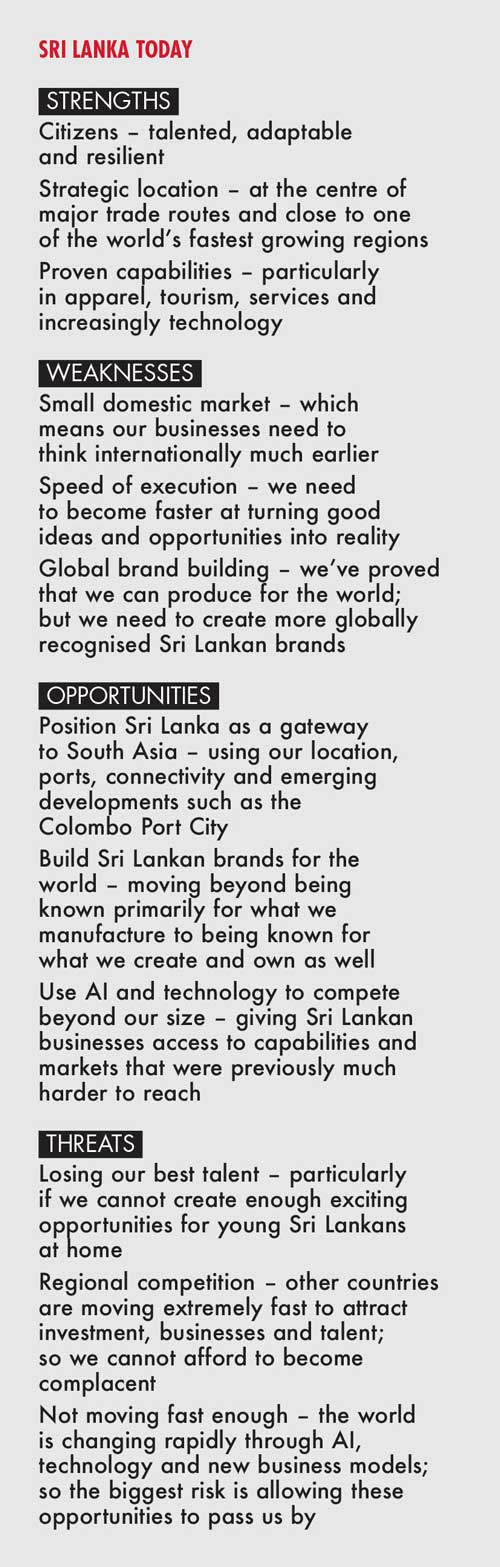
A: If I had to choose one, I’d say confidence.
Of course, we need policy consistency. We need access to capital, technology and skills – all these are real issues.
But sometimes I think our biggest limitation is the ceiling we put on ourselves. Local companies manufacture for some of the best brands in the world. Sri Lankans run businesses all over the world. We have proven that the capability is here.
However, when it comes to building our own brands internationally, we sometimes behave as though coming from a small country means we have to remain a small player – I don’t believe that.
The government has a major role to play.
We need consistent policies, easier access to markets, trade agreements, investment and infrastructure. But as entrepreneurs, we also have to take responsibility. We have to be willing to invest, take risks, enter markets where nobody knows who we are and accept that we’ll probably make mistakes along the way.
Sri Lanka doesn’t lack ability – but sometimes we simply need to think bigger.
Q: Having a recognised family name can bring both opportunities and heightened expectations. How have you ensured that your credibility is based on performance rather than inheritance?
A: I have never been uncomfortable acknowledging the advantages I’ve had. What matters is what you do with those advantages.
A recognised family name can open doors – that’s the reality. But it can also mean people are watching you more closely and expecting you to perform.
Eventually in business, the numbers speak for themselves. You cannot inherit customer loyalty. You cannot inherit a strong management team. You cannot inherit execution. And you definitely cannot expect a consumer to buy your product because of your surname.
That is one of the reasons building Moose has been important to me. It was a very simple test: will people actually buy what we create? At the end of the day, I’d rather be judged by the businesses I build, the people I develop, the decisions I make and the results we deliver.
Q: During periods of economic and national uncertainty, what drives an entrepreneur to stand tall, continue investing and remain confident in Sri Lanka?
A: If everybody waits for certainty, nothing will be built. Sri Lanka has gone through some extremely difficult periods and anybody running a business here knows what that feels like.
But I also think difficult periods test whether you genuinely believe in the country or believe in it when everything is going well. I remain confident because I see the talent we have here. I see the capability of our people, our location and so many opportunities that we still haven’t developed properly.
That doesn’t mean we should ignore our problems. We should be much more demanding about reforms, governance, consistency and competitiveness. Confidence shouldn’t mean accepting things as they are. But business leaders also have a responsibility to keep building.
Every time we open a store, hire someone, nurture a young manager, invest in technology or try to take a Sri Lankan product to another market, we’re making a small bet on the future of this country. I would rather take that bet than sit on the sidelines waiting for somebody else to build the country for us.