
DIGITAL DISTRACTIONS
THE PESKY WANDERING MIND
Manilka Ediriweera notes that attention spans have contracted considerably
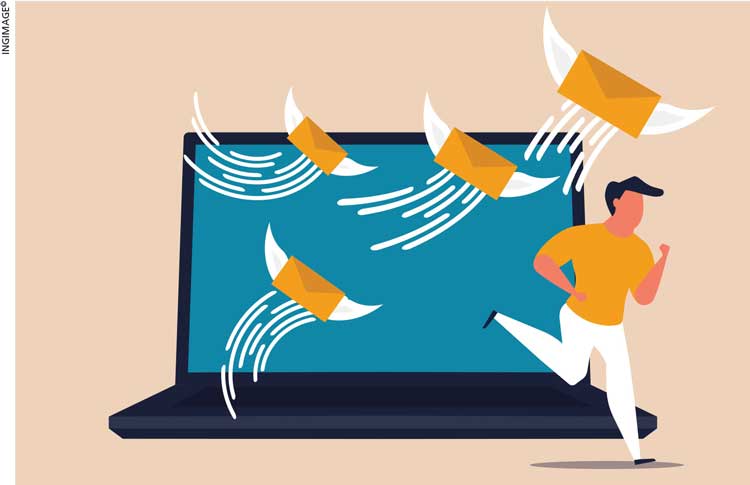
It’s no secret that we are constantly distracted in today’s digital world; and more often than not, we tend to make the mobile phone the usual suspect. However, phones are only part of the problem.
From push notifications to overflowing inboxes, social media, ads, endless tabs and back-to-back messages, we’re overloaded with information left, right and centre.
Think about the last time you read six or seven chapters of a book in one sitting, or watched a movie without reaching for your phone. How long has it been since you sat with your own thoughts?
For most of us, it’s been a while…
All of this points to one thing: our attention spans have dwindled considerably and it’s become the norm, which is rather unfortunate.
According to some studies, the average human’s attention span on a digital screen has dropped dramatically to 40-47 seconds, down from about 2.5 minutes in 2004. While this shift may have been accelerated by technological advancements, this distracted nature predates the smartphone too.
We’ve always had wandering minds; and today, an entire economy has been built around it. The result is a distracted mind that can hardly focus.
You’ve probably noticed these patterns in yourself. How easily your focus breaks and how often you reach for a screen. Perhaps you wonder what you could do about it but only end up scrolling. As for the reason, there’s science behind it.
Every time your phone pings and every time you scroll, it feels like a tiny reward for your brain. In other words, it triggers your brain’s reward system by releasing dopamine and making you feel good. And since our brains are wired to chase more of what it perceives as rewarding, we keep chasing the next comment, reply etc.
The fact that digital rewards and distractions are ever-present doesn’t help either. Everything is designed to keep you hooked – from auto played videos to endless feeds and scrolling. Once you begin, it’s hard to pull away.
And this situation has arisen by design rather than accident.
That said, distraction isn’t simply about seeking pleasure. Sometimes it’s about avoiding discomfort too – such as boredom, stress etc. In such moments, the screen can become an escape. A break from what you don’t want to face.
Add to this our habit of multitasking in the name of efficiency and it gets compounded. Every time you switch your attention from one task to another, there is a switch cost. This is the mental effort required to reconstruct where you were and what you were thinking before the interruption.
So yes, digital distraction is common and also normal – but normal doesn’t mean it’s harmless. For starters, it can change how your brain feels. You may experience lower energy levels, a decline in your cognitive capacities, a dip in creativity and poor memory.
There are other costs too…
Your neck and wrists start aching after long stretches hunched before a screen. You catch yourself half-listening to what the person across the table is saying because your phone lit up. And you may be sacrificing your sleep to check on one more thing. It’s like we slip into autopilot.
Reclaiming attention begins by recognising these digital distractions and how to respond to them. While it may not be easy at the start, the consequences we face if we don’t address it seem more dire.
And you don’t need to implement drastic changes to set things in motion.
For instance, you can begin by trying to understand why you’re reaching for a device without doing it on autopilot. Ask yourself why? Is it because of stress, boredom or avoidance? That one question can move the decision from reflex to conscious control.
Try implementing habits such as keeping your phone in another room or on silent while you work. You could move your social apps off the home screen or try switching to a minimal layout on your phone. This won’t make the interruptions disappear; it will make getting distracted far less convenient because it’ll provide a chance to break the habit.
Being mindful about how you take breaks can help too. Stopping mid-task can cost you much more time and effort than stopping at a natural point. What you can do is build breaks around these moments instead of wherever the interruption comes in.
A harder option would be to sit with boredom.
For many, there’s nothing more challenging than sitting with boredom. We always try to fill the silence with music or a podcast, or by scrolling. Giving your brain a few unscheduled and unstimulated moments can replenish your mental resources – and improve your focus.
None of these requires you to throw your phone away. After all, digital distraction isn’t only due to the phone in your hand; it’s more about catching yourself before it happens to stop disruption from being automatic.