RETAIL SECTOR
Compiled bY Prashanthi Cooray
THE CONSUMER OF TOMORROW
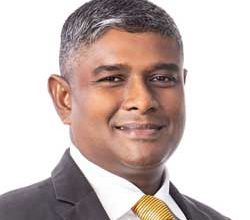
Danushka Silva explores how brands are evolving in an ever-changing world

Q: In your view, what is shaping innovation in the fast-moving consumer goods (FMCG) sector today and how can companies stay ahead of changing consumer expectations?
A: I believe the main shift we’re seeing is that the external environment is changing at an unprecedented pace.
As a result, consumer expectations are constantly being redefined by economic uncertainty, digital influence and evolving lifestyles. This means that being consumer centric has become an ongoing endeavour.
Innovation can no longer be treated as a mere sequence of products moving through a pipeline. Instead, it needs to function as an internal strength woven through consumer understanding, R&D, the supply network, commercial planning and day-to-day delivery.
Adding to this, climate and commodity swings will increasingly determine how innovation unfolds. To reduce exposure to regional supply chain volatility, organisations must develop formulations with greater intent at the local level.
At the same time, feasibility reviews should be brought forward in the innovation process to assess the longevity of formulations. Innovation has to be sustainable. If it isn’t, it turns into risk.
Ultimately, innovation requires solving meaningful consumer problems while creating sustainable business value – rather than creating something for the sake of novelty.
Q: How have digital platforms and data analytics transformed the marketing landscape? And how has this changed the way you approach consumer engagement and decision making?
A: As businesses operate in an increasingly digital era, the most notable shift has been the rise of consumer influence.
Brands no longer control the conversation – consumers do. Digital platforms have transformed marketing from one-way communication into continuous engagement, where relevance, authenticity and experiences are essential to earning trust.
What this means is that brands need to make their presence more meaningful and relevant in consumers’ lives, extending beyond purely commercial objectives.
In this environment, data has become a critical strategic asset. It enables organisations to decode consumer expectations, make faster decisions, engage consumers more precisely and optimise performance.
Today however, advantage is not defined by the volume of data a business holds but how quickly it can translate insights into decisive action ahead of the competition.
Q: What leadership qualities are essential for navigating complexity and change in the FMCG sector today?
A:Today’s fast-moving consumer goods landscape is more unpredictable than ever, driven by geopolitical tensions and climate instability that intensify the need for resilient leadership.
The Sri Lankan market too has endured many a crisis over the past decade.
In this setting, executives need to build two critical capabilities: strategic clarity and operational agility. While these may sound straightforward, they become far more challenging in practice.
Detailed long-range plans no longer guarantee relevance. Instead, leaders should maintain a long-term outlook while adopting shorter strategic planning cycles that reflect constant shifts in the business environment. They must then cascade this evolving strategic direction across the operational teams they lead.
When conditions are uncertain, strategic clarity inevitably involves trade-offs, so leaders must be ready to make timely decisions and set a clear course for their teams. Nothing is more damaging than indecision, particularly when a business is under pressure.
While strategic clarity can guide action during stressful moments, operational agility is equally essential.
Strategic intent accomplishes little unless it is translated into action promptly, whether the goal is to endure or excel in a changing environment. Achieving this goal calls for an end-to-end view of the value chain including scenario planning, contingency measures and the right level of resourcing.
Finally, effective leadership lies in building a team and an organisation capable of finding the right solutions.
Q: As for the future, what structural changes do you anticipate in Sri Lanka’s FMCG sector – and where do you see the main opportunities for growth?
A:In line with developed markets, I believe that Sri Lanka’s FMCG sector will undergo a transformation over the next decade, driven by digital integration.
This evolution is likely to manifest in two areas: the retail and shopper experience, and the enhanced digitisation of business value chains.
Digital integration will accelerate the shift from traditional mass-market distribution models to omnichannel frameworks, where distribution channels evolve into instant fulfilment networks. The continued growth of self-service retail formats and quick commerce also presents major opportunities for businesses.
Brands need to make their presence more meaningful and relevant in consumers’ lives, extending beyond purely commercial objectives
As these channels evolve, the shopping experience will increasingly rely on digital currency, automation, data analytics and AI while supply chain replenishments will start relying on agentic artificial intelligence.
Beyond the retail experience, technology – particularly AI – will revolutionise how businesses forecast demand, extract consumer insights, create products, optimise supply chains and engage with customers.
Furthermore, machine learning will play a critical role in streamlining business processes.
While these structural changes may seem ambitious today, organisations that are not only resilient in the face of change but also agile enough to influence it will lead the way into the future.
The interviewee is the General Manager Marketing (Munchee) of Ceylon Biscuits Limited.