
SRI LANKAN FINTECHS EYE 200 MILLION MARKET OPPORTUNITY BEYOND DOMESTIC SHORES
Conrad Dias, Vice Chairman of the Fintech Forum Sri Lanka and Chairman of LOLC Finance PLC, believes the next stage of Sri Lanka’s fintech journey is about helping local fintech companies access larger regional markets, strengthen collaboration with banks and regulators, and build an ecosystem capable of sustaining long-term growth.
For Sri Lanka’s fintech companies, one of the biggest barriers to growth is not innovation, but market size. With a domestic population of just over 20 million, even successful fintechs eventually need to look beyond the country’s borders to achieve meaningful scale.
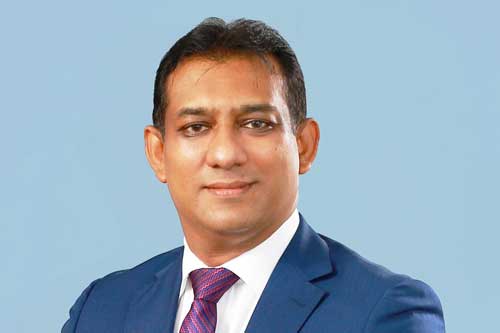
Fintech Forum Sri Lanka Vice Chairman and LOLC Finance PLC Chairman Conrad Dias believes creating pathways into larger regional markets should therefore be a key priority for the country’s fintech ecosystem.
“If our fintechs can operate in one of the countries in Africa, for example, they could access a market of around 200 million people,” Dias said. “That is almost 10 times Sri Lanka.”
The challenge, according to Dias, is not whether Sri Lanka can produce innovative fintech solutions, but whether the ecosystem can help those innovations scale into markets large enough to support globally competitive companies.
The Fintech Forum is seeking to address this by bringing together banks, finance companies, fintech start-ups, payment providers, technology companies, regulators and policymakers, creating stronger industry alignment and collaboration.
“When the Forum was established, our priority was to bring an industry that worked in silos together,” Dias said. “I believe our greatest achievement has been creating that platform. Today we have established a strong collaboration.”
Nearly every bank in the country now participates alongside fintech companies, LankaPay and other key ecosystem stakeholders, while the Central Bank of Sri Lanka also remains actively engaged.
Dias said this foundation has enabled the Forum to move into its next phase, with greater emphasis on accelerating innovation, strengthening policy engagement and opening opportunities for regional expansion.
Last year’s Sri Lanka Fintech Summit was a significant milestone in bringing the ecosystem together. Building on that momentum, this year the Forum plans an expanded Fintech Festival designed to bring together an even broader cross-section of industry stakeholders.
International partnerships are increasingly becoming an important component of the Forum’s strategy, with Dias stressing that such relationships should translate into tangible business opportunities rather than remain limited to networking.
The Forum has already established relationships with fintech associations in Singapore, Taiwan and Africa, creating channels for knowledge exchange, business connections and potential market access.
Sri Lanka can provide a strong environment for developing, testing and validating fintech solutions, but Dias noted that sustainable commercial growth frequently requires access to significantly larger markets.
Through relationships with overseas fintech ecosystems, the Forum aims to help Sri Lankan companies identify potential partners, understand regulatory requirements and explore expansion opportunities that could otherwise be difficult to pursue independently.
Dias said successful international expansion must also be supported by a strong domestic fintech ecosystem. The Forum’s work is centred on three interconnected areas – strengthening collaboration among industry stakeholders, advocating policies that facilitate innovation while protecting financial stability, and developing the ecosystem through knowledge sharing, workshops, industry events and international partnerships.
These initiatives are intended to address barriers that individual fintech companies may find difficult to overcome independently and enable innovative ideas to move more rapidly from development to commercialisation.
Improving access to finance for small and medium enterprises (SMEs) and micro-SMEs is another priority. Traditional financial institutions can find these segments relatively expensive to serve due to regulatory, governance and operational requirements. Fintech companies, meanwhile, are increasingly developing digital solutions capable of reaching these businesses more efficiently.
Dias sees collaboration, rather than competition, between the two sides as the most effective model. Fintechs can bring innovation, technology and improved customer experiences, while banks and regulated financial institutions provide trusted financial infrastructure, governance, regulatory compliance and institutional credibility.
Combining these strengths could help extend financial services to businesses that have historically remained underserved.
Dias pointed to buy-now-pay-later (BNPL) platforms operating in Sri Lanka as an early example of embedded finance. However, he sees a much broader opportunity for similar financial solutions to be seamlessly incorporated into e-commerce platforms, super apps, digital marketplaces and sector-specific ecosystems.
He expects embedded finance to develop significantly over the next three to five years as open banking matures, allowing financial services to become increasingly integrated into digital experiences already used by businesses and consumers.
As fintech innovation accelerates, Dias believes regulation must evolve alongside technological development.
Digital lending is one area attracting growing attention. While licensed banks and registered financial institutions operate within an established regulatory framework, some online and fintech-led lending platforms can operate outside conventional structures, potentially creating risks for borrowers, including SMEs that may not fully understand the implications.
Dias believes clear and proportionate regulation can strengthen confidence among consumers, financial institutions and fintech companies without unnecessarily restricting innovation.
The Forum is advocating and working closely with the Central Bank to encourage regulatory frameworks that facilitate innovation while strengthening consumer protection. Drawing on international examples including Singapore, Dias said clearer governance could ultimately contribute towards a healthier and more sustainable fintech ecosystem.
Responding to questions on industry-wide data sharing and access to datasets such as CRIB, Dias noted that performance data sharing is already taking place within the LankaPay ecosystem. However, broader access to certain datasets would require deeper collaboration between banks and fintech companies.
He emphasised that banks have an important role in providing the trusted rails, governance and institutional frameworks required for the fintech ecosystem to develop sustainably. As collaboration deepens, the Forum aims to support an environment in which innovation can expand without compromising the safeguards required within the financial services industry.
Dias sees fintech as an important enabler of Sri Lanka’s wider digital economy, with the potential to support entrepreneurs, broaden access to financial services and deepen collaboration across the financial ecosystem.
“The groundwork is done,” Dias said. “Now it’s the acceleration and innovation stage that we are in.”
For Sri Lankan fintech companies, that acceleration increasingly means looking beyond a domestic market of just over 20 million people and establishing partnerships that can provide access to substantially larger regional opportunities.
By strengthening collaboration among stakeholders at home and developing international partnerships across Asia and Africa, the Fintech Forum aims to help Sri Lankan fintech companies make the transition from promising local innovation to commercially sustainable regional players.