LMD SEPTEMBER 2026 COVER STORY
REDEFINING FDI INFLOWS
The Colombo Port City Special Economic Zone will generate a continuous inflow of foreign exchange into Sri Lanka beyond the traditional definition of FDI
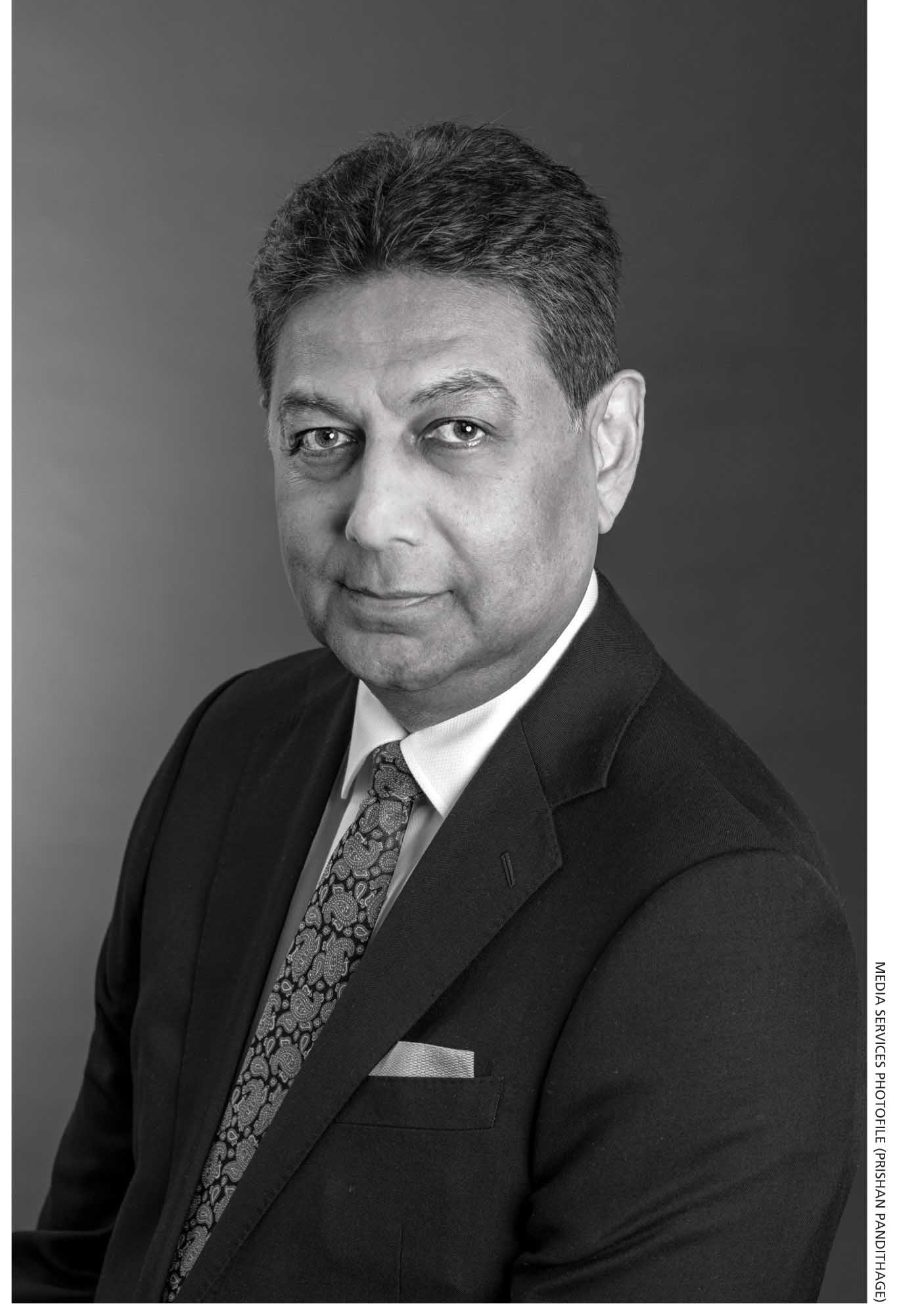
Harsha Amarasekera PC

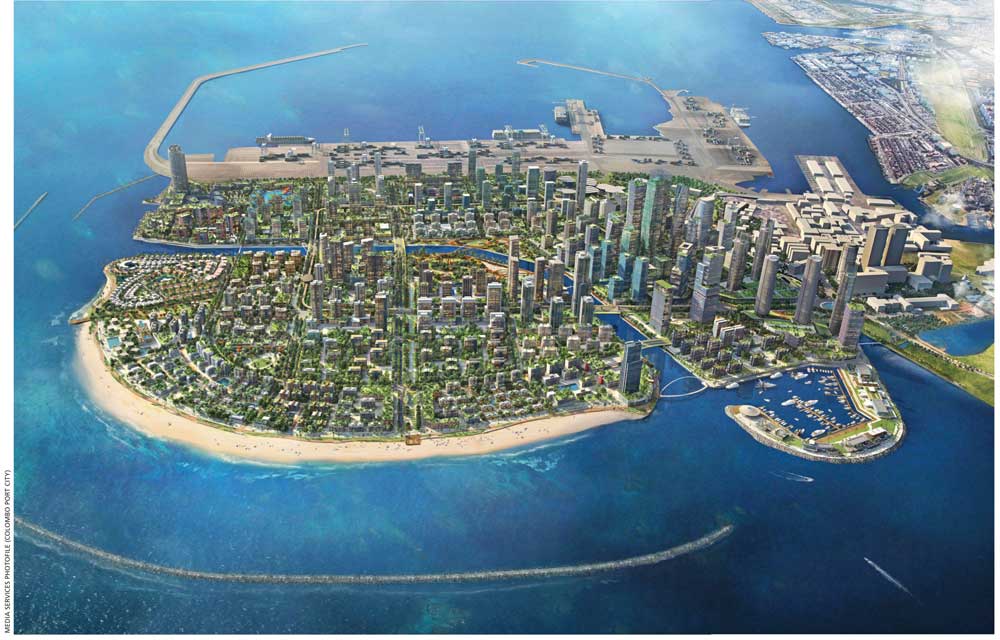
Rising from Colombo’s coastline, Colombo Port City represents a bold attempt to redefine Sri Lanka’s place in the regional economy. More than a major real estate development, it is envisioned as a Special Economic Zone (SEZ) capable of attracting international business, investment and expertise while positioning the country as a competitive hub for the export of services.
Its ambitions extend beyond physical infrastructure: Colombo Port City seeks to create an integrated platform for business, investment, innovation, lifestyle and regional connectivity, with the potential to reshape the country’s economic and commercial landscapes.
Turning that vision into enduring economic value will require regulatory certainty, consistent policies, institutional credibility and an efficient operating environment.
The six member Colombo Port City Economic Commission (CPCEC), appointed by the president in 2024, has a pivotal role to play in building investor confidence and ensuring that Colombo Port City contributes meaningfully to the wider national economy.
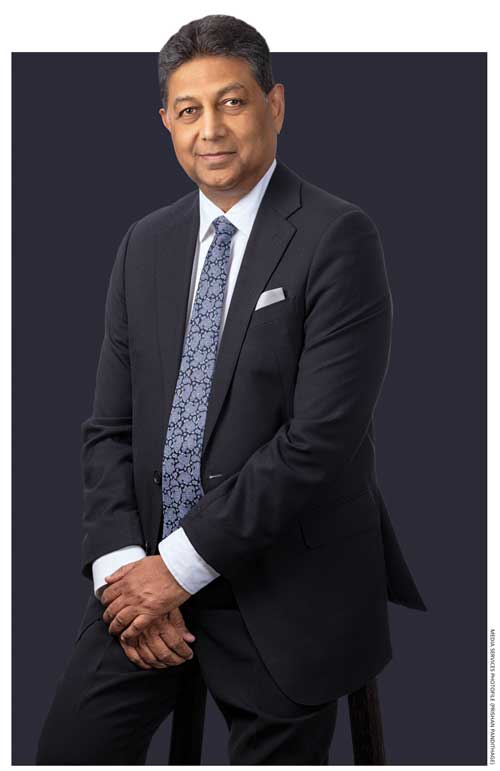
At the helm of the commission is President’s Counsel Harsha Amarasekera, whose career spans the interconnected worlds of law, business and leadership.
Recognised as one of Sri Lanka’s leading corporate and commercial lawyers, Amarasekera brings decades of legal experience together with extensive boardroom exposure across banking, manufacturing, agriculture, energy and infrastructure. He must therefore, know how regulation, governance and investor confidence influence the direction of businesses and economies.
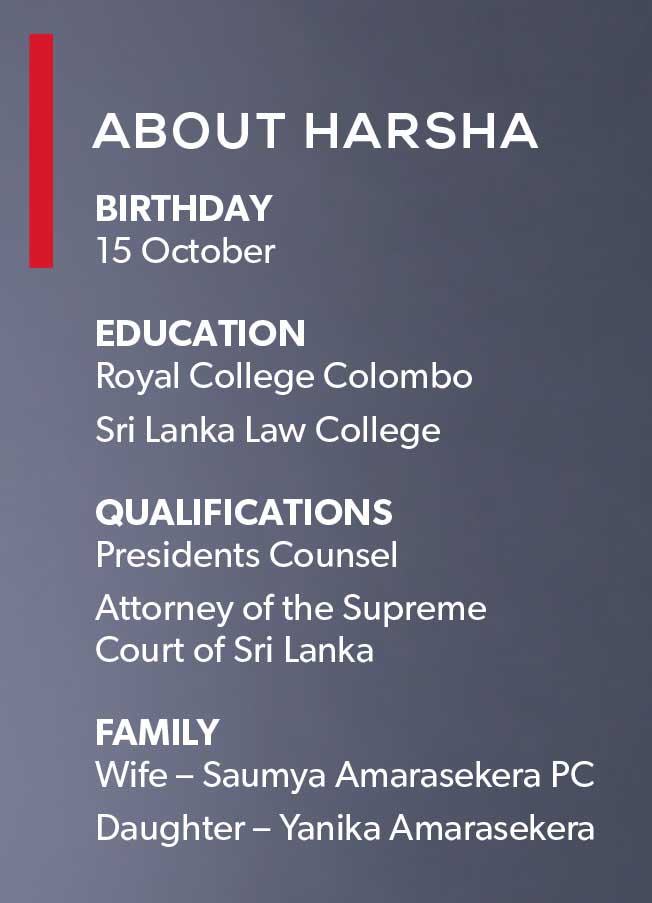
As chairman of prominent listed entities including Sampath Bank and CIC Holdings, he has helped guide organisations through periods of economic uncertainty, structural change and emerging opportunities.
Colombo Port City is at an important juncture for the nation. As Sri Lanka seeks to rebuild economic confidence, attract foreign capital and expand beyond its traditional sources of export income, the development offers an opportunity to strengthen its position as a regional services hub.
Achieving this will also depend on improving the ease of doing business, and ensuring that opportunities generated within Colombo Port City extend beyond its geographical boundaries to create wider commercial activity and national economic value.
Drawing on his experience across the legal and corporate sectors, Amarasekera offers a considered assessment of the progress made so far, the challenges that remain and the role Colombo Port City could play in shaping Sri Lanka’s next phase of economic development.
– Compiled by Tamara Rebeira
Q: Colombo Port City has long been spoken of as a transformative national project. At this stage, how would you define its role in Sri Lanka’s macroeconomic future?
A: Colombo Port City is precisely the type of platform currently required to support Sri Lanka’s and Colombo’s next phase of growth. Its impact is not confined to real estate.
Rather, it brings together commercial activity, infrastructure development, value creation and tourism related opportunities that have the potential to generate a wider chain reaction across the economy. Colombo Port City should be viewed as Sri Lanka’s principal platform for economic transformation, and a globally recognised gateway to South and Southeast Asia.
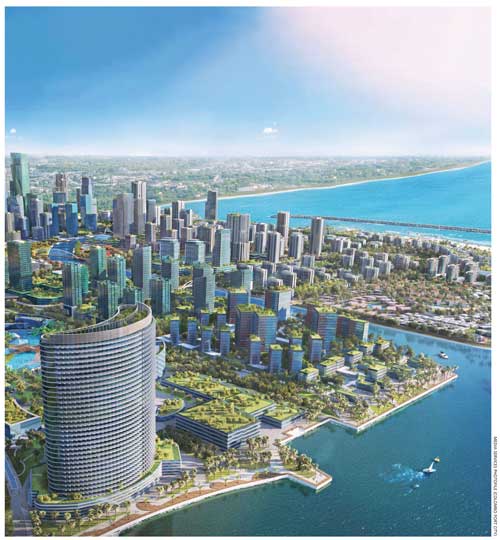
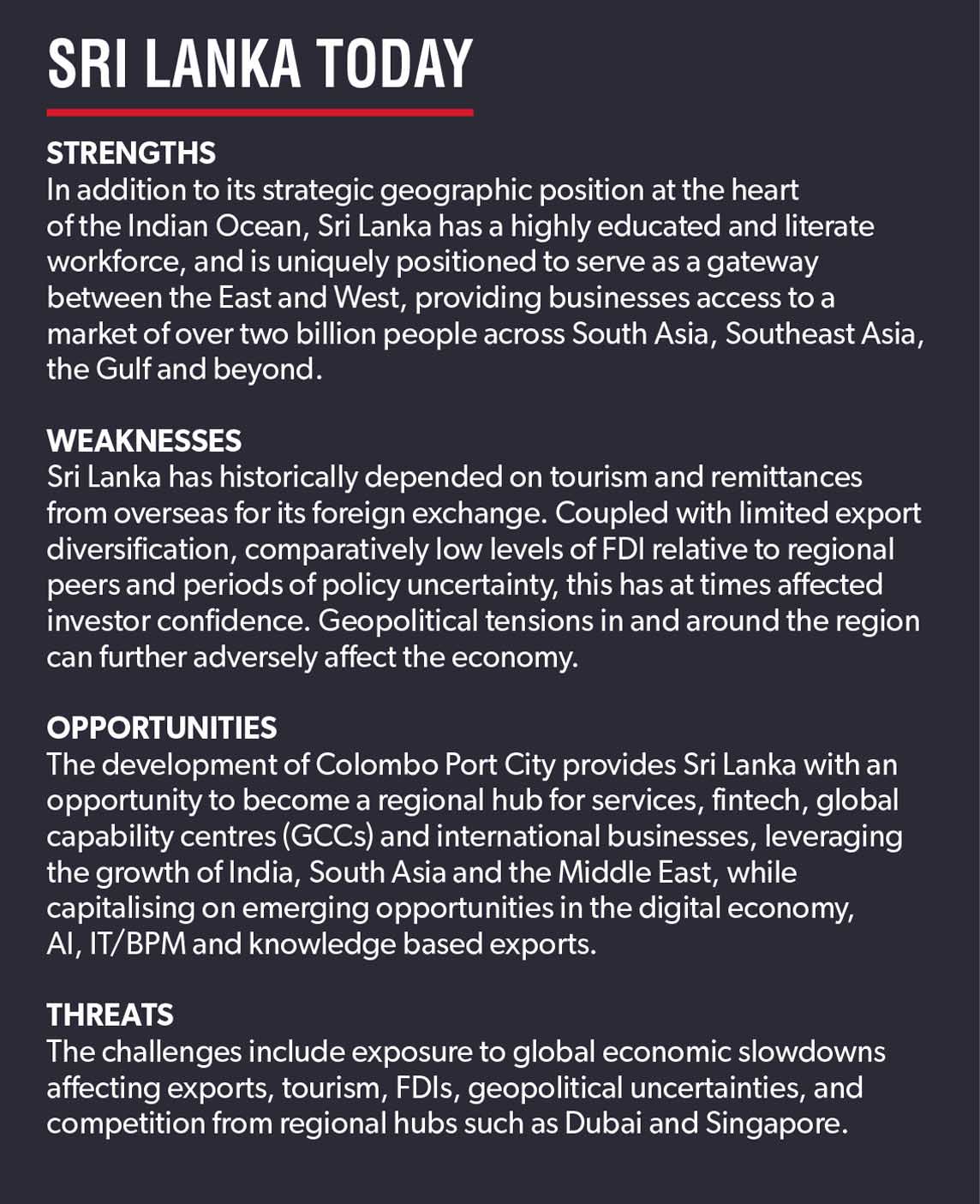
Colombo Port City has the unique potential to diversify the country’s growth model beyond traditional sectors such as apparel, tourism, tea and worker remittances. The Colombo Port City framework positions it as a service oriented Special Economic Zone (SEZ) designed to attract businesses across sectors such as trade and logistics, technology, professional services, innovation, regional headquarters and tourism.
We currently have over 150 companies registered within the Colombo Port City SEZ, creating approximately 10,000 direct job opportunities – they operate from over 150,000 square metres of office space, utilising more than 1,000 residential units that contribute substantially to economic activity across multiple sectors.
It is these registered companies and the business activities they create that result in increased demand for larger real estate investments to meet their commercial, residential and retail requirements.
This model has become the catalyst for attracting higher levels of foreign direct investment (FDI) into Colombo Port City. It is also important to recognise that the Colombo Port City Special Economic Zone will generate a continuous inflow of foreign exchange into Sri Lanka beyond the traditional definition of FDIs as companies registered within the Colombo Port City framework pay their monthly operational expenses in foreign currency.
Salaries, and office and apartment rentals, will therefore be supported by a recurring inflow of foreign exchange for as long as these companies operate within the SEZ, thereby contributing positively to the balance of payments and supporting the exchange rate.
In terms of construction activity, three significant high end apartment projects have already commenced at Colombo Port City. These developments will add value not only to Colombo’s ecosystem but also the wider construction industry including city based businesses and smaller local enterprises.
The Colombo Port City Special Economic Zone has the potential to become the centrepiece in positioning Colombo and Sri Lanka as home to the first master planned city in South Asia.
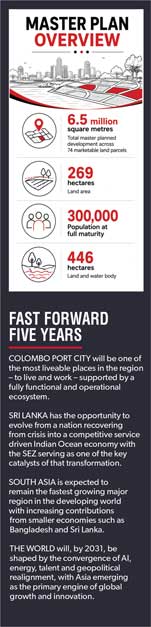
With an investment of US$ 1.4 billion to date in land reclamation and infrastructure development, and a further 12 billion dollars or more required to develop the aggregate of 74 land parcels earmarked for development – creating 3.3 million square metres of residential space, 1.15 million square metres of retail, hospitality and other such spaces, and 1.15 million square metres of commercial space – the SEZ represents Sri Lanka’s most significant opportunity to transition from a small consumption driven economy to a globally connected services led economy complemented by world-class lifestyle and hospitality experiences.
If executed effectively and in the fullness of time, it could become one of the country’s primary engines for attracting FDI, generating foreign exchange, creating high value employment, facilitating technology transfer and strengthening economic integration.
Colombo Port City has the unique potential to diversify the country’s growth model beyond traditional sectors such as apparel, tourism, tea and worker remittances
Colombo Port City’s true success will be measured not only by the buildings constructed, businesses established, capital attracted and jobs created but also by the lasting value it delivers to every Sri Lankan for decades to come.
Q: The country is emerging from a period of economic stress and working to restore investor confidence. How can the Special Economic Zone help reposition Sri Lanka internationally – and change the way global investors view the country?
A: The macroeconomic future and the way global investors view the country are interlinked.
To this end, the central message the Colombo Port City Economic Commission (CPCEC) seeks to convey is that Colombo Port City is not simply a land development adjoining the city’s central business district; it is Sri Lanka’s principal platform for rebuilding investor confidence, strengthening international positioning, and creating a globally connected services led economy complemented by world-class lifestyle and hospitality experiences.
The SEZ’s value proposition rests on a powerful combination of factors: a strategic location at the heart of the Indian Ocean, immediate proximity to Colombo’s commercial core, access to a market of more than two billion people across South and Southeast Asia and the wider region, a business environment designed for international investors, and Sri Lanka’s longstanding reputation for neutrality.
In an increasingly complex geopolitical environment ‘neutrality’ can become a competitive advantage for companies seeking a stable regional base from which to service multiple markets. In that light, we see Sri Lanka as the Switzerland of the South Asian region.
International investors today are looking for stability, predictability, good governance, efficiency and continuity
International investors today are looking for stability, predictability, good governance, efficiency and continuity. Colombo Port City is being positioned to meet precisely those expectations. Through the CPCEC’s single-window investor facilitation framework, companies are able to engage with one dedicated authority, obtain approvals more efficiently, access Grade A residential and office spaces as they become available, and secure the operational support required to create a safe and healthy lifestyle, and establish and scale regional business activities.
This is particularly relevant for businesses in established hubs such as Dubai, Singapore, and across the wider Gulf and Asian regions, where companies are increasingly adopting multi location operating models.
The SEZ can serve as a complementary regional extension: a cost effective, well connected and business friendly base, from which global companies can support customers, partners and operations across South Asia, the Middle East, Africa and the wider Indian Ocean region.
The visible progress now taking place is also important as the Colombo Port City moves from planning to execution. The commitment of approximately US$ 500 million by some of Sri Lanka’s eminent developers across residential and marina waterfront developments demonstrates confidence, and creates a robust platform from which to engage foreign investors.
When investors see construction activity, committed developers, improving regulatory clarity and a pipeline of further projects, confidence begins to translate into tangible interest.
The commitment of approximately US$ 500 million by some of Sri Lanka’s eminent developers across residential and marina waterfront developments demonstrates confidence
That confidence must now be projected internationally.
The success of the initial developments can create a domino effect, encouraging foreign investors to explore opportunities independently or through joint ventures with local partners.
More importantly, it signals that Colombo Port City is no longer only a long-term vision; it is becoming an investable operational platform with an essential role in Sri Lanka’s economic recovery and regional competitiveness.
However, as to how the international investment community views the SEZ will depend largely on confidence in governance, continuity and execution.
This requires consistency in decision making, transparency in regulation, responsiveness to investors, adherence to international best practices and the continued strengthening of the single-window investment facilitation process.
At the same time, Colombo Port City must maintain clear standards.
The objective is not to attract investment at any cost; it is to attract legitimate long-term businesses that have generated capital lawfully, operate transparently and adhere to all laws on anti-money laundering, countering the financing of terrorism and proliferation financing.
Within those parameters, our objective is to position the SEZ as a preferred destination for investment.
Q: You have referred to Colombo Port City as a potential catalyst for growth. What must happen for that promise to translate into tangible benefits for the country, its people and the economy?
A: Together with all the other members of the commission, I took up this responsibility towards the end of December 2024 and we commenced work in January last year. When I first used the words ‘a potential catalyst for growth,’ not a single investor had commenced any form of development activity.
Today, four developments representing an investment of approximately US$ 500 million are already underway. The SEZ no longer needs to promote itself alone; these developers are taking it to the world.
Using globally and regionally recognised personalities, they are producing world-class advertising campaigns that position Colombo Port City across the region. In effect, they have become ambassadors for the development. This is an important foundational step in attracting further investment.
However, words alone are not sufficient…
We must put in place the essential elements required to build an ecosystem that makes Colombo Port City not only an attractive place to visit but also an exceptional place to live and work. It must be somewhere people genuinely want to relocate to, base their families and build lifestyles.
To achieve this, the SEZ must offer internationally recognised education and healthcare institutions that not only meet the needs of residents and expatriate families, but also attract foreign students and patients from across the region. This includes a high quality school, a reputable university, and an internationally accredited hospital capable of serving both local and international healthcare needs.
We are working towards calling for proposals to establish an internationally recognised school, a university and a hospital. Each development would be located on a dedicated marketable land parcel and awarded to investors assessed by a committee against clearly defined pre-published criteria.
We must put in place the essential elements required to build an ecosystem that makes Colombo Port City not only an attractive place to visit but also an exceptional place to live and work
Such projects would be fundamental not only to the success of Colombo Port City but also the broader national interest. They would facilitate knowledge transfer, reduce the outflow of foreign exchange, and potentially generate new foreign exchange earnings by attracting students and patients from countries across the region.
Q: Many countries in the region are competing aggressively for foreign investment. What is Sri Lanka’s strongest proposition through the SEZ – is it location, lifestyle, talent, regulation, cost competitiveness, tax and other incentives, access to South Asia or a combination of these?
A: I believe it is a combination of factors with location being the first and most critical. As reclaimed land immediately adjacent to Colombo’s central business district, it would be difficult to identify a more strategically positioned site.
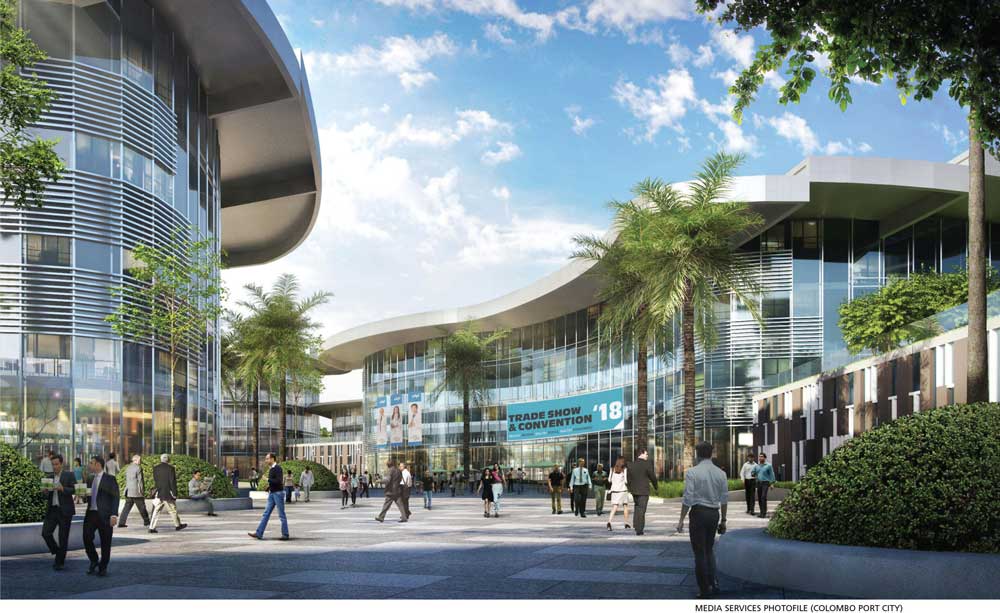
Sri Lanka itself may offer an attractive location but a SEZ of this nature would not necessarily succeed if it were situated in a remote area. Colombo Port City’s proximity to existing infrastructure, five-star hotels and key transport links creates a distinctive opportunity to position it as a truly unique destination within the region.
The marina development, which will create spaces for recreation, retail and hospitality, and have the capacity to berth approximately 200 vessels, will be the first of its kind between Dubai and Phuket. This enhances the SEZ’s appeal, creating a character and atmosphere for both Colombo Port City and Colombo that would be difficult to replicate elsewhere in South or Southeast Asia.
And the second factor is liveability.
While destinations such as Dubai, Singapore and other similar locations offer a sophisticated lifestyle, Sri Lanka provides something many destinations cannot offer: convenient access to the liveability factor including beaches across the island, the scenic hill country, archaeological sites, diverse wildlife and a rich cultural heritage, all within a relatively short distance.
Therefore, we are positioning Colombo Port City as an attractive base for global capability centres, innovation hubs and regional headquarters. It should be a place where expatriate professionals and their dependants can live and work in a world-class environment while enjoying a genuinely liveable destination during their leisure time.
We are working towards calling for proposals to establish an internationally recognised school, a university and a hospital
Colombo Port City also benefits from strong connectivity to South Asia, the wider Asian region and beyond. Together, these factors strengthen its competitiveness.
In terms of incentives, we may be at the lower end of what some competing destinations offer. However, operating within the framework of the IMF programme requires us to work with what is available, and market the SEZ on the strength of its location, neutrality, liveability, infrastructure, connectivity and overall value proposition.
Q: How do you see Colombo Port City fitting into the country’s broader development model? Should it be viewed primarily as a financial centre, services hub, lifestyle destination, real estate development or an integrated platform that combines these elements?
A: I would say the latter.
Colombo Port City should be viewed as an integrated platform that brings together all these elements rather than being defined by any single attribute. While it has often been described as a ‘financial centre,’ it’s much broader in scope.
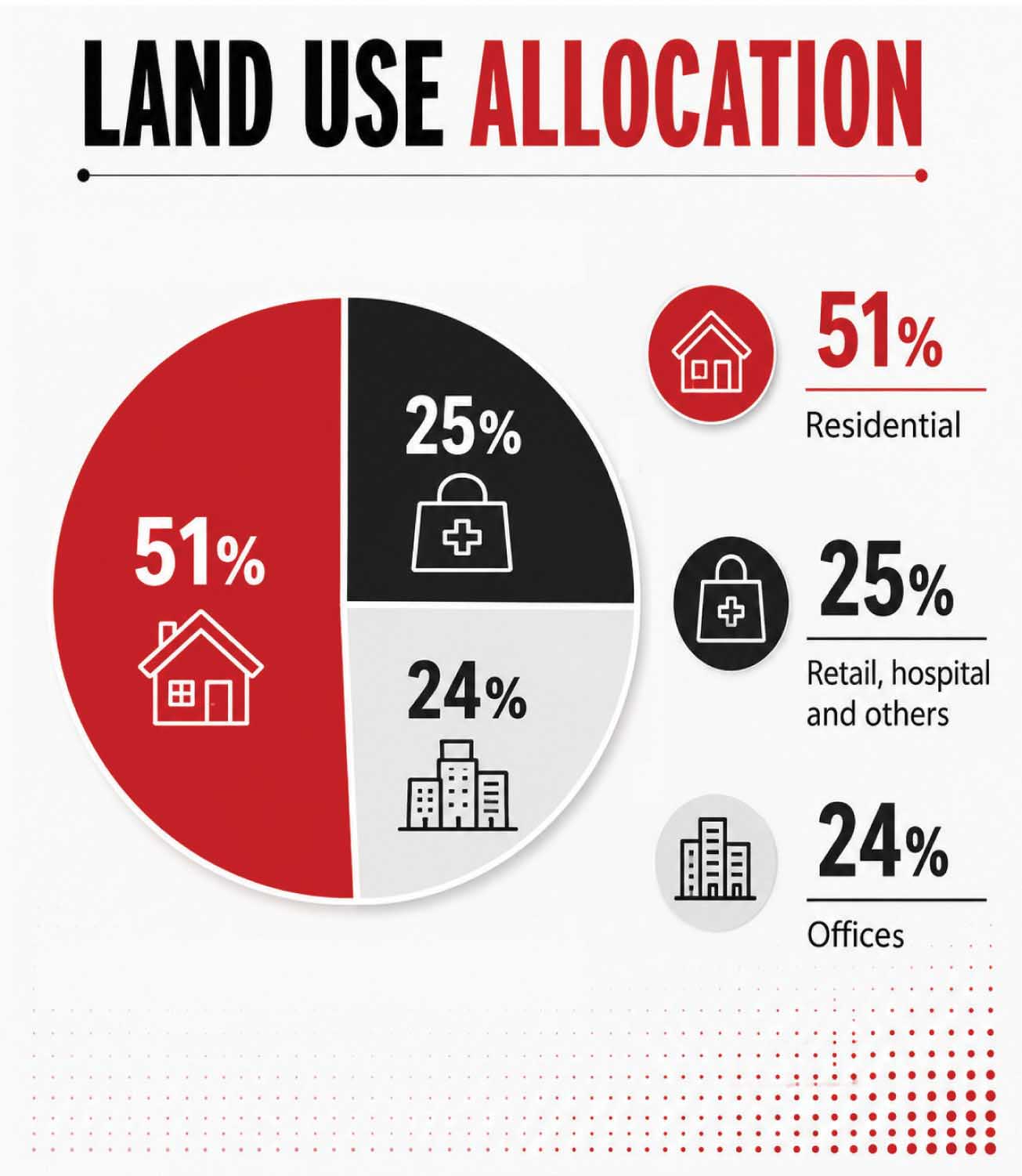
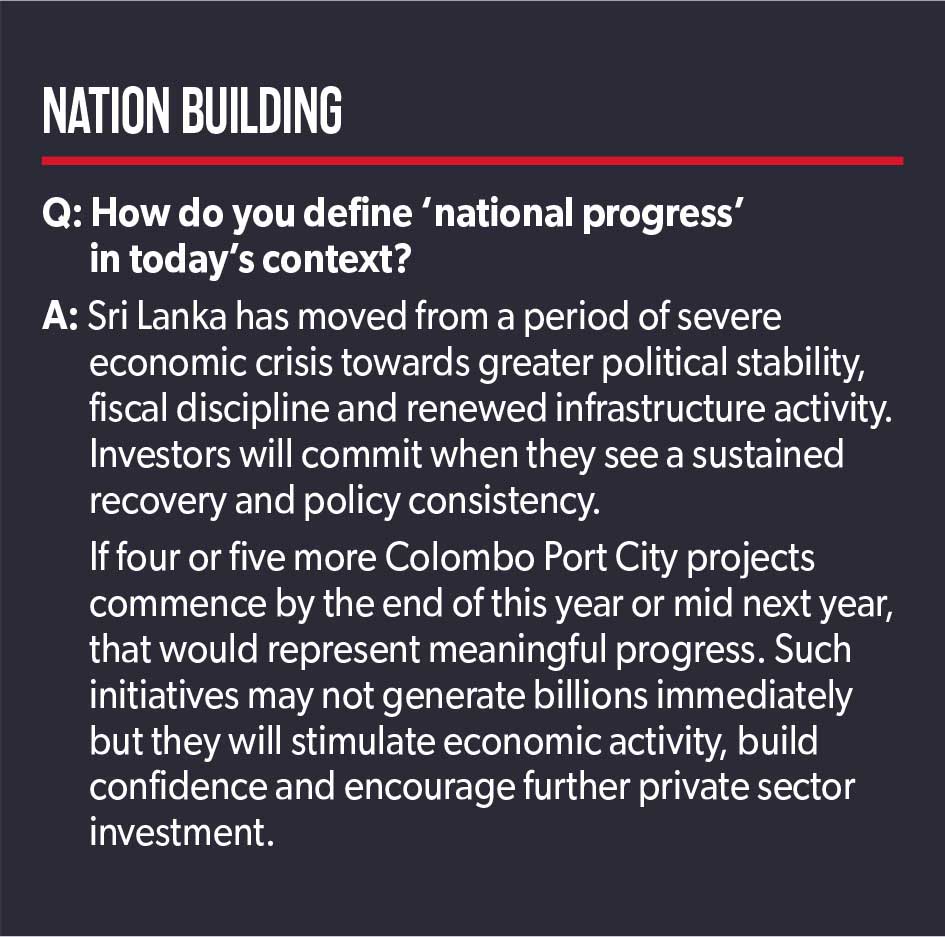
Of the 6.5 million square metres of master planned development across the 74 marketable land parcels, 50 percent is designated for residential spaces – a fact that is often overlooked. Of the balance, 25 percent is allocated for retail, leisure, hospitality, health, education and other such social developments while only 25 percent is designated for commercial activity.
At full maturity, approximately 300,000 individuals are expected to live and work within the SEZ, enjoying a high quality of life. It would be comparable to concentrating a significant urban population within a highly planned mixed-use environment spanning 278 hectares.
The potential contribution this could make to Sri Lanka’s GDP and wider economic activity is considerable.
Colombo Port City will help position the commercial capital as a destination in itself. Business travellers who presently visit Colombo for only a few days may in the future, bring their families as a much broader range of lifestyle, leisure and recreational experiences will be available.
The cumulative economic impact of these activities may be difficult to quantify but the long-term benefits and economic spillovers could be substantial.
Q: The Colombo Port City Economic Commission is positioned as a single-window investment facilitator. What does this mean in practical terms for investors – and how far has the commission been able to simplify approvals, reduce delays and create a more seamless investor journey?
A: It means exactly what it is intended to convey – investors deal directly with the CPCEC, and our objective is to make the investment process as straightforward and efficient as possible.
To date, we have not required investors to navigate from one authority to another.
For infrastructure projects, each plot of land has a predetermined gross floor area, height restriction and designated use. Utilities are already provided up to the site boundary and the SEZ has its own planning committee. As a result, I believe it is considerably easier to undertake a project within Colombo Port City than in many other parts of the country.
That is not to suggest that every process is already seamless. Unlike the Board of Investment of Sri Lanka (BOI), which has been operating for more than four decades, we are still a relatively new institution and business activity is only now beginning to gather momentum.

However, every challenge raised by an investor is treated as an issue that must be resolved. Once a solution is identified within the legal framework and authority available to us, it is incorporated into our standard operating procedures. This ensures that future investors can move through the same process more efficiently.
Colombo Port City does provide a genuine single-window mechanism but is it entirely seamless today? Not yet.
However, we’re continuously improving the process, and I’m confident that we will achieve the level of efficiency and responsiveness investors expect from a leading international investment destination.
Q: Would you agree that red tape, bureaucracy and since of late, a reluctance on the part of state officials to grant approvals for projects led by incoming foreign investors – for fear of repercussions in the future – are undermining the prospects that a mega project such as the Colombo Port City has? And if so, where should the solutions come from – and what are they?
A: In practical terms, red tape and bureaucracy have historically impeded both local and foreign investment, and affected the ease of doing business in Sri Lanka.
At the same time, foreign investment has been identified by the government as a key pillar of Sri Lanka’s economic development strategy.
As far as Colombo Port City is concerned, there has been a concerted effort to ensure that projects can progress efficiently and continuous efforts are being made to enhance the process. Whenever amendments to legislation or regulations have been required, we have received the full cooperation and support of the relevant authorities.
The marina development, which will create spaces for recreation, retail and hospitality, and have the capacity to berth approximately 200 vessels, will be the first of its kind between Dubai and Phuket
We are also fortunate that the SEZ now falls directly under the president in his capacity as the minister of finance, which has enhanced the project’s credibility and provided a strong level of institutional support. The secretary to the treasury is closely involved in several of the larger initiatives currently under consideration and that engagement has been instrumental in advancing key projects.
It is also important to recognise that many of the projects being developed within Colombo Port City are service based and differ fundamentally from traditional investments undertaken in Sri Lanka. As a result, certain issues require careful evaluation before a project can advance to the next stage.
Therefore, I would not necessarily characterise these requirements as ‘red tape.’ Rather, they reflect the process of establishing new frameworks and operating models.
Once those pathways have been developed and tested, subsequent projects should be able to move forward far more efficiently. That is the foundation we are currently building.
Q: What are investors asking you most often at this time? Are their concerns mainly around regulation, taxation, foreign exchange stability, repatriation of profits, political stability, land, timelines or Sri Lanka’s broader macroeconomic outlook?
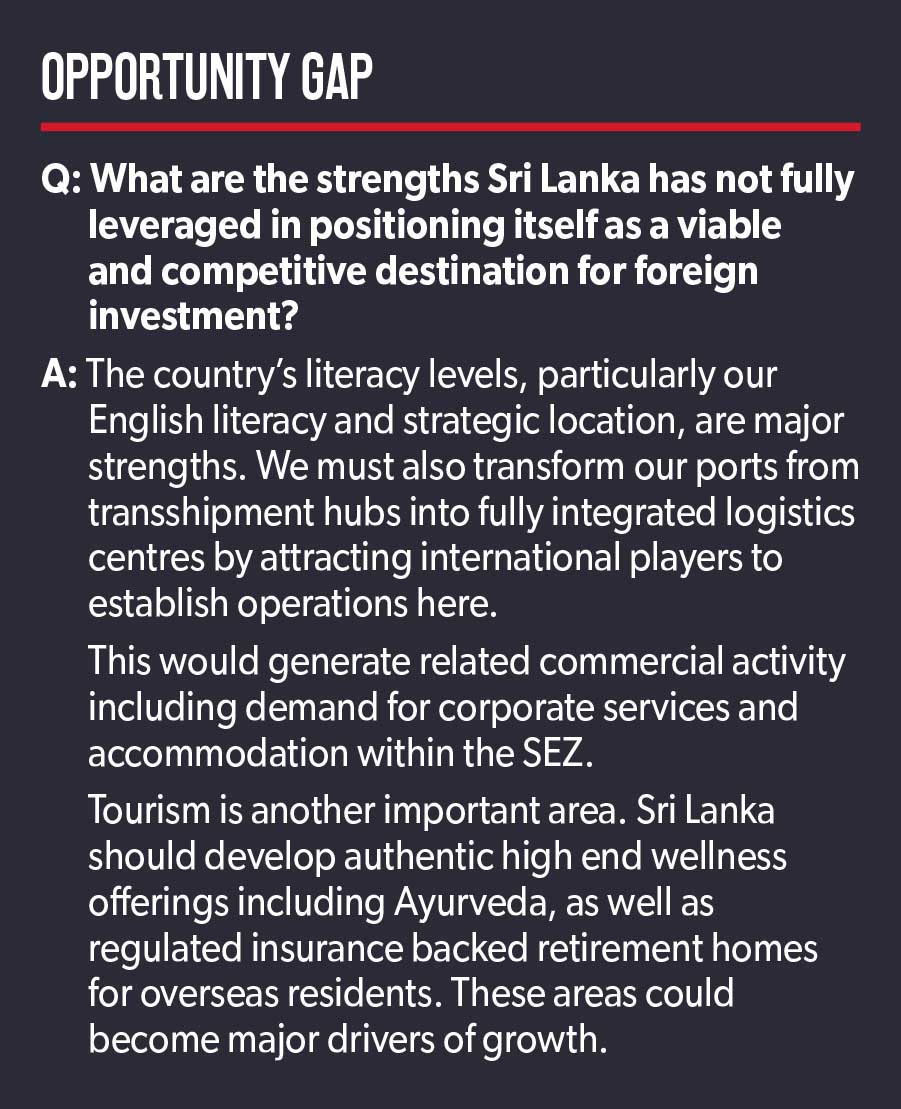
A: Political stability is currently not a major concern. Sri Lanka today benefits from a relatively stable political environment and consequently, this is not a theme that arises frequently in investor discussions.
The first issue investors raise is consistency: investors want confidence that the framework in place today will remain stable, predictable and transparent over the long term.
And the second relates to the unfettered access to foreign currency earned and deposited in bank accounts in Sri Lanka, followed closely by assurances that such foreign currency will not be mandatorily converted into Sri Lankan Rupees. In this regard, I believe we have been able to demonstrate that appropriate safeguards exist to provide investors with the assurances they desire.
The final issue relates to the ownership of land within the Colombo Port City. This matter is clearly addressed by the Colombo Port City Economic Commission Act, which states that ownership of the 446 hectares comprising land and water bodies rests with the government of Sri Lanka, which has empowered the CPCEC to transfer land to investors on a leasehold basis. So investors leasing land enter into agreements with the CPCEC.
As this authority to lease the marketable land located within the SEZ is vested in the CPCEC by legislation, investors derive considerable confidence from the certainty and clarity this provides.
Q: The 2026 amendments to the Colombo Port City Economic Commission Act have been described as improving governance, oversight and investor certainty. From your perspective, what is the most important shift introduced by these revisions?
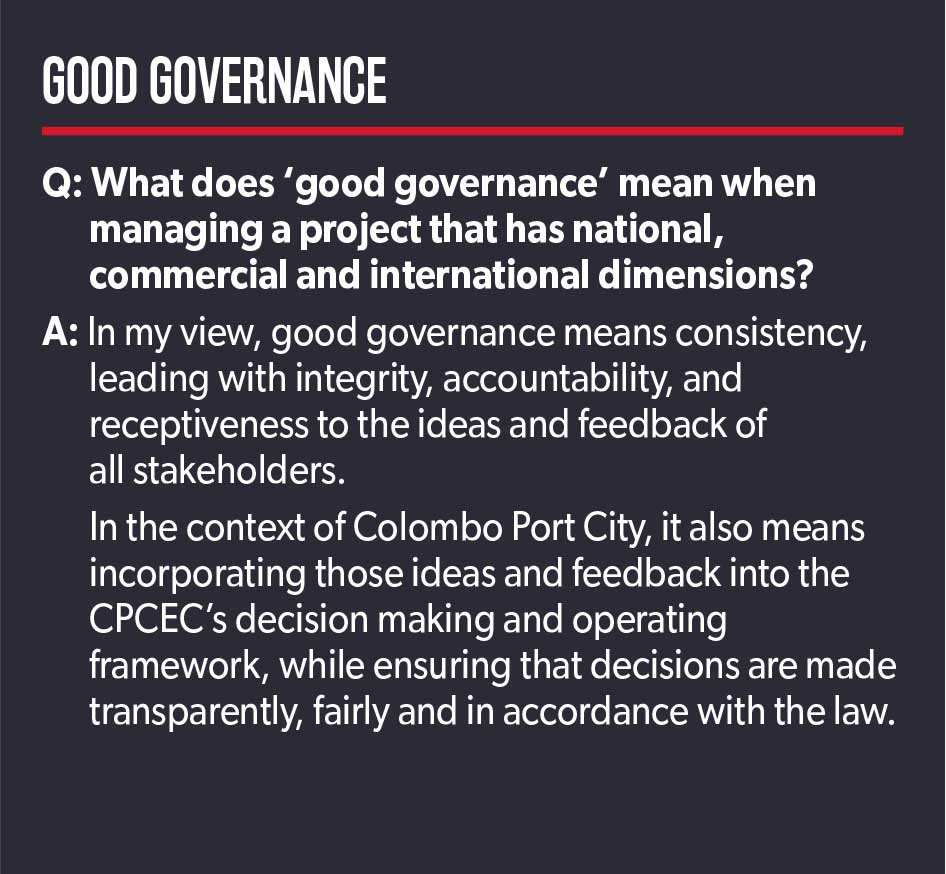
A: The most significant shift introduced by the amendments is the move towards greater transparency and a rules based approach to investment.
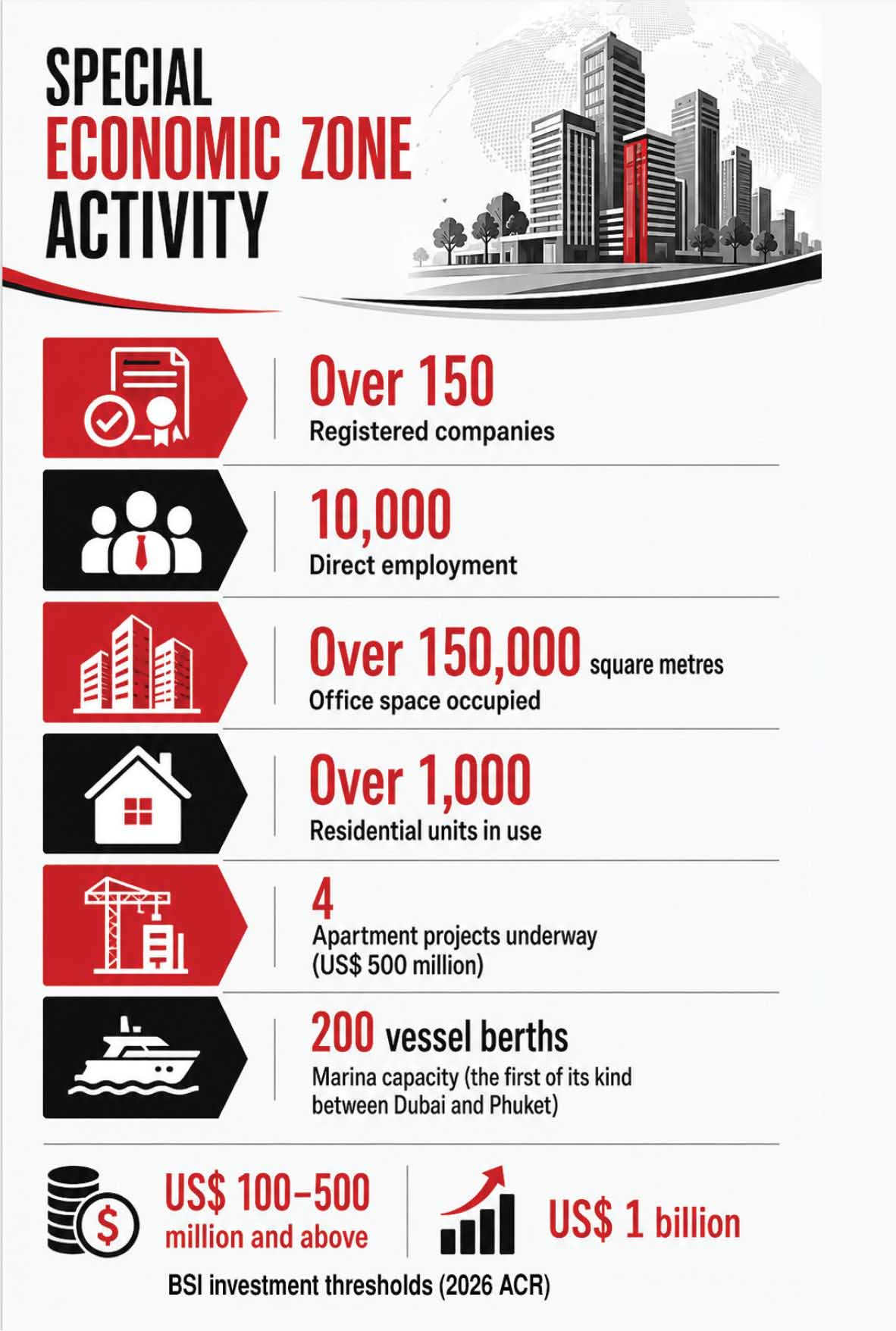
Previously, the commission could recommend a project to the cabinet as a primary development without a clearly defined set of criteria. Today, specific eligibility requirements have been established for Businesses of Strategic Importance (BSI) with investment thresholds ranging from US$ 100 million to 500 million and above one billion dollars.
Under the revised framework, proposals are submitted to the ministry of finance for technical evaluation before being referred to the cabinet for consideration. This provides a structured and transparent decision making process.
The cabinet now considers projects only after the required evaluation has been completed. Furthermore, and also very importantly, the amendments introduced provisions to ensure the monitoring of businesses that have been granted incentives as well as a process through which any incentives granted may be suspended or revoked.
In my view, this has notably strengthened governance, transparency and public accountability, particularly in relation to the granting of tax concessions and investment incentives.
Q: The SEZ has been positioned as a future financial and services hub. What building blocks must be in place before international financial institutions take that ambition seriously?
A: I believe there is a misconception that should be addressed.
Colombo Port City is often described as a financial hub but it should more accurately be described as previously mentioned, as a ‘service oriented Special Economic Zone.
The SEZ has been designed primarily to support the export of services. While financial services will form part of that ecosystem, the broader objective is to attract a wide range of export oriented service industries.
To achieve this, we must provide world-class infrastructure that enables companies to establish operations quickly and seamlessly.
One of our key advantages is the flexibility available in relation to expatriate employees. There is no fixed limit on the number of visas that may be recommended when a company seeks to relocate its operations to the SEZ.
For example, if a company currently operating a regional office in Hong Kong wishes to relocate it to Colombo Port City, it might need to be fully operational from day one. If this requires 100 employees to relocate, we would be in a position to facilitate those visas within a matter of days, enabling the company to commence operations almost immediately.
That level of facilitation may not be as readily available in many competing jurisdictions. Measures such as these are intended to make Colombo Port City future ready for regional and global businesses.
In each case, the commission will assess whether attracting the proposed business is in the national interest and where appropriate, recommend the necessary visas to the Controller General of Immigration and Emigration.
Q: Would you agree that the gateway to the country – and thus, Colombo Port City– is our main international airport in Katunayake? And if so, how would you critique the impression that quality foreign investors may have when they land at the Bandaranaike International Airport (BIA), when comparing their experience with other nations in the region?
A: BIA is currently operating at or near full capacity and is no longer able to accommodate growing passenger volumes as effectively as it should.
The need for expansion has long been recognised by successive governments. Unfortunately, the economic crisis delayed those plans. The project has since been revived and its successful implementation will be critical not only to the future success of the SEZ but also Sri Lanka’s broader economic development objectives.
If Sri Lanka is serious about increasing tourist arrivals from current levels to seven or eight million visitors annually, airport expansion is not optional; it is essential. Once completed, the development will significantly improve the country’s connectivity, strengthen Colombo Port City’s attractiveness as an international destination and deliver substantial economic benefits across Sri Lanka.
Q: While there have been encouraging signs that local investors – especially in the property sector – are entering the Colombo Port City, what expectations do you have of quality foreign investors following suit? And from which regions of the world do you except there to be an interest going forward – for example, China, India, the Middle East or Europe?
A: We are seeing encouraging levels of interest from the Gulf region as well as a potentially substantial investment from China that we hope will materialise in the near term as a major commercial development.
We are positioning Colombo Port City as an attractive base for global capability centres, innovation hubs and regional headquarters
And we’re developing a strategy to attract investments in developments from countries across the region including India, Pakistan and Bangladesh.
We are also witnessing a growing interest from Europe, particularly in relation to infrastructure projects. What we now need is for one or two of these projects to move forward in order to encourage other investors to follow suit. These are the regions on which we’re currently focussed.
To date, we have not seen a major investment interest from India. However, given India’s scale, proximity and economic growth trajectory, we remain optimistic that Indian investors will become an increasingly important part of the Colombo Port City story in the years ahead.