LMDtv 1
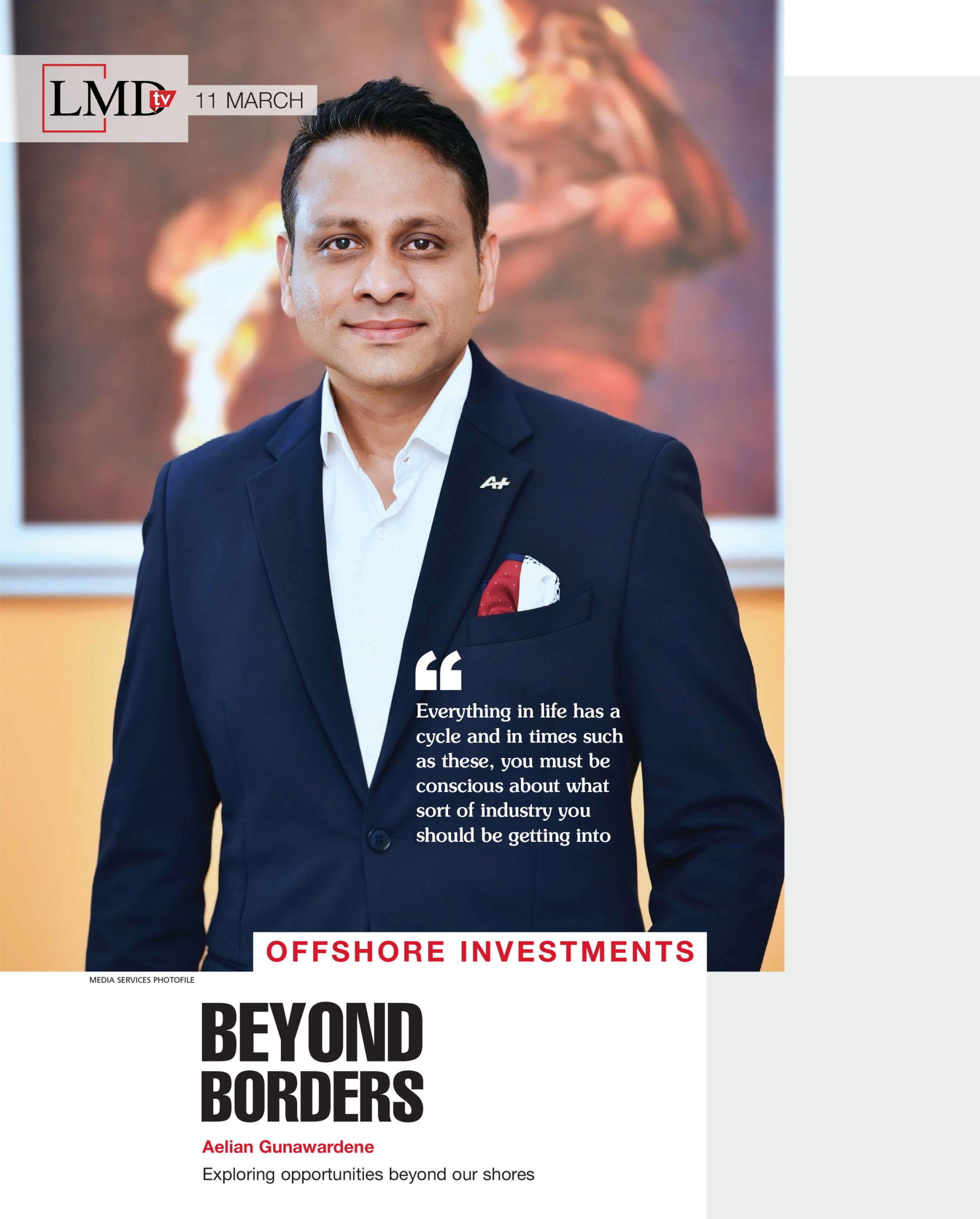
Sri Lanka has always been keen to expand its business overseas – and to this end, offshore investments come as a natural progression. Founder and Managing Director of JAT Holdings Aelian Gunawardene noted that once an enterprise reaches a stage where local market opportunities are exhausted, focussing on foreign markets becomes beneficial.
In a recent LMDtv interview, he explained that when a business achieves a certain level of success, financial strength and reputation, it should consider expanding to foreign markets. He urged companies to evaluate factors such as convenient access, proximity, cultural similarities and other aspects that will help facilitate such forays.
Once a suitable country is identified, it is equally important to assess whether there is sufficient demand for the product, he added.
Gunawardene highlighted several promising destinations for offshore investments by Sri Lankan businesses including Bangladesh, Kenya, Vietnam and Malaysia to name a few.
He continued: “Now that there is peace in Bangladesh and a new government in place, there’s a lot of opportunity in that country. Africa also welcomes investments and accepts Sri Lankan companies with open arms.”
Many Sri Lankan businesses have ventured into manufacturing and power in Africa, and are doing remarkably well, he added.
Nigeria is another market with opportunities particularly in gas generated power. Gunawardene explained that the political situation is relatively relaxed and the hierarchy can be approached easily in Nigeria.
He elaborated: “If they recognise that you are bringing a good opportunity, they open their doors and approvals can be processed with ease.”
While opportunities are abundant, there are several risks that companies need to navigate when taking businesses beyond Sri Lankan shores. Currency fluctuations remain one of the most pressing challenges.
As Gunawardene pointed out, “if the host country’s currency depreciates sharply, then the cost of your export product will increase significantly.”
Geopolitical instability is another global threat and the crisis in the Middle East is creating a ripple effect across the world.
Gunawardene observed that oil shortages impact fuel prices, transportation of goods including insurance, freight and production expenses, leading to an overall increase in operational costs as well.
“While it is necessary for businesses to remain aware of geopolitical developments, one cannot necessarily hold back from investing and expanding due to such threats. Everything in life has a cycle and in times such as these, you must be conscious about what sort of industry you should be getting into so that you can shield yourself against such risks,” he asserted.
Gold is another valuable sector to invest in. Gunawardene opined that “if you’re in Ghana or Nigeria, entering the gold mining industry is fantastic – because the industry in that part of the world is generally shielded against many geopolitical risks.”
He explained that it is also important to ensure that the principles of corporate governance are adhered to when taking a business offshore.
“In Sri Lanka, everything we do must be within corporate governance frameworks. However, for example many organisations in Bangladesh may not follow governance principles to the same extent. Banks and the political establishment recognise and respect companies that operate as a responsible corporate citizen when these frameworks are followed,” he posited.
Adhering to corporate governance comes with both advantages and costs: although it costs you to be a good corporate citizen, you don’t need to look over your shoulder in the long term. He noted that this will help an organisation grow from strength to strength.
Gunawardene summed up: “I believe that for a business to be successful, it cannot be set up with loopholes in the system; itmust operate transparently, pay its taxes with a smile, and hope and trust that these contributions will be invested in the right manner.”