Beyond a Seat at the Table: Let Women Farmers Set Sri Lanka’s Rural Agenda
2026: International Year of Women Farmers
By Vimlendra Sharan, FAO Representative for Sri Lanka and the Maldives
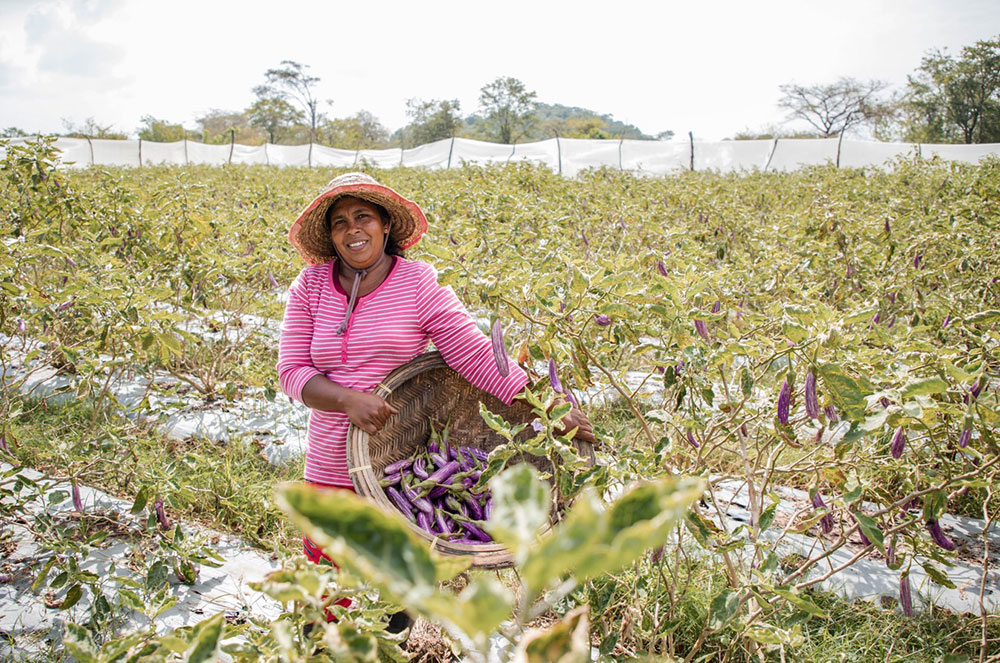
When Sri Lanka talks about “the farmer”, the mental picture is still too often a man in a paddy field. Yet across our agriculture and plantation economies, it is women who plant, weed, harvest, process, sort, and sell while also carrying the invisible workload of water, fuel, care, cooking, and community life. The UN’s declaration of 2026 as the International Year of the Woman Farmer is not a ceremonial footnote. It is a reminder that our national food security, and the resilience of rural livelihoods, rests on women whose labour remains undercounted, underpaid, and under supported. Too often women farmers remain unserved by institutions in how we design extension services, target investments or shape leadership in farmer organisations and value chains.
2026 as the International Year of the Woman Farmer offers the country a timely opportunity, not only to celebrate women’s work, but to consolidate gains already underway and accelerate reforms that can unlock further progress. The purpose is not to point fingers. It is to acknowledge a practical truth: when women farmers have equitable access to resources and decision-making, the whole food system becomes more productive, resilient, and inclusive.
There is encouraging momentum to build on. Sri Lanka has a strong foundation of community networks, women’s groups, and local enterprise supporting household food security and diversification. Many women farmers have demonstrated remarkable innovation, adopting climate-smart practices, strengthening home-based production, and keeping farms running through economic stress and climatic shocks. Development partners, civil society, and public institutions have also expanded attention to gender in agriculture, with growing emphasis on skills development, market linkages, and women’s participation.
FAO’s work and analysis in Sri Lanka have reinforced both the importance of women in agriculture and the need to go further particularly through more systematic gender mainstreaming across policies and programmes. The guidance is constructive: identify women’s technical training needs, expand access to appropriate machinery and services, strengthen women’s inclusion in farmer organizations, and improve data so policies can be better targeted and tracked.
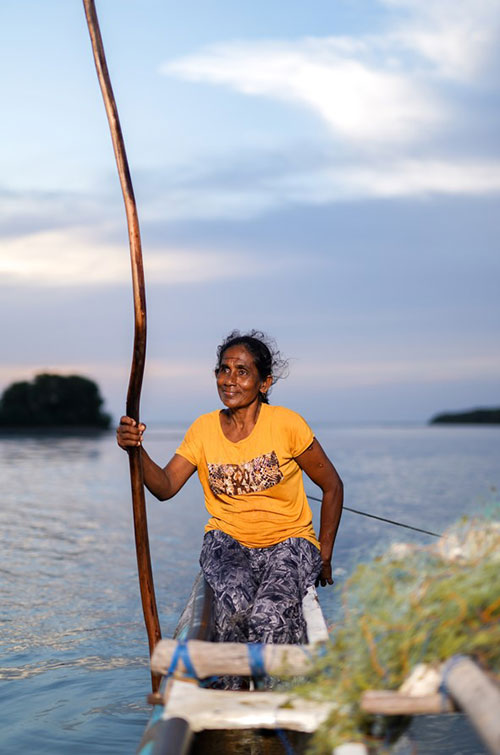
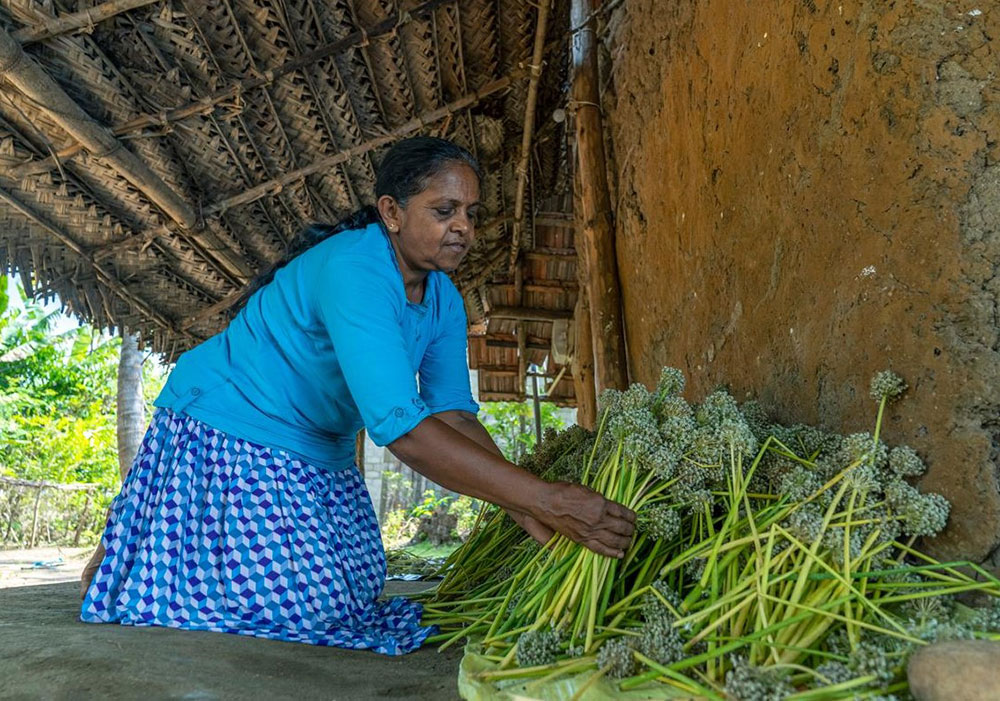
Concrete examples from FAO-supported initiatives show how this translates into women’s empowerment in practice: in Puttalam, fisherwoman Susila Kanthi sustained her family through the 2022 crisis with FAO emergency cash assistance, made possible through support from the United Kingdom’s Foreign, Commonwealth & Development Office, a lifeline that helped her cover daily needs and medical expenses and return to the lagoon with dignity; in Monaragala, Nirosha Dilmini transformed a quarter acre into the yield of a full acre through FAO’s GAP training and equipment, delivered with funding from Australia’s Department of Foreign Affairs and Trade (DFAT), increasing profits, securing supermarket linkages and cultivating year-round despite climate shocks; in Anuradhapura, Malani Senehelatha boosted the profitability of her onion seed enterprise using rain shelters and improved techniques introduced through a Government of Canada–supported FAO initiative, turning knowledge and technology into higher, more reliable incomes; in Galkiriyagama, Priyanthi Kumari Ekanayake, supported by the EU-funded RiceUp project, harvested over 150 bushels of certified seed paddy from 1.5 acres, emerging as a quality seed producer and role model in her community; and in Kandy and Bandarawela, students like Piumi Madhubashini Kumarasinghe and Pamodi Bhagya are gaining practical agrifood and entrepreneurial skills through FAO’s Entrepreneurial School Garden programme, implemented with DFAT support, planting the seeds for a new generation of confident young women farmers and agripreneurs.
While these testimonies are heartening, it would be unwise to mistake important successes for systemic change. Across Sri Lanka’s agriculture and plantation sectors, constraints remain stubborn and familiar:
- Access gaps persist in land tenure and control over productive assets, limiting women’s bargaining power and eligibility for formal finance.
- Extension and training do not consistently reach women in ways that fit their time constraints, mobility realities, and learning needs—especially in technical areas such as mechanization, climate-resilient practices, and agribusiness skills.
- Market participation is often shaped by unequal power dynamics, leaving many women concentrated in lower-return segments of value chains, with limited voice over pricing, contracts, and collective marketing.
- In the plantation economy, women’s labour remains indispensable, yet the pathways to skills upgrading, leadership, and higher-value roles are still too narrow relative to their contribution.
And this is where 2026 should encourage a more honest conversation about what “inclusion” really means.
For years, programmes have rightly encouraged women’s representation: more committee members, more participants, more “seats at the table.” That is progress, and it matters. But a seat at the table can become symbolic if it does not come with the authority to shape what is on the menu.
A practical, forward-looking agenda for 2026 could therefore focus on four areas where Sri Lanka can build on progress and accelerate change.
First, make extension and skills programmes truly accessible and relevant to women farmers. This means scheduling that respects care responsibilities; training delivered close to communities; greater use of women trainers and peer learning; and content that includes machinery operation, post-harvest handling, quality assurance, digital tools, business planning, and climate services.
Second, expand women’s access to finance and markets with risk-reducing pathways. Group-based financing, savings and credit models, and targeted guarantees can ease collateral barriers. On the market side, predictable procurement—where feasible—can create stable demand that helps women plan production and invest with confidence, building on lessons from home-grown school feeding models.
Third, move from representation to agenda-setting power. Farmer organizations and producer groups should not only recruit women members, but reform governance so women can meaningfully influence decisions. That requires transparent rules, rotating leadership, mentoring, negotiation training, and practical enablers such as transport, childcare links, safe meeting environments so that participation is not penalized. It also requires allies: men who understand that sharing power is not a loss, but a route to stronger institutions and better outcomes.
Fourth, improve gender-disaggregated data and accountability. Better measurement is not bureaucracy, it is a tool for fairness and effectiveness. Tracking who receives services, credit, training, and contracts can reveal gaps early and enable course correction. It also helps distinguish between participation as a metric and influence as an outcome.
Sri Lanka’s story is not one of absence; it is one of significant contribution and growing attention, paired with the recognition that much more remains to be done to match women’s responsibilities with equal opportunity and influence. The International Year of the Woman Farmer 2026 can help the country take the next step. We need to turn appreciation into action. Celebrating women farmers is important. Ensuring they have not only a seat, but also the ability to set the agenda, and to decide what success should look like is the work that 2026 International Year of Women Farmers should help us advance with renewed urgency and shared commitment.