HR PROFESSION
Compiled by Prashanthi Cooray
BUILDING PEOPLE POWER
Asangi Wickramaratne reflects on the art of building inclusive workplace cultures
Q: What strategies are most effective to attract and retain top talent in today’s competitive job market?
A: In the past, compensation and titles were primary drivers for attracting talent. Today, career development opportunities, recognition, flexible working arrangements and wellbeing have become key considerations.
Candidates now place value on a company’s commitment to employee wellbeing, and its diversity, equity and inclusion (DEI) frameworks.
Moreover, individuals prioritise balancing personal lives with professional performance. In response, companies are adopting progressive policies with positive and inclusive workplace cultures. This has become a major factor in attracting talent.
Traditional factors are evaluated in tandem with these holistic and human centric aspects, reflecting a shift towards purpose driven employment choices.
Q: What do you see as the main shifts in human resources (HR) practices in Sri Lanka over the past few years?
A: The use of AI has made HR processes faster, and more efficient and accurate. In recent years, human resources teams have increasingly adopted artificial intelligence tools, integrating them into existing HR processes.
This shift reflects a broader commitment to innovation, efficiency and data driven decision-making.
Another major development is the growing emphasis on DEI. Organisations are recognising the importance of inclusive workplace practices – from the adoption of gender neutral terminology to redesigning company logos to reflect their commitment to DEI.
This marks a shift away from traditional thinking and signals Sri Lanka’s efforts to create more respectful and accepting workplaces.
Although the pandemic and economic crisis have passed, a lasting development is the widespread adoption of flexible work arrangements. Once unfamiliar and limited to a few roles, remote work has become accepted across industries.
Many organisations have embraced hybrid work models, which support employee wellbeing and productivity while also serving as a key tool to attract new talent. This shift reflects a transformation in workplace culture that prioritises flexibility, autonomy and adaptability
Q: What key HR lessons have you found to be universally applicable? And what practices need to be tailored to specific sectors?
A: Through my experience across the service sector, I’ve observed both universal HR principles and sector specific nuances.
Industrial relations and grievance handling procedures – governed by legal frameworks – remain largely uniform regardless of the sector. Similarly, aspects such as performance management, DEI initiatives, and employee development and engagement – while tailored to organisational contexts – follow common foundational principles.
Sectors such as insurance and knowledge solutions place a strong emphasis on data protection and privacy, with robust policies and strict repercussions for breaches due to the sensitive nature of their operations.
A key differentiator is the compensation and benefits structure. For instance, insurance relationship officers have their own incentive structure while sub-sectors within the transportation sector also have specific incentive models.
In hospitality, employee remuneration includes a unique service charge component, which may also vary based on tenure, experience and so on. The hospitality sector also stands out for its distinct operational model.
While governed by the Shop and Office Act, it includes special provisions for residential hotels regarding the treatment of employees due to its 24 hour operations. Furthermore, special provisions are made for laundered uniforms, meals and accommodation based on their shifts.
And while it is more flexible, the knowledge solutions sector may also require shift work to accommodate client time zones and service demands.
These experiences affirm that while the core principles of human resources remain consistent, effective HR strategies call for thoughtful customisation to suit each sector.
Q: How can HR leaders strike a balance between performance needs and employee wellbeing?
A: Performance is driven by motivation – and for employees to stay motivated, they must be able to operate as their best selves. This is where wellbeing plays a critical role.
Given that employees spend much of their day at work, their overall wellbeing is closely tied to workplace environment and culture. HR leaders have both an opportunity and a responsibility to ensure that wellbeing is an ongoing discussion within the workplace.
While many organisations have introduced wellbeing programmes, sustainable impact requires consistent and proactive measures. It’s also important to ensure that an organisation’s culture does not undermine employee wellbeing.
Fostering collaboration within and across teams strengthens both engagement and support systems, while empowering team leaders to conduct regular one-on-one conversations with team members ensures that wellbeing is a part of the dialogue and not an afterthought.
Creating a culture that values mental wellbeing is vital. This involves raising awareness, encouraging openness and building systems where employees feel safe to speak up. It also means recognising signs of struggle, supporting recovery and ensuring reintegration is handled with empathy – without compromising individual or team performance.
Ultimately, wellbeing is a key driver of performance – HR leadership must champion this balance by embedding wellbeing into performance conversations, fostering supportive accountability and evolving practices to meet the needs of the workforce.
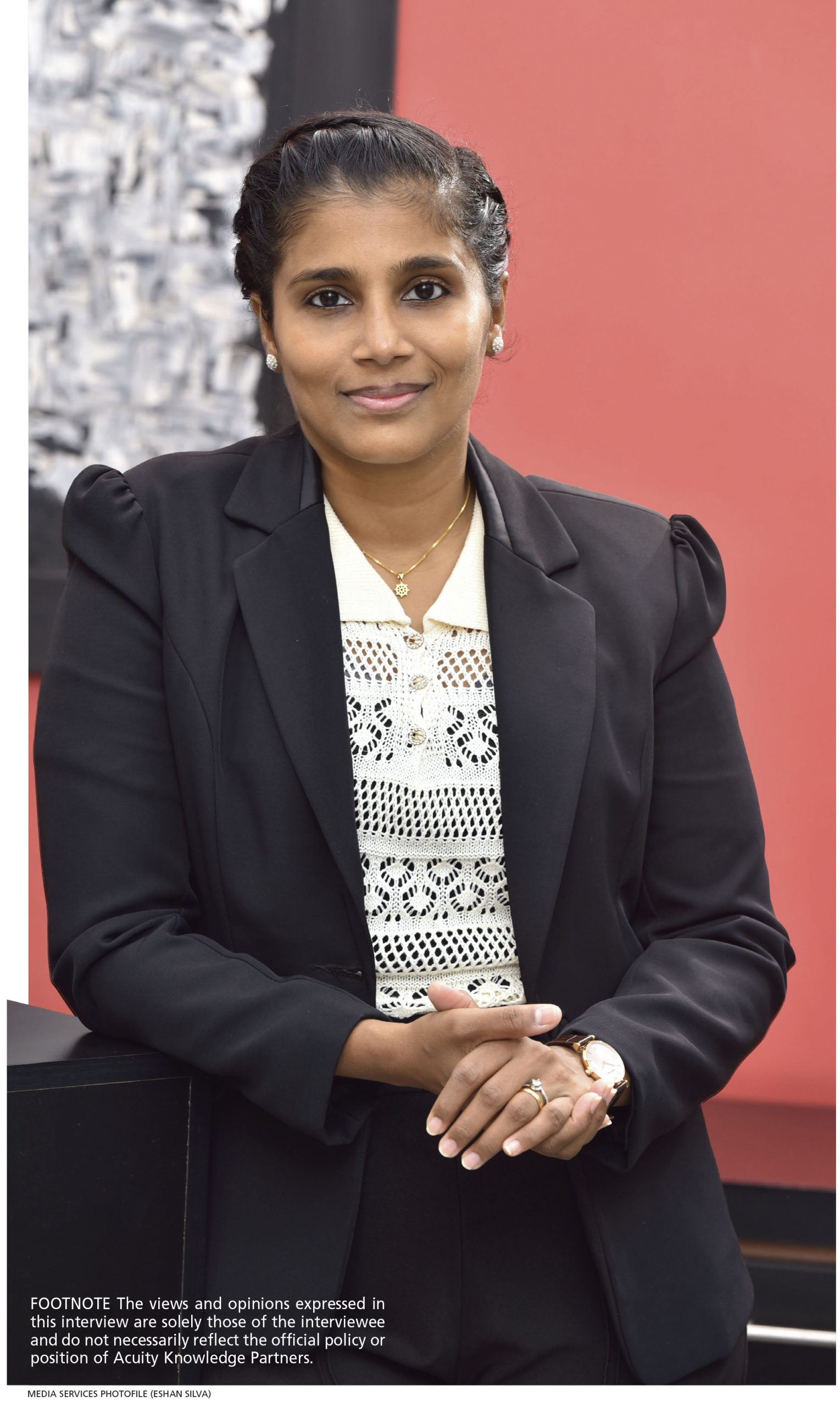
The interviewee is the Assistant Director of Human Resources of Acuity Knowledge Partners.
FOOTNOTE The views and opinions expressed in this interview are solely those of the interviewee and do not necessarily reflect the official policy or position of Acuity Knowledge Partners.