THE PLANTATIONS
Cyclone Ditwah exposed, once again, a truth that Sri Lanka has long struggled to confront, which is the discrimination suffered by the Malaiyaha Tamil community. Disasters may be triggered by nature but their effects are shaped by politics, history and longstanding exclusions.
The rains and floods struck the central hills more severely than other parts of the country but the rebuilding process is taking place in an unequal manner with the Malaiyaha Tamil community being disproportionately disadvantaged.
A SHARED SENSE OF BELONGING
Tamil plantation workers must have land ownership rights – Dr. Jehan Perera
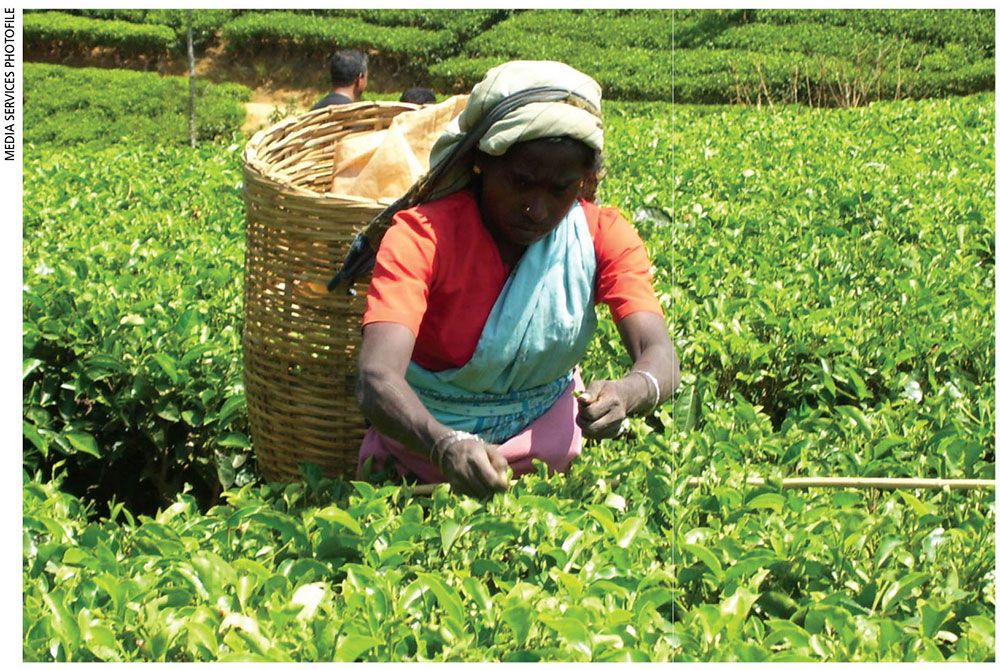
They faced this crisis already burdened by structural inequalities. And the cyclone revealed with renewed clarity the problem that has haunted this community for generations, which is that they don’t own land.
A fundamental principle of justice is that equal treatment in unequal circumstances can produce unjust outcomes. The government of President Anura Kumara Dissanayake recognised this principle when it provided an unprecedented daily wage subsidy to Malaiyaha Tamil plantation workers in its 2026 budget.
In doing so, it acknowledged that structural constraints in the plantations had denied workers a wage increase for nearly a decade. Cyclone Ditwah has now exposed similar structural constraints in disaster relief and resettlement.
Most Malaiyaha Tamil plantation workers don’t own the land on which they live or the houses they occupy. These are managed by state agencies and plantation companies for historical reasons dating back to colonial rule.
As the descendants of indentured labourers brought from India by British colonial rulers over two centuries ago, plantation workers remained tied to estates under conditions that have barely changed since Sri Lanka gained independence.
Flags and constitutions changed but this relationship didn’t. Housing hasn’t been significantly upgraded and many families continue to live in line rooms that were never intended for permanent habitation, let alone to withstand extreme weather events.
A community that contributes enormously to the national economy remains excluded from the full benefits of citizenship
This absence of land and housing ownership has had direct consequences in the aftermath of the cyclone. The government announced relief measures ranging from Rs 25,000 for cleaning damaged houses to five million rupees for rebuilding destroyed homes.
However, access to this support is linked to proof of land and housing ownership. This condition systematically excludes plantation workers even though they have suffered the same losses as other citizens. More than half of the affected Malaiyaha Tamil families haven’t even received the initial payment.
The problem extends beyond housing: plantation workers can’t register small businesses conducted on land owned by companies; and since these businesses are unregistered, owners are ineligible for government compensation for loss of income.
As a consequence, livelihood recovery – which is a central pillar of post-disaster reconstruction – simply bypasses them. Communication failures deepen this exclusion. Government communication largely takes place in Sinhala with no consistent channel for Tamil speaking plantation communities.
Therefore, many families lack clarity about procedures, documentation and timelines, and information asymmetry reinforces powerlessness. A community that contributes enormously to the national economy remains excluded from the full benefits of citizenship.
The claim that land is unavailable doesn’t withstand scrutiny. Adequate land exists within plantation areas for housing. In recent years, swathes of plantation land have been allocated for other economic purposes including tourism, renewable energy and livestock farming.
These allocations demonstrate that land can be released when policy decisions permit. Official assessments presented to parliament and reviews conducted at ministry level have repeatedly acknowledged that large areas of plantation land remain underutilised or unproductive with estimates running into tens of thousands of hectares.
So land availability is not the primary constraint.
There is a clear need to facilitate the vesting of land ownership rights with Malaiyaha Tamil plantation workers as part of the resettlement process. Doing so will ensure that the post-cyclone recovery is fair, inclusive and consistent with principles of justice.
The housing allocations don’t have to undermine the economic viability of plantations that needs to be upgraded in terms of investment and technology. This is both possible and necessary given that only a small proportion of land is required for housing, and the plantation industry has already diversified land use for non-core activities.
So the challenge is to use the tragedy of Cyclone Ditwah to rebuild not only houses but also a shared sense of belonging that has been denied to the Malaiyaha Tamil community for too long.