STATE OF THE NATION
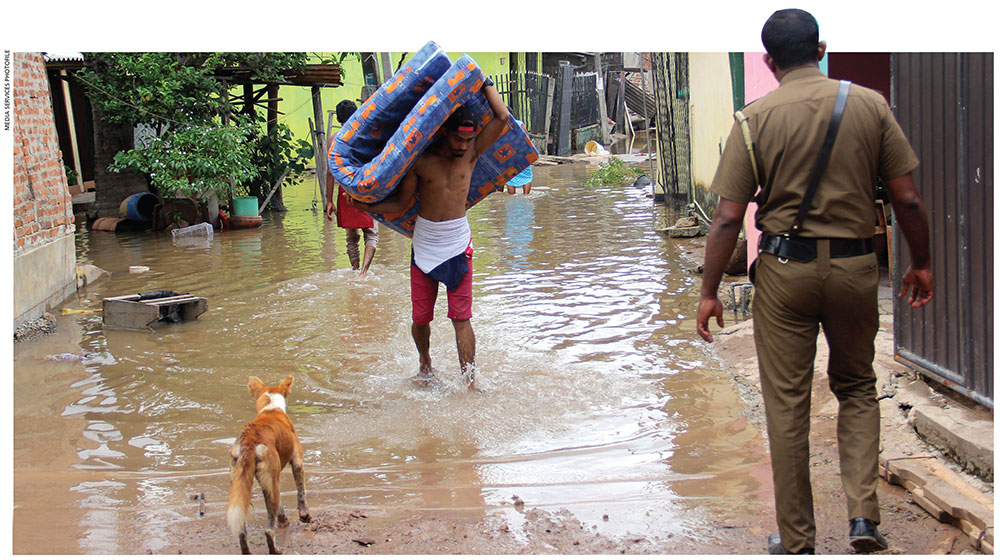
Sri Lanka’s economic narrative over the past decades has been a roller coaster ride. And now we’re looping through the sharpest curve yet. Cyclone Ditwah’s devastation carved deep scars into the landscape and lives of millions of islanders, leaving behind a trail of broken dreams – and yet, bridges to be rebuilt.

A LEAP FORWARD AFTER LAMENTING IS OVER
Wijith DeChickera weighs the burden of debt, disaster and the dance towards sustainable growth in the staggering aftermath of Cyclone Ditwah
But with a moratorium on debt repayments ending sooner than later, there is no relief in postponing the prospect of the inevitable; or respite through avoidance of gritty realities couched in grandiose rhetoric, or wishful thinking.
The country cannot afford to be slack on savvy policy decisions, strategic investments or planning foresight. The task ahead – to rebuild better, smarter and sustainably – must be executed with caution and courage.
A glance at the numbers makes it clear why this is imperative.
Sri Lanka’s government debt sat at roughly 96 percent of GDP in 2024, which was high for a middle income economy but down from peaks above 110 percent at the height of the economic crisis.
In 2022 and the year after, Sri Lanka’s economy plunged – contracting by 7.3 and 2.3 percent respectively. But in 2024, following historic reforms under the IMF’s Extended Fund Facility (EFF), its GDP grew by a robust five percent, outstripping expectations.
That rebound was remarkable; but it may not be enough.
The International Monetary Fund, which committed some US$ 2.9 billion under the EFF in 2023, tied funding to structural and fiscal targets that remain ambitious.
Sri Lanka is aiming to raise government revenue to around 15 percent of GDP, up from a crisis era low of nearly eight percent, while trimming deficits to five percent of gross domestic product.
Foreign exchange reserves, the lifeblood of import dependent states, have risen from crisis lows of nearly 1.9 billion dollars to almost US$ 7 billion by the end of 2025 – which is sufficient to cover roughly three months of imports.
But these reserves are fragile, vulnerable to external shocks, and under pressure from rising needs for reconstruction and regular debt servicing.
At this critical juncture, Sri Lanka needs a policy playbook that is both bright-eyed and battle tested, anchored in both realism and optimism.
Fiscal discipline with strategic flexibility is key. And fiscal consolidation is the backbone of any credible economic programme. Without it, debt woes will reignite, import bills overwhelm reserves and biz confidence ebb. But strict austerity without strategic flexibility can strangle a recovery.
So the government must maintain its commitment to the IMF’s benchmarks: primary surpluses of roughly 2.3 percent of GDP through careful revenue mobilisation and spending controls.
It should also permit targeted investments in reconstruction, especially where they catalyse private sector activity or boost export capacity. Belt and braces budgets look good on paper but they must also leave room for calibration where it counts.
Rebuilding and growing our foreign exchange reserves is vital too. Sri Lanka’s forex position will remain a front line variable in its economic stability. Reserves buildup cannot be left to chance or happenstance. The country must push hard on sources of sustainable foreign inflows.
As for tourism, the island is targeting three million international visitors this year – that’s a 27 percent increase over 2025, given inflows from tourism of some 3.2 billion dollars last year.
This industry, once crippled by a series of sociopolitical crises and then the natural hammer blow of a cyclone, is reclaiming its role as a major foreign exchange earner. But it needs continued investments in marketing, quality infrastructure and climate resilient facilities.
Where exports and remittances are concerned, beyond tea and apparel, export diversification is essential. Remittances, which are growing strongly year on year, could exceed US$ 7 billion in 2025 as inflows climb and the diaspora’s engagement deepens.
These boosts will help narrow the nation’s import bill and bolster reserves without resorting to borrowing.
SME and private sector enablement are as crucial as ever.
Small and medium-size enterprises – the backbone of the economy, and engine of jobs and innovation – must be transformed from marginal actors as they were in the past to growth leaders of the present.
Practical policies might include expanded credit guarantee schemes, and tax incentives tied to job creation and digital technology adoption, as well as regulatory simplification that does not compromise governance.
Tourism must transform itself from a seasonal interest into a sturdy industry with a sustainability core. Sri Lanka cannot merely chase the next pretty girl on the beach or annual export target.
Rather, it must lock into a model where growth is resilient, green and inclusive. From ecotourism to clean manufacturing zones, and renewable energy investments to climate smart agriculture, the emphasis must be on value and not volume alone.
Not to be neglected is social protection and the role governance plays – because reform fatigue is real. As Sri Lanka tightens its fiscal belt and restructures the economy, social cohesion must remain at the centre of policy.
Safety nets targeted at the poorest, training programmes for displaced people, and strengthened anticorruption and public financial management systems will create a society that not only recovers but thrives.
The task ahead – to rebuild better, smarter and sustainably – must be executed with caution and courage