
STATE OF THE NATION
VIEWPOINTS
WORST OF TIMES AND AN ISLAND’S SPIRIT!
Wijith DeChickera wonders if the reputable resilience of our island race is just a resigned adjustment to state apathy
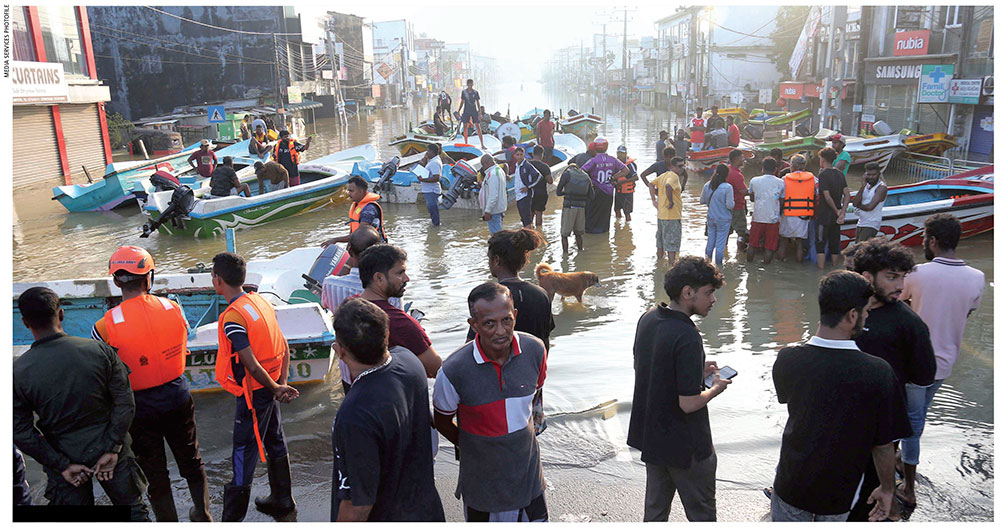
By now, Cyclone Ditwah will be a somewhat distant if dismal memory. But the islandwide impact of the devastating cyclonic storm and questions it raised may well remain at the forefront of our wounded national psyche, and compromised economic growth and development agenda at the start of a new year.
And the remnant impression could be that – not for the first time – the people were let down by their government. Again.
It is clear that state actors could or should have helped vulnerable populations to be better prepared to face the natural disaster that unfolded over the last days of a windy, rainy November to claim 639 lives (and more than 200 missing) – both counts at the time of going to press – and cause inestimable in damage.
Of course, it is easy to be wise after the event. Hindsight has 20/20 vision.
There is little doubt now that the authorities were slow off the mark to take practical steps to mitigate the extent of the fallout from the cyclone, after the Meteorological Department issued a storm warning on 12 November – over two weeks before the torrential downpour that washed away lives, livelihoods and a last-ditch attempt at a good 2025.
Lacking experience at the real modes of governance that distinguish even arrogant and corrupt professionals from well-intentioned but clumsy amateurs, the National People’s Power (NPP) administration suffered a not insignificant setback to an already eroded image as regards civics.
Time will tell whether the electorate is as able to forgive its governors as it was ever ready and willing to help its fellow citizens in a crisis.
On the government’s side, the powerful regime led by its most public, outspoken figures would no doubt have wondered what they could have done better. Yes, they inherited decades of neglect and corruption. But didn’t they undertake to change a decrepit system?
Fail…
Especially declaring an emergency earlier, taking proactive steps to alert and relocate people in the path of the predicted cyclone, mobilising the security forces ahead of the crisis and countless other proactive steps.
The government may also come to rue the day when it appealed to the goodwill and solidarity demonstrated by generations of Sri Lankans with their backs to the wall when the regime realises that the republic remembers other administrations that fell back on this popular strategy rather than stepping up to the leadership plate.
Yet, on the positive side of this umpteenth traumatic experience – though we are said to be a resilient nation – the unity and communal efficiency of a panoply of civil society organisations, NGOs and INGOs, and ordinary citizens caring for their own, as well as the heartwarming comfort of strangers, characterised the national spirit amid the chaos, confusion and consternation.
Ironies abound, which span the gamut from the NPP’s previous criticism of prior governors on their respective lapses – from handling the tsunami criminally to coping with the COVID-19 pandemic ambivalently – to a blatant betrayal of the ‘system change’ mantra. It was business as usual for the person in the street and on flooded plains or sloping hillsides alike; which is to say, people stepped in to fill the gaps that government left yawning.
This in no way undermines or devalues the often heroic efforts of numerous state agencies including the forces and emergency response departments that stood firm and rendered yeoman service at a time of dire national need.
But the bitter truth is that hot-air balloons filled with cheap talk were the banners of state that flew over many islanders’ heads in the eleventh month of 2025. And the people chalk up another victory to our island spirit.
There is also no doubt that going forward, the government needs to get its act together as regards disaster management and act in the same stalwart manner as it says it’s serious about system change to end the culture of corruption and nepotism that was the bane of island politics for a substantial part of the 75 years that the NPP points its finger at as being the curse over Sri Lanka.
Because there is more to governance than envisaged while in opposition, the incumbent administration would do well to take a more scientific approach to mitigating fallout from natural phenomena as much as it professes to have cracked the cheat code on ending corruption.
Waste, mismanagement, bureaucracy and being ill-prepared, or not dynamic and efficient enough, are also tantamount to negligence by the state.
Therefore, in an island nation regularly – and relatively predictably – battered by the vagaries of cyclonic storms in the Bay of Bengal on one side and the Arabian Sea on the other, the government needs to grow up into maturity rather than muddling along on the disaster management front.
Meanwhile, as for those unforgiving of a tyro administration’s first major flop, dare we ask what the finger-pointing detractors did during the crisis to ease the burdens of their neighbours and other affected innocents?
Perhaps we all need to grow up.