STATE OF THE NATION
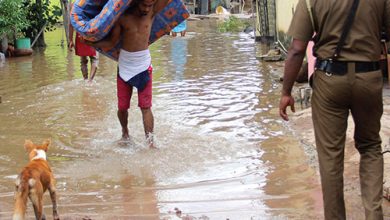
On 28 November, Cyclone Ditwah made landfall in Sri Lanka, unleashing torrential rains, catastrophic flooding and deadly landslides. The tropical storm rapidly evolved into the most devastating natural disaster the island has faced in its history of environmental cataclysms.
According to WHO figures, it affected 1.4 million people across all 25 districts, displaced more than 230,000 individuals and caused over 400 deaths. Other estimates go as high as 2.2 million affected with the death toll over 650 and nearly 175 missing.
BUILD DIFFERENTLY AFTER DITWAH
Wijith DeChickera surveys the fallout as well as a way forward in the aftermath of the most devastating disaster to befall our nation
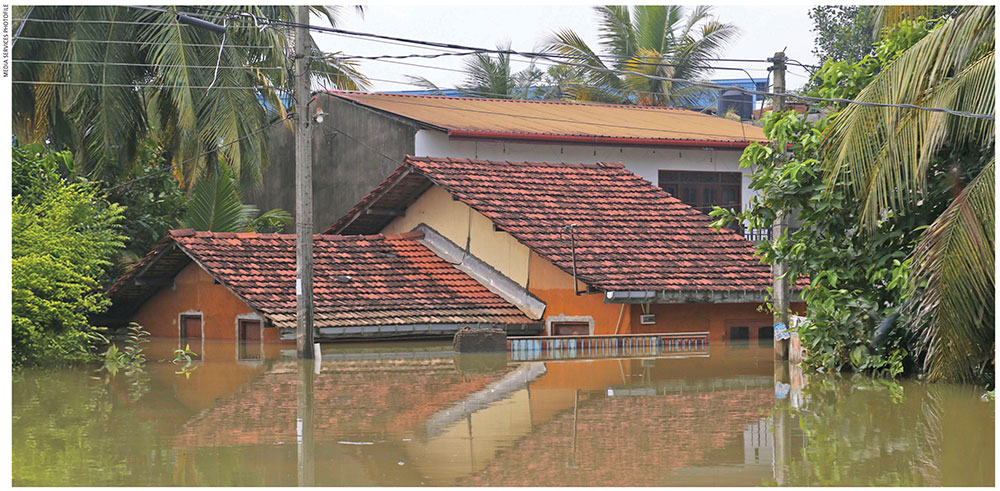
Damage to buildings – especially houses – was severe: the World Health Organisation reports that over 560 homes were destroyed and more than 20,000 partially damaged, thrusting thousands of families into crisis.
The economic toll has been staggering. A World Bank Global Rapid Post-Disaster Estimation (GRADE) report quantifies direct physical damage that disrupted services, destroyed houses and other buildings, and crippled agriculture at roughly US$ 4.1 billion – that’s four percent of Sri Lanka’s GDP.
While agricultural losses including flooded paddy and vegetable lands accounted for 800 million dollars of the above estimate, damage to infrastructure (roads, bridges, the railway network and water supply systems) approached 1.7 billion dollars, according to the World Bank.
And the losses surpassed direct physical destruction: Ditwah decimated millions of livelihoods and destabilised food security, destroyed over 240,000 hectares of crops, damaged irrigation networks and dealt long-term risks for rural economies.
The ILO has estimated that nearly 375,000 jobs were affected with monthly income losses pegged at around US$ 48 million, underscoring economic shocks to households and markets.
A plethora of analysts warn that the debilitating aftermath will delay an already fragile economic recovery, slow growth and push more families into the mire of poverty.
The cost of rebuilding Sri Lanka – whether ‘build back better’ or ‘build forward differently’ – could reach the six to seven billion dollars range; which, being beyond our financially hamstrung country’s reserves, could place severe pressure on state resources and undermine the government’s reforms oriented projects.
In late December, more than a million people still required humanitarian assistance – a rescue and relief effort fronted in many places by typical Sri Lankan resilience in the face of adversity.
It emphasised the goodwill of islanders united in a crisis whereby even when the state was late, neighbours were the first responders and generous donations bolstered rehabilitation programmes islandwide.
The early part of January saw UN agencies seeking about US$ 35 million, according to the United Nations Office in Geneva, to support lifesaving relief for the most vulnerable – including children, displaced families and households facing food insecurity.
India pledged 450 million dollars, the largest assistance package so far. Diaspora and private sector contributions boosted the Rebuilding Sri Lanka fund to US$ 11 million in January.
So what price a sustainable recovery and rebuilding strategy for Sri Lanka?
Given the scale of the devastation, long beleaguered islanders must move beyond short-term relief into strategic, sustainable rebuilding that enhances resilience against future climate hazards.
The problem is that much of the damage arose from infrastructure and homes that were unable to withstand extreme rainfall and landslides. A compensatory strategy would be to build roads, railways, bridges and utilities networks to higher resilience standards – elevated road and rail beds, improved drainage and retrofitted structures.
Sri Lanka must promote climate resilient housing codes with risk mapping, and safer siting and subsidies for retrofits in vulnerable areas.
The World Bank and Asian Development Bank (ADB) have pledged combined financing (the latter US$ 120 million, the former 200 million dollars) for reconstruction and services restoration. Additional bilateral financing can be aligned with green criteria, unlocking concessional loans and grants.
As agricultural destruction threatens food security and incomes, appropriate strategies span the gamut from cash for work programmes to restore irrigation, level fields and reconstruct farm access roads; through subsidised inputs on seeds and fertiliser, and crop insurance schemes for smallholders; to diversified cropping systems and climate smart agriculture to withstand erratic rainfall.
Sri Lanka could redirect part of the Rs. 500 billion supplementary estimate for targeted agricultural recovery; and partner with the FAO and IFAD or use bilateral grants to bolster rural resilience.
Because mass displacement and trauma risk long-term social stress, we need to widen social safety nets prioritising women, children and the elderly. Integrating mental health and trauma support into primary care and community centres is paramount.
The IMF’s US$ 206 million emergency relief financing could help fund such programmes and stabilise fiscal pressure on the government.
Ditwah’s impact highlights systemic vulnerability: the state needs to invest in early warning technology, community education, real-time monitoring, and evacuation planning and protocols. Funding earmarked under international climate finance channels – e.g. Green Climate Fund (GCF) and ADB resilience programmes – could be accessed.
It is imperative for the government to establish a transparent, representative and inclusive rebuilding governance mechanism prioritising climate resilience, and ensuring transparency and accountability.
Cyclone Ditwah exposed deep vulnerabilities in Sri Lanka’s infrastructure, economic systems and social safety nets. A sustainable recovery strategy requires not only rebuilding what was lost but transforming systems.