SINGER (SRI LANKA)
RANK 27
“Our 19 consecutive People’s Brand of the Year awards including youth and consumer durable categories affirm that we remain deeply connected to Sri Lankans across generations”

Group Managing Director
Q: Singer (Sri Lanka) has long been a household name across generations. How do you balance legacy with innovation as you steer the company into the future?
A: Singer (Sri Lanka) carries a legacy of over 147 years and the reason we have remained relevant across generations is that we have always kept the brand young. I often say Singer is a 147-year-old ‘young’ company because our longevity is rooted not in tradition alone but our ability to evolve continuously.
A legacy by itself cannot carry you forward. It is the company’s willingness to rethink, reinvent and respond to changing consumer needs that has sustained our leadership.
For nearly a century, Singer was a single product, a single brand organisation built around sewing machines. At a certain point, we recognised the need to transform; and that shift – moving from a sewing machine company to a full-fledged home appliance retailer – became one of our defining turning points. From there, our evolution only accelerated.
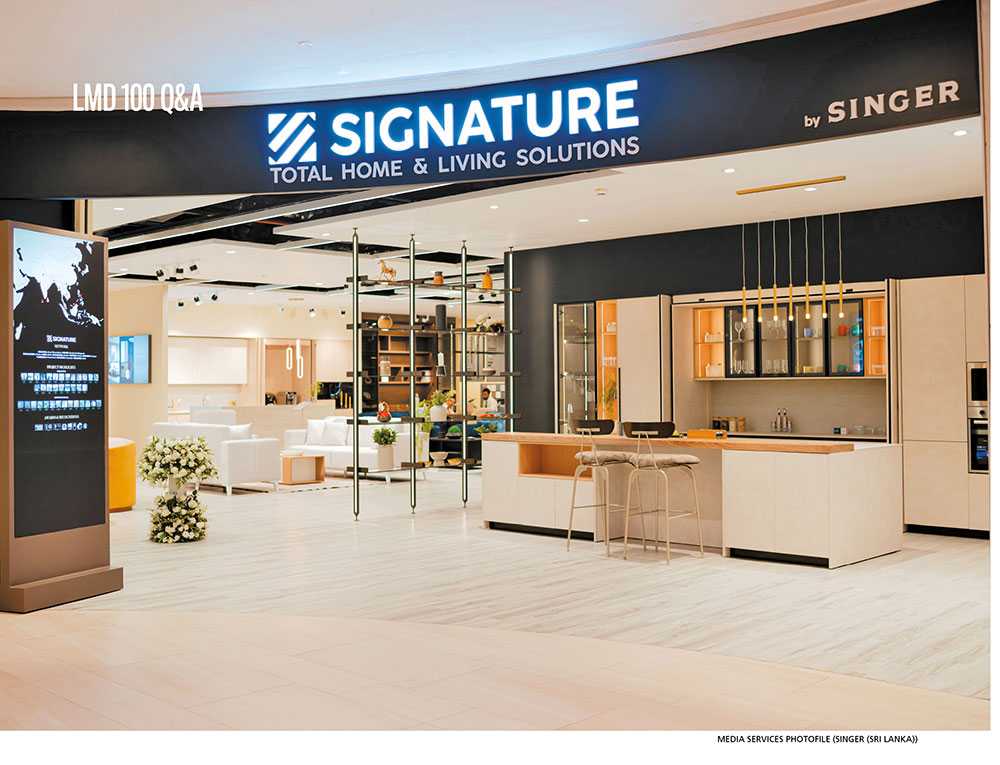
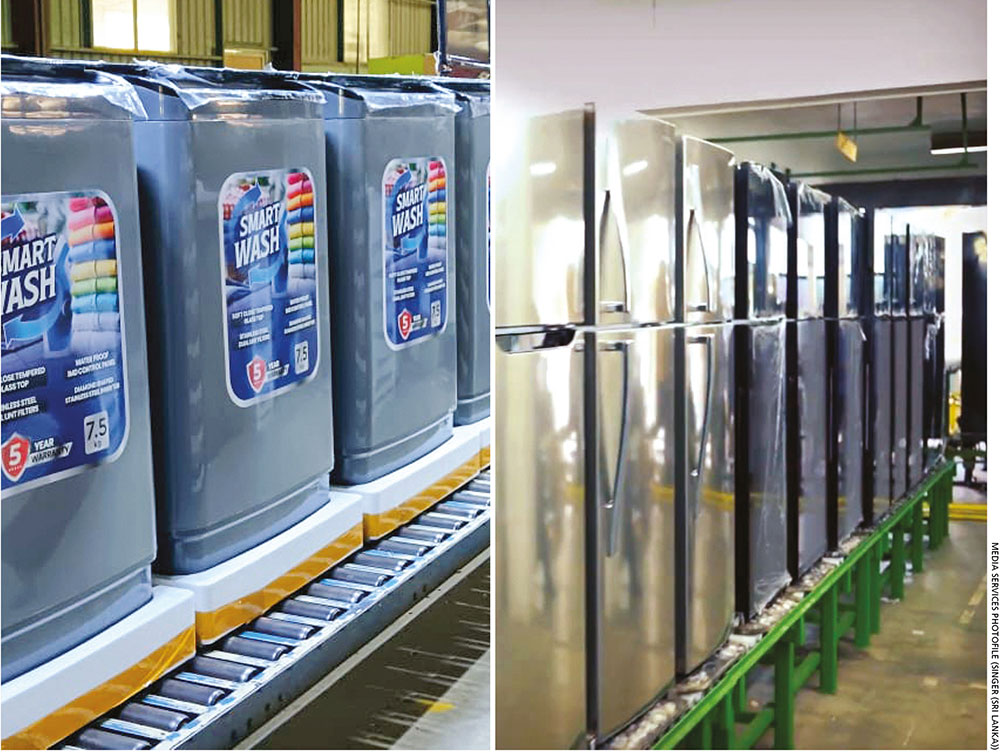
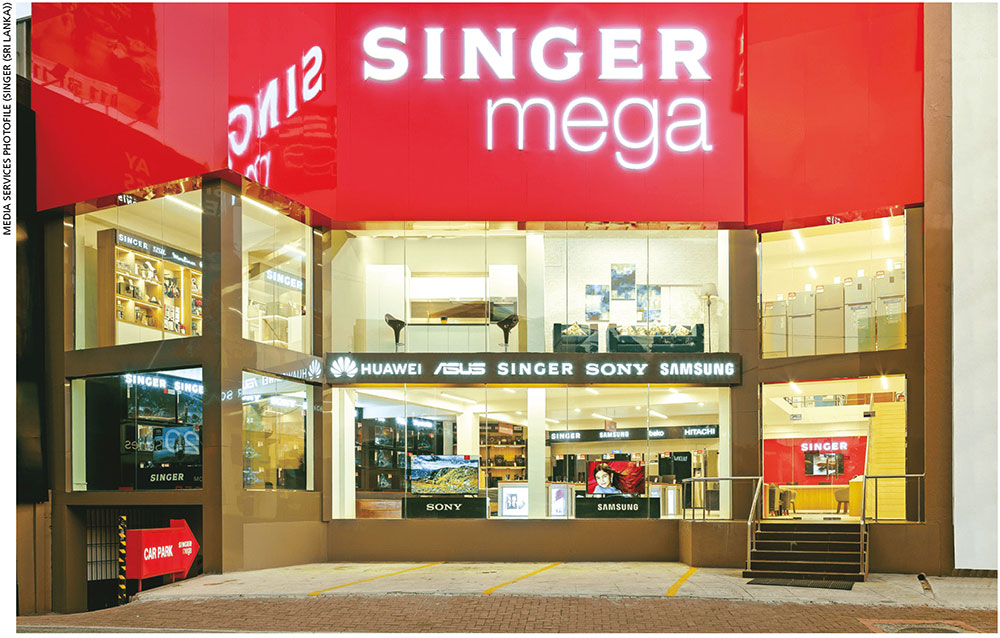
We expanded into manufacturing in the 1980s, establishing four factories producing home appliances, white goods and engineering products. In the late 1990s, we once again recognised a shift in retail dynamics as large malls began reshaping consumer behaviour. This led to the creation of the Singer Mega model in 1999, which has since grown into a strong network of 30 outlets.
Another strategic milestone came in 2012 when we entered the digital product segment – mobiles, laptops and connected devices – as we saw the world moving decisively toward digital lifestyles.
Within a few years, Singer became the market leader in this category. More recently, we diversified into the light automobile segment – offering electric, petrol and diesel vehicles – while Singer Finance (Lanka) remains a strong and growing part of our financial services portfolio.
Our multi brand strategy has enabled us to serve consumers across all segments: entry, mid and premium; and today, we represent around 65 global and local brands. Alongside this, we have invested heavily in digitalisation and service transformation to keep pace with modern consumer expectations. Our rebranding in 2022, featuring the vibrant red identity and refreshed shopfronts, further strengthened our visibility and modern appeal.
The trust placed in us by global partners reflects how the industry perceives Singer today: as modern, innovative and future ready. Our 19 consecutive People’s Brand of the Year awards including youth and consumer durable categories affirm that we remain deeply connected to Sri Lankans across generations.
Q: As Sri Lanka continues to pursue economic and political stability, how is the corporate sector driving growth while overcoming challenges that persist on many fronts?
A: For Sri Lanka’s corporate sector, the most critical enablers of growth are economic and political stability, and consistency in policy-making. When these fundamentals hold, businesses find it far easier to plan, invest and operate without constant adjustments.
Over the past 12 to 18 months, we have seen encouraging signs on both the economic and political fronts, and this renewed stability has allowed many companies to regain momentum and focus on long-term strategy rather than short-term survival.
A predictable macroeconomic environment also makes key variables such as interest and exchange rates much more manageable. Even when movements occur, they are less likely to materialise as shocks, giving businesses the confidence to execute their plans effectively. The recent growth across several sectors reflects this improved operating climate.
Going forward, Sri Lanka must continue to strengthen its core economic pillars: tourism, worker remittances, exports and domestic productivity – especially through a vibrant private sector. If these areas are supported with clear policy direction and stable macro indicators, the corporate sector will continue to drive investment, innovation and national economic progress.
Q: What trends do you observe in your sector – and what have you done as a business to optimise some of them?
A: In our sector, which focusses on products that enhance everyday living, several clear trends are shaping demand. As Sri Lanka’s per capita income gradually rises, lifestyle expectations are evolving.
Yet, penetration rates of many household appliances such as refrigerators, washing machines and air conditioners remain relatively low outside essentials such as televisions and mobile phones.
We also see faster upgrade cycles, a strong shift toward energy efficient products, and the growing importance of digital devices such as smartphones, laptops and tablets.
Changing household dynamics – more dual income families, increased time pressures and the revival of tourism – are further driving demand for modern home and kitchen equipment that support speed, convenience and comfort.
The new generation increasingly relies on online research, digital payments, e-commerce platforms and social reviews before making purchasing decisions, which is reshaping how demand is created.
To optimise these trends, we ensure early access to globally relevant products, closely monitor regional innovation and make new technologies available to Sri Lankan consumers without delay.
While external factors such as duties can affect pricing, we focus on affordability through instalment plans, credit card offers and hire-purchase schemes, ensuring wider accessibility across the country.
Q: In the wake of the brain drain, what strategies have you put in place to retain talent and overcome the challenges that many businesses are facing?
A: The talent outflow that intensified during the economic crisis affected the entire country; and like many organisations, Singer also lost several high potential employees. While this trend has now slowed as many who left have realised the challenges of settling abroad, we took a proactive approach to retention.
We focussed on engaging closely with our people, helping them see clear career pathways within the company, and fast tracking their development and learning opportunities. And we offered cross functional exposure, greater empowerment and a stronger sense of purpose so they could recognise the long-term value of building a career here rather than viewing migration as the only option.
“Our multi brand strategy has enabled us to serve consumers across all segments: entry, mid and premium; and today, we represent around 65 global and local brands”
Q: How should businesses operating in Sri Lanka nurture enabling organisational cultures to make the most of a diverse workforce?
A: Today’s organisations are more generationally diverse than ever with baby boomers, Gen X, millennials, Gen Z and even Generation Alpha working together. This naturally creates different expectations, behaviours and work styles.
In legacy companies such as Singer, it is essential that management adapts to these shifts rather than expecting younger generations to conform to older norms because that simply will not work.
Leaders must understand what motivates younger employees, the environment they need to perform well, and the freedom they expect in areas such as dress codes, expression and work style.
Their loyalty patterns may differ but they bring strong technical skills, creativity and speed. If companies provide an inclusive, flexible culture that respects these differences, younger employees will thrive; and in turn, deliver the performance the business needs.
However, we understand that employees may still move on for various personal or external reasons. So to meet that challenge, we are investing heavily in building a strong second layer of talent to ensure continuity and stability.
Q: To what extent does your group harness technological advancements – especially in the context of AI – in its operations?
A: Data is one of Singer’s chief strengths, built over decades of serving millions of customers across Sri Lanka. To fully harness this, we have made digitalisation a core strategic pillar. We also established an Advanced Analytics Centre of Excellence staffed by data scientists and engineers who focus on customer relationship management, supply chain optimisation, service quality, business intelligence tools and automated workflows.
Artificial intelligence now enables us to move toward hyper personalised marketing; predict customer needs; and improve planning in areas such as sales and operations planning, and inventory management.
We are also investing heavily in digital literacy through our Singer Spark programme, ensuring all 3,000 employees can effectively use these new capabilities and deliver real value.
Telephone 115 400 400 | Email singer@singersl.com | Website www.singersl.com