REFORM AGENDA
Q: How do you view the prevailing macroeconomic trajectory?
A: The country has witnessed a remarkable turnaround over the past three years in improving economic stability with the support of the IMF’s Extended Fund Facility (EFF) programme.

Compiled by Yamini Sequeira
A NATION AT A CROSSROADS
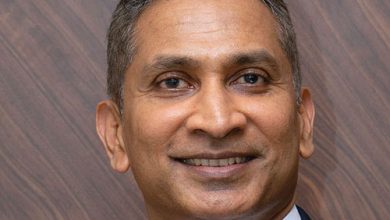
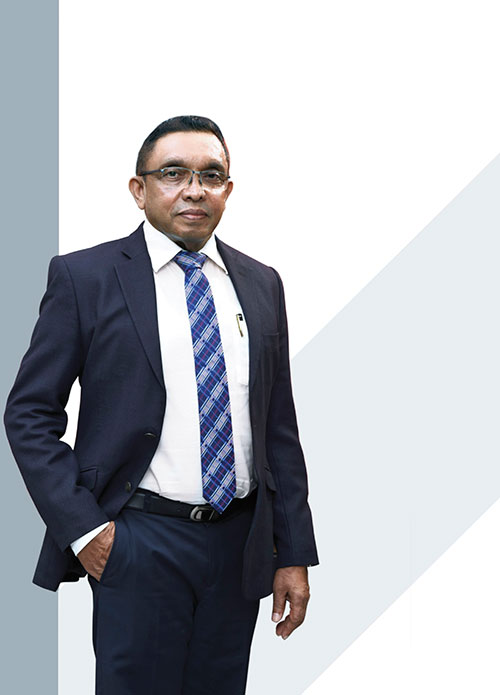
Prof. Sirimal Abeyratne prioritises higher FDIs for economic sustainability
Progress in terms of fiscal consolidation and monetary discipline has been notable, as demonstrated by increased tax revenues, a positive primary account balance, a manageable budget deficit, lower interest rates and controlled inflation.
Q: Do you believe the fiscal reforms in place are sufficient to ensure long-term debt sustainability, especially given the upcoming external repayment schedule?
A: They aren’t – our external financing position is one area where performance is lagging.
Official foreign reserves stood at around US$ 6 billion towards the end of last year, whereas the International Monetary Fund’s performance schedule projected it to be seven billion dollars or so in 2025, US$ 9 billion in 2026 and 15 billion dollars by the end of the decade.
We must not forget that the country had to suspend external debt repayments in April 2022 due to this issue: inadequate foreign exchange earnings. The economy is yet to achieve steady and stable export growth, instead of relying heavily on increased tourism income and worker remittances.
Q: What does the inflation outlook look like, in your assessment?
A: It remains acceptable in the medium term with average inflation below the upper margin of five percent. Monetary policy discipline has improved notably during the past three years.
While the effectiveness of the new Central Bank Act passed in 2023 has been a contributing factor, it has also been instrumental in maintaining the Central Bank of Sri Lanka’s independence and eliminating printing money to finance government expenditure.
Q: Where does the official poverty line sit today – and does it reflect the ground realities of low income communities?
A: The official poverty line stood at Rs. 16,413 in September last year, representing the minimum monthly expenditure requirement to meet a person’s basic needs. By comparison, the international poverty line for a middle income country is US$ 3.65 a day (approximately 1,000 rupees).
Unfortunately, official poverty data for the country has not been published since 2019. As a result, we depend on studies by development partners such as the World Bank and UNDP, as well as representative survey findings of think tanks such as LIRNEasia and the Centre for Poverty Analysis (CEPA).
Despite differences in poverty thresholds and methodologies, a synthesis of these reports suggests that a substantial share of the population – i.e. between six to eight million – remained poor in 2023 and 2024.
Moreover, so-called hidden poverty among the middle class fixed income households are often overlooked, despite being an acute social issue resulting from an economic crisis of this magnitude.
Q: Which sectors do you believe are demonstrating resilience or could potentially anchor future growth?
A: Sri Lanka is at a crossroads – while economic stability has improved, it must be sustained by accelerating the country’s transformative growth. An average economic growth rate of between eight and 10 percent is necessary to maintain improved stability, which has thus far been achieved rather painfully.
Millions of individuals must be lifted out of poverty by creating job opportunities and expanding household incomes – outcomes that depend on higher GDP growth. But such growth cannot be accelerated unless it is linked to foreign direct investment (FDI) inflows.
Q: How competitive is Sri Lanka in attracting FDI in comparison to its regional peers?
A: In terms of FDI inflows and export growth, Sri Lanka has a poor record among its peers. Over the past five years, the country has attracted approximately US$ 3.4 billion in FDIs, a notable portion of which involved government facilitation rather than independent investments.
By contrast, India attracted 241 billion dollars over the same period. For argument’s sake, even if India’s scale is cited as the region’s centripetal force, it contradicts the fact that Singapore attracted over US$ 600 billion during the same period.
As for export growth, it is distressing to find that Sri Lanka, despite being the first South Asian country to adopt policy reforms, counts only some 13 billion dollars in merchandise exports.
Q: Which policy gaps continue to deter long-term foreign investors, despite recent stabilisation efforts?
A: Accelerating export growth requires higher FDI flows.
Sri Lanka must adopt a more aggressive reform process to position the country as a competitive investment destination in the region. This requires domestic policy and regulatory reforms to establish a conducive business environment, and technological improvements to enhance efficiency in business.
Externally, Sri Lanka must establish open borders through both unilateral open market policy reforms and FTAs to provide global free market access to investors. The country cannot maintain a protected domestic market on the one hand and an open free market on the other.