LMDtv 4
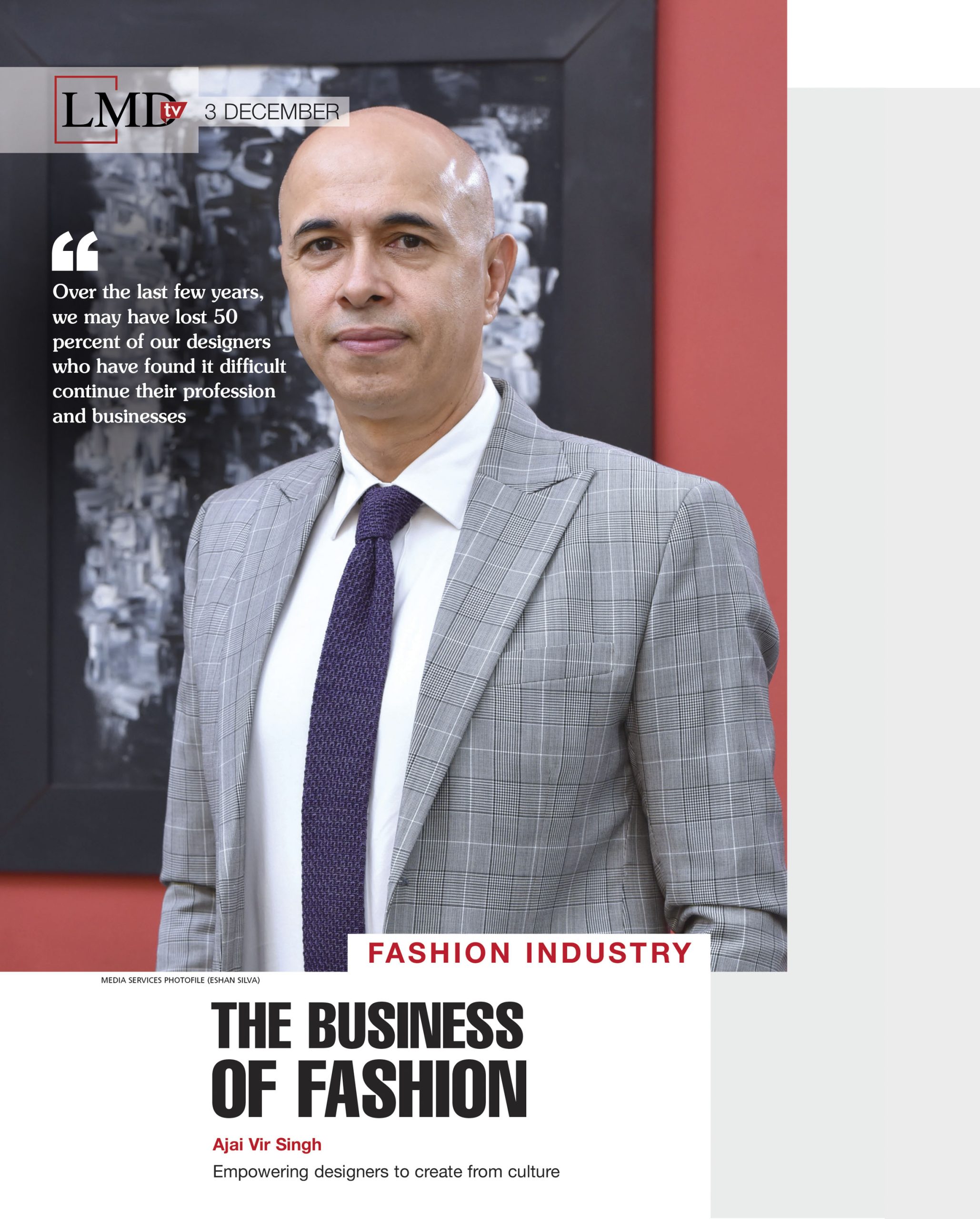
Fashion is one of the largest industries globally – and it is growing regionally. “In Sri Lanka, we are finding our feet once again, especially with the return to stability that we’re experiencing,” said the Managing Director of Colombo Fashion Week Ajai Vir Singh on LMDtv not long ago.
He explained that even though the terms ‘fashion’ and ‘apparel’ are sometimes used interchangeably, they’re separate domains.
“The global fashion industry is driven by Western markets and the growth in fashion drives the apparel industry, which is the engine that produces fashion. In Sri Lanka, apparel has always carried a massive name for our country on the international stage; but the fashion industry is a separate and creative side.”
He noted: “The fashion industry promotes designers, and helps nurture, mentor and promote them – and though globally it is connected to the apparel industry, this is not the case in Sri Lanka.”
“What happens here is that all the designers come under the category of SMEs, and they have their own little units that support their creative expressions, which you and I see as fashion,” he added.
Fashion is an expression of culture around the world. Singh explained, adding that “South Asia is extremely rich in art and culture, which includes crafts, music, literature and all expressions of creativity. Countries such as India, Pakistan and Bangladesh have infused their crafts and culture into Western orientations of their fashion, which has been facilitated by the resources, markets and stability they have compared to Sri Lanka.”
Sri Lanka has been on an economic rollercoaster; it has experienced several ups, downs and periods of steadiness in between. “If the prevailing sense of stability continues, we’ll have far more development in fashion because we have the infrastructure, fashion schools, fashion retail and so on,” he asserted.
The country is also blessed with talent in fashion, which has given rise to many designers. He continued: “Designers need to consider themselves as small-scale businesspeople. There is no way that you can create a garment and not be able to sell it – if so, you’ll go bankrupt. This means that our designers are in fact design entrepreneurs.”
However, the picture is not exactly rosy, as Singh noted: “Over the last few years, we may have lost 50 percent of our designers who have found it difficult to continue their profession and businesses, and so began doing something else.”
He added: “When economic stability drops, your propensity to spend on things which are nonessentials reduces. It affects all creative industries including art, music and related spheres, and discourages young people from entering those fields since they would opt for more stable jobs. So this reduces the talent pool.”
Singh noted that passion is the most crucial requirement to succeed in fashion, along with opportunities and exposure to what is trending in other markets.
He said: “We need to keep working consistently on our quality benchmark. Sometimes we become too emotionally involved with the design and may compromise on quality. The story behind the product and the emotions that went into it will all be there but customers will look at whether it’s worth buying or not.”
Looking at future trends that are shaping the fashion industry globally, he highlighted the drift towards nationalism.
Singh elaborated: “Around the world, people are looking for identity and this is most often defined by culture. Today’s designers are exploring how culture and crafts can be used in the creation of fashion. Identity driven fashion means your product will look different, no one else in the world can copy it and it will have a demand because it’s unique.”
“This trend of digging more into art and culture, and finding something unique to pick and create from, will shape in all countries, including emerging markets,” he concluded, adding that Sri Lanka can follow this trend too.