
LMDtv 3
Electric, hybrid and new energy vehicles (NEVs) are increasingly plying Sri Lankan streets with multiple brands entering the local market. These vehicles offer users low-cost, environmentally-friendly and energy efficient driving solutions, often presented in luxurious designs with lengthy warranty periods.
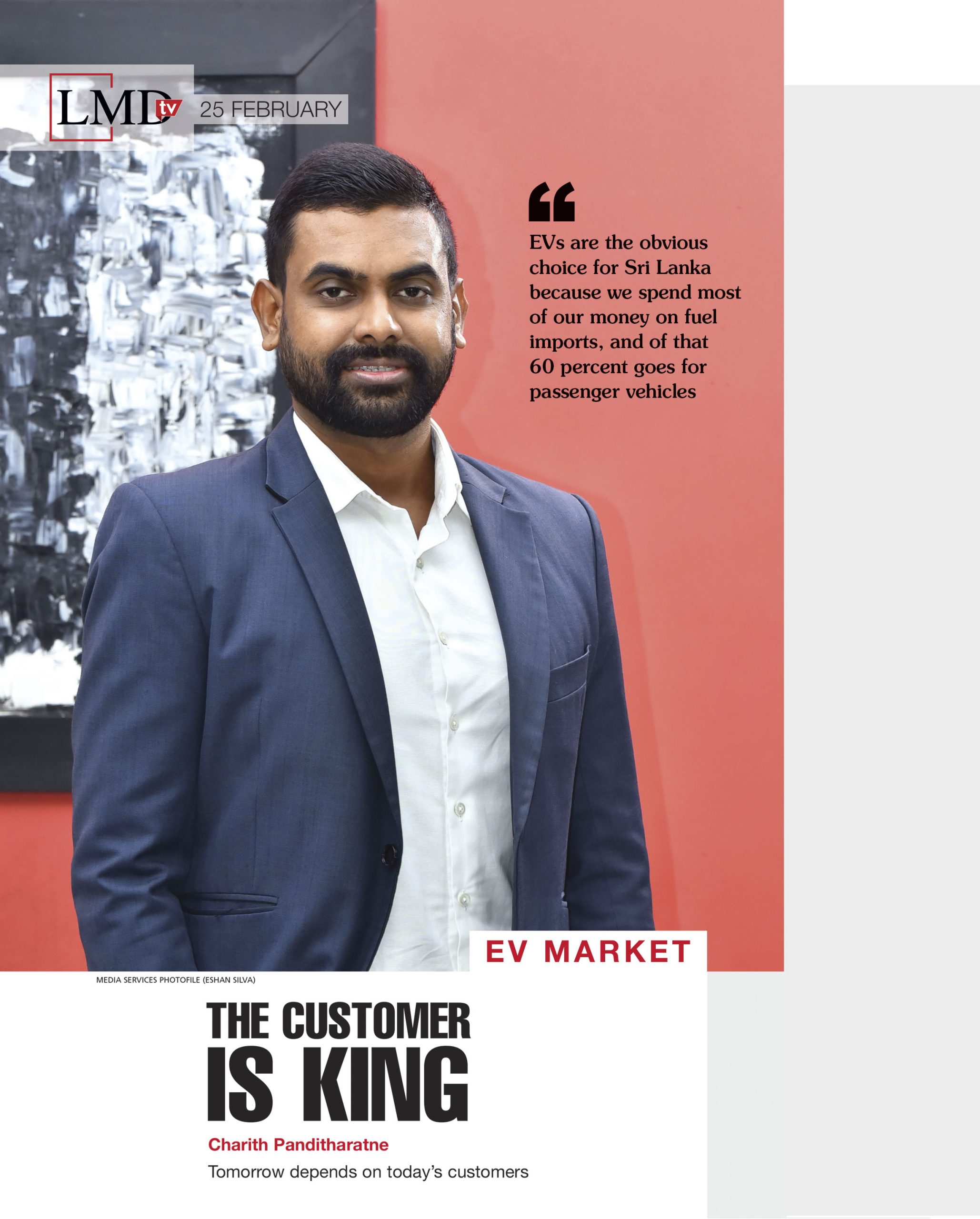
CEO of John Keells CG Auto Charith Panditharatne, speaking to LMDtv recently, noted that Sri Lanka has always been ready for electric vehicles (EVs) and NEVs because it is a small country, and people don’t travel hundreds of kilometres a day.
He added that with the latest NEVs, “which can do more than 400 kilometres per charge,” people have realised the cost effectiveness and convenience they offer.
The local market may appear to be thriving in terms of NEV adoption but it still lags behind global players due to the multi-year import ban on vehicles. Sri Lanka is five years behind modern technology while the world has moved ahead, as seen in South Asia, East Asia and parts of Europe that have embraced EVs very well, he added.
Nevertheless, the potential in the local market is immense, and this is being fuelled by a NEV friendly charging ecosystem and many people investing in solar power generation solutions at home.
He explained: “The majority of NEV customers have solar power generation at home so their travelling cost is basically zero, and repair and maintenance costs are also comparatively low. Our calculations show that it is more than 80 percent cheaper to own an EV compared to a similar level internal combustion engine (ICE) vehicle.”
Demand in the secondhand market is also looking positive.
To this end, Panditharatne noted: “It depends on the longevity of the product and how good the after sales service is since that’s what transfers the element of trust to another person to buy the same vehicle. And secondhand values haven’t dropped because the ecosystem, spare parts and services are available.”
Due to the rapidly increasing demand and supply of NEVs however, many players have faced challenges with servicing.
He revealed that “servicing is a big challenge. Sri Lanka is buying NEVs after five years and since a lot of talent – mainly technicians – has migrated to other countries, we have to train people in new technologies and how to work with them. Servicing and maintenance infrastructure is also not fully available yet.”
While the availability of charging infrastructure also needs to be addressed, Panditharatne claimed that it has developed much faster than expected.
Another determining factor vis-à-vis the demand for NEVs pertains to financing options. He explained that “earlier, EV customers could lease up to 90 percent of the vehicle value but this has been reduced recently. So now, regardless of whether you buy an ICE, hybrid or EV vehicle, the financing options are the same.”
Panditharatne remains optimistic about the next couple of years.
He said: “Sri Lanka came into action after five years and there was a lot of pent-up demand, which I feel has reduced. We should see a normalised market this year and in 2027. NEV penetration will depend on how well the industry manages infrastructure and after sales service – only this will give people the confidence to opt for EVs and NEVs.”
“EVs are the obvious choice for Sri Lanka because we spend most of our money on fuel imports – and of that, 60 percent goes for passenger vehicles. We spend more money on fuel than on food and medicine. Imagine being able to reduce our fuel costs by 10 percent and what we’ll be able to achieve with those savings,” he pointed out.
The market will become more competitive. This is because only a certain number of vehicles will be sold and all players will want a share of it. It will depend on how well companies take care of existing customers because word of mouth spreads.
At the end of the day, everything depends on how well you treat your customers, he reiterated.