
LMDtv 2
“It (q-commerce) is not yet considered an essential route to market, and hasn’t been identified by many brands and most distribution networks”
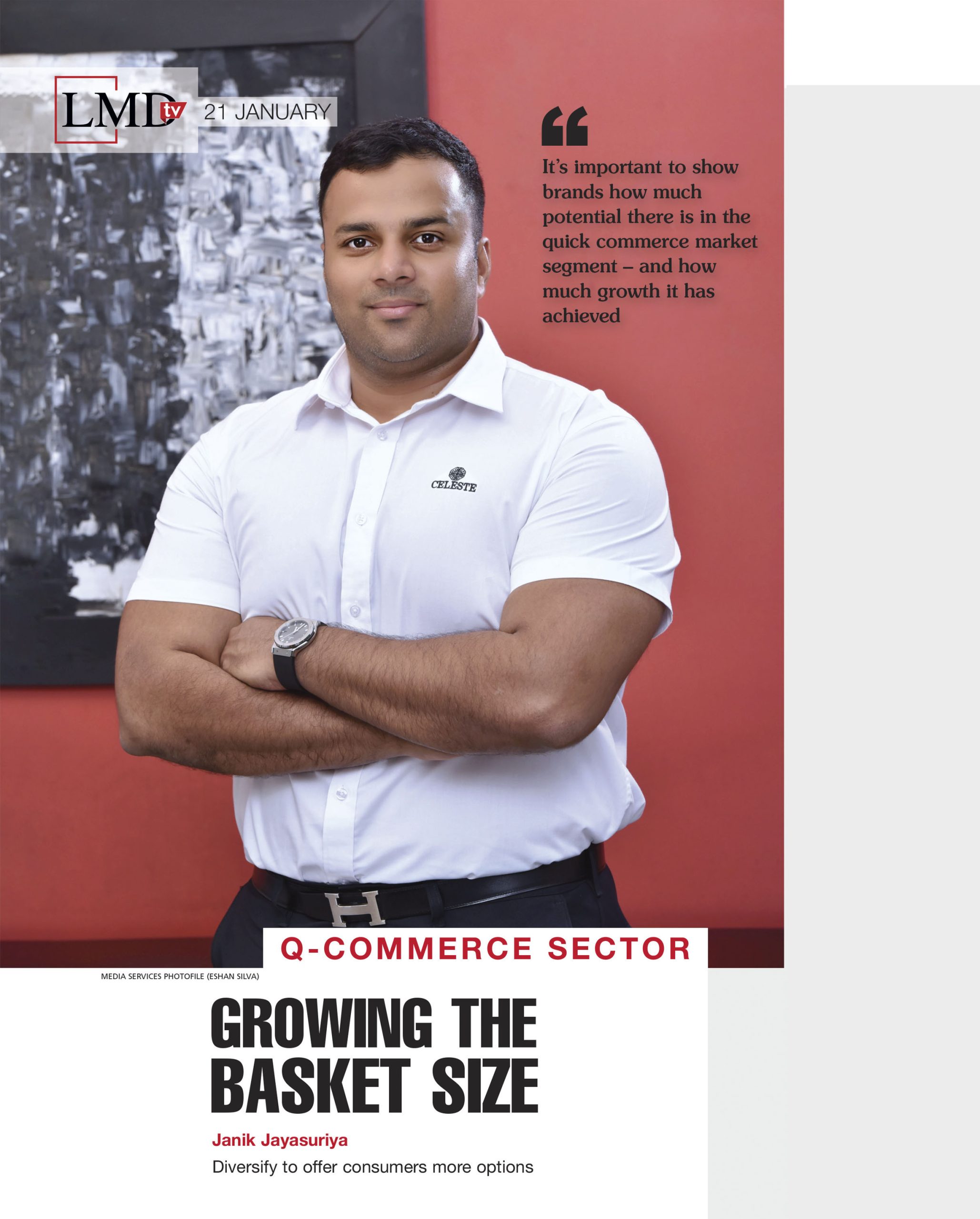
Quick commerce (a.k.a. q-commerce) may have emerged as a support service during the pandemic but today, this innovative route to market is here to stay, says the Founder and Managing Director of Celeste Janik Jayasuriya.
Speaking on a recent airing of LMDtv, he explained that the key distinction between e-commerce and q-commerce is that the former refers to traditional online shopping where deliveries take place on the same or next day while q-commerce ensures delivery in an hour or two.
Jayasuriya added that even though the revolution in quick commerce here in Sri Lanka began during the pandemic, we aren’t far behind global counterparts. He explained that in the UAE, delivery is completed within15 minutes, while in India they often take less than 10 minutes over a 24 hour period.
He continued: “In Sri Lanka, we operate around the clock and do 30 minute deliveries; and we’re working to bring that down a little more to around 25 or even 20 minutes.”
The Indians have mastered both the art and science of q-commerce, and Jayasuriya believes that Sri Lanka is perhaps only three or four years behind, “which is encouraging since we have a lot to learn from them.”
He continued: “Today in India, you can order a PlayStation at 2 o’clock in the morning and have it delivered to your doorstep at the same price as any store in 10 minutes – that’s how optimised Indians are in terms of their last mile logistics.”
“It’s the type of demand they’ve created,” he added.
Though it may not be practical in some parts of the world, he feels we can achieve this in Sri Lanka.
According to Jayasuriya, consumers are becoming accustomed to “being able to order anything they want and having it delivered to their doorstep at the same price as any supermarket.”
Although they turned to q-commerce during the pandemic due to a lack of choice, they’ve adopted it as a go-to option today.
And Jayasuriya explained how quick commerce operates in Sri Lanka through aggregators: “In Sri Lanka, we have two major aggregators – Uber Eats and PickMe. They connect merchants with customers, generate orders and manage last mile deliveries.”
However, q-commerce is not without its share of challenges, he explained: “It is not yet considered an essential route to market, and hasn’t been identified by many brands and most distribution networks. When it comes to stock reservations, quick commerce players might probably receive the lowest priority; and as a result, there are issues in demand planning and product availability since fill rates can be lower.”
Q-commerce operators use a range of solutions to overcome these challenges including maintaining slightly higher buffer levels, building strong relationships and continuing communications with brands.
Jayasuriya averred that “it’s important to show brands how much potential there is in the quick commerce market segment – and how much growth it has achieved. It’s important to grab the attention of decision makers so they know that it’s a very good route to market and something they need to start focussing on.”
Q-commerce, he noted, is more about diversity of products rather than quality.
“You’re not talking about large baskets: quick commerce is about allowing individuals who are usually super organised in their lives and plan out every single detail not have to think too much when it comes to shopping for basics.”
Consumers don’t have to keep everything stocked in cupboards and fridges as this leads to wastage – because they are overbuying to avoid going back to the store frequently.
“You’re buying what you need, when you need it. You are reducing wastage, saving time by not visiting traditional supermarkets, finding parking space, standing in line and not paying more. This is the q-commerce mindset,” he explained.
Jayasuriya also stressed that the goal isn’t about increasing quantity but growing the basket size by diversifying categories so that people have more options.