
LMDtv 1
“There shouldn’t be a term called ‘data driven marketing’; it should simply be informed decision making”
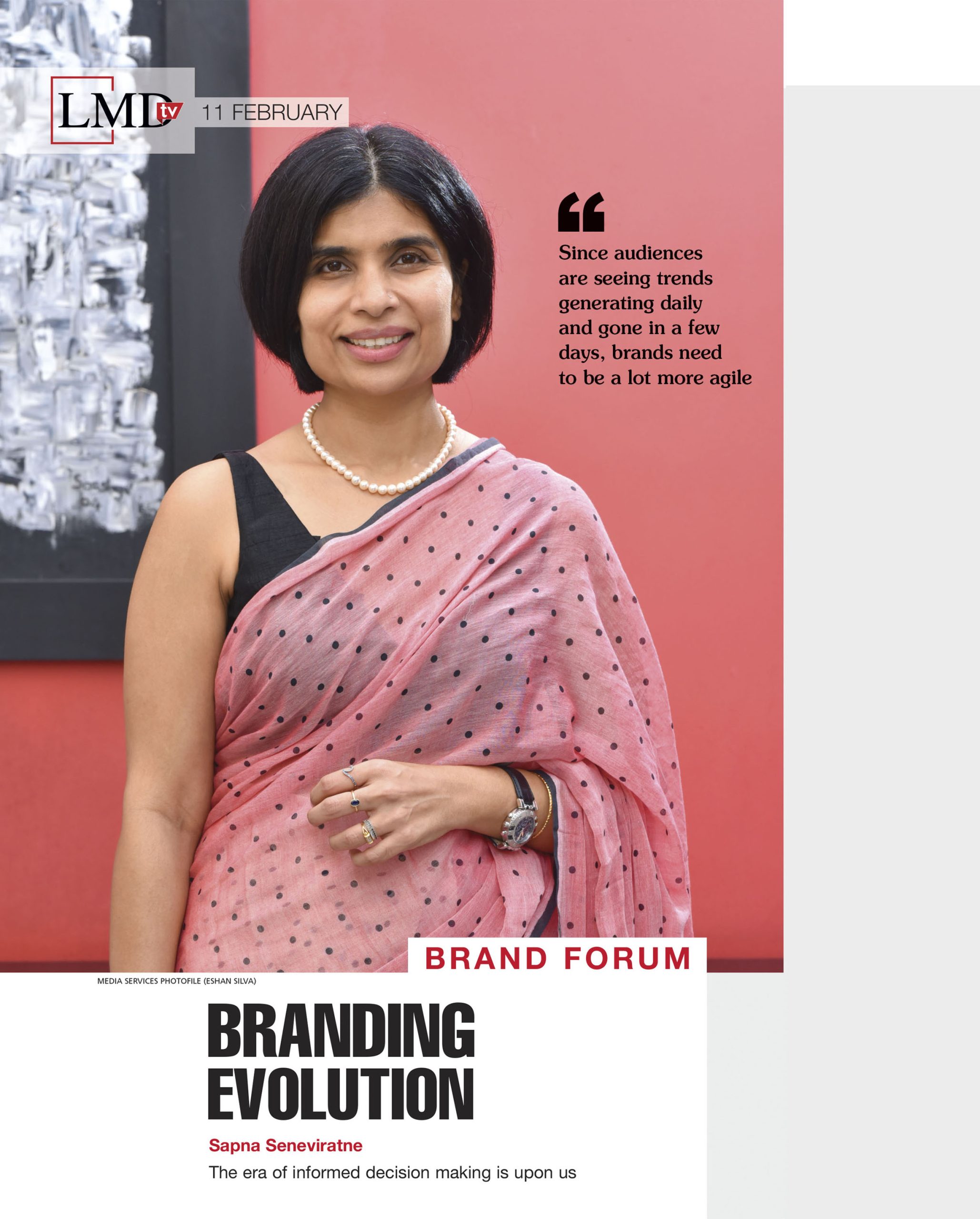
The dynamics around marketing are shifting rapidly as trends gain momentum and fade just as fast. And the world of branding is evolving amid numerous changes and disruptions, requiring both brands and consumers to wrap their heads around these transformations.
CEO of Publicis Groupe Sri Lanka Sapna Seneviratne shared several micro marketing trends when speaking to LMDtv’s Ruwandi Perera, beginning with the division of creativity into two distinct lanes.
“The creative lane too is splitting. We see AI produced cheaper content emerging; and it’s more focussed on scale, volume and speed. There’s another space evolving, which refers to human crafted storytelling that is becoming a stronger differentiator,” she explained.
Seneviratne observed: “Many of us are used to looking at brand building within a highly emotional impact making space but I think that’s shifting more towards trust, credibility and sustainability as audiences are demanding greater transparency.”
“We’re also seeing communities on Discord and other platforms, since brands are reflective of what’s happening in real life, and are busy emulating this trend and building their own communities,” she added.
While brand related creativity was previously more focussed on maintaining consistency, the need of the hour is to differentiate, she stressed: “Instead of taking a quarterly or annual point of view, buyers are recognising that things are changing in real time. Since audiences are seeing trends generating daily and gone in a few days, brands need to be a lot more agile.”
She continued: “Adapting fast is important because there’s a generational turnover taking place; there’s an entire generation that has not heard of your brand. Therefore, you have to constantly work at making sure that you’re in touch with newer audiences.”
With digital transformation becoming a staple for businesses, it’s also shaping how brands operate.
Conventional wisdom is that brand building is a long-term strategy: you invest in media and creativity, and develop distinct brand assets which over time, stand out in your audience’s minds.
She noted that today, media investment is not merely about shifting from traditional to digital but is increasingly about social content and how brands can become more socially engaged. Digital transformation also provides brands with notably more data at their disposal. Yet, not all brands make use of data effectively.
Digital native brands are generally adept at collecting and leveraging data. Brick and mortar brands are also clever at gathering data at the retailer, distributor and consumer levels but they haven’t built their digital ecosystems yet. She stressed that there are brands that are good at data collection too, although this data is sitting in various silos across different departments – which means that brands don’t have a focussed view.
The main challenge with data lies in using it properly: many brands fail to connect data insights with decision making which ironically, is much easier now with AI driven analysis.
One reason for this mismatch is stakeholder management, she pointed out: “We aren’t too good at handling senior stakeholders and building awareness on the importance of data driven decision making.”
Seneviratne highlighted another barrier, which is the reluctance to invest time and resources in data driven decision making. This circles back to issues in stakeholder management, and the challenge isn’t unique to Sri Lanka; it is common globally.
Finally, it comes down to the human factor including leadership. “There is a lot of education that’s required at the marketing end to make sure that data driven decision making is understood. It’s also necessary to understand that the more you spend with linked outcomes, the better it is,” she opined.
And she surmised that “there shouldn’t be a term called ‘data driven marketing’; it should simply be informed decision making.” she added.