JOHN KEELLS HOLDINGS
RANK 5
“The group’s growth momentum remains closely aligned with the broader economic recovery with core sectors delivering strong performances”

Deputy Chairperson
Group Finance Director
Q: As Sri Lanka continues to pursue economic and political stability, how is the corporate sector driving growth while overcoming challenges that persist on many fronts?
A: The corporate sector has demonstrated its role in both the recovery of the country and driving growth. What Sri Lanka has lacked over the years however, is stability and consistency in economic policy.
With key macroeconomic fundamentals sustained in a strong position – low inflation, stable interest rates, improved foreign exchange inflows and a steady currency – the country is well positioned to sustain its upward momentum. For the first time in recent history, all key macroeconomic fundamentals are aligned and have a strong foundation simultaneously, which is why the recovery this time around can be sustained.
Tourism is rebounding strongly with arrivals matching the pre-crisis levels of 2018. This resurgence is revitalising the hospitality, retail and transport sectors while bolstering foreign exchange earnings. Exports have remained resilient, reinforcing the country’s external position and supporting the continued broader economic revival.
Port operations are expanding rapidly, fuelled by rising cargo volumes and strategic infrastructure investments. With the right policy alignment, Sri Lanka is poised to become a regional logistics and transportation hub, leveraging its geographic advantage and enhanced operational capacity.
Emerging sectors can contribute towards gaining further momentum. Renewable energy projects have the potential to attract capital and reduce dependency on fossil fuels. E-commerce and IT services are scaling in response to digital adoption.
Greater clarity on the strategic focus areas and continued commitment to sustaining reforms will be vital to ensure Sri Lanka capitalises on the next wave of growth and attracts meaningful foreign investment.

Q: How is your group faring against the backdrop of the prevailing macroeconomic milieu?
A: Amidst a stabilising macroeconomic backdrop, the group’s transformational investments are proving pivotal – not only as growth drivers for the business but also catalysts for national development. With strong fundamentals and a future focussed portfolio, the group is well positioned to unlock value across both established and emerging sectors.
The group’s growth momentum remains closely aligned with the broader economic recovery with core sectors delivering strong performances. The leisure sector continues to benefit from the resurgence in tourism across properties in Sri Lanka and the Maldives while consumer facing businesses – particularly supermarkets and consumer foods – are witnessing renewed momentum, supported by improving consumer sentiment.
Ports and shipping operations are expanding steadily, buoyed by favourable regional trade flows. Sri Lanka’s proximity to India further enhances its strategic relevance, offering a unique opportunity to capture value from India’s accelerating economic growth, particularly in tourism and maritime logistics.
Q: Could you outline your group’s plans – especially with regard to expansion?
A: After many years of investment in expanding our portfolio, capacity and capability, the group is now focussed on extracting value from these transformative investments. These large-scale projects, designed to unlock long-term value, are beginning to deliver tangible impact across key sectors.
The focus will be on realising the vision behind these investments to ensure they create a transformative impact – not only on the performance of John Keells Holdings (JKH) but also the country at large.
In leisure, City of Dreams Sri Lanka stands as an iconic development. Positioned to capture rising outbound travel from India, this integrated resort is set to elevate Sri Lanka’s profile as a premium destination in the region and serve as a powerful growth catalyst for the group.
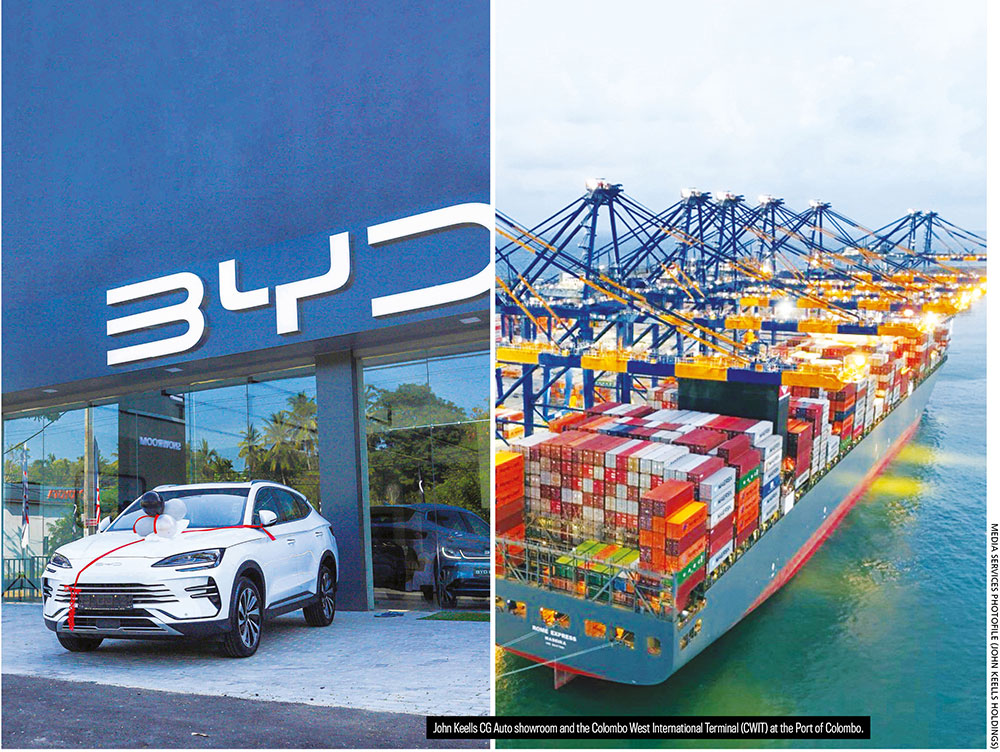
And in ports and shipping, the commencement of operations at the Colombo West Container Terminal (WCT-1) marks a major milestone. With the second phase already underway and ahead of schedule for completion by end 2026, WCT-1 is expected to enhance capacity at the Port of Colombo and reinforce Sri Lanka’s competitiveness as a regional transhipment hub.
The current momentum seen in the performance of phase 1 – barely a few months since commencement – validates the long-term growth potential of the Colombo port and its ability to become a notable regional transportation and logistics hub. The group will continue to explore investment opportunities aligned with these prospects.
In addition, the group’s new venture in the new energy vehicle (NEV) business has also gained strong traction, capturing a marked market share from inception. Meanwhile, core sectors such as consumer foods, supermarkets, financial services and property continue to explore emerging opportunities, supported by evolving consumer dynamics and digital integration.
These businesses remain focussed on capturing growth through product innovation, operational agility and market responsiveness. The group’s initiatives in advanced data analytics will further enhance its ability to leverage data driven insights, creating a sustained competitive advantage through customer centric and value driven initiatives.
“JKH remains deeply committed to upholding the trust placed in it over not only decades but more than a century of operations”
Q: What are your group’s goals and objectives for financial year 2025/26?
A: The group’s immediate strategic focus is on consolidating returns from recent large-scale, transformative investments, and translating these into sustained growth and enhanced shareholder value. With key projects entering their operational phase now, the group is well positioned to unlock long-term value across its diversified portfolio.
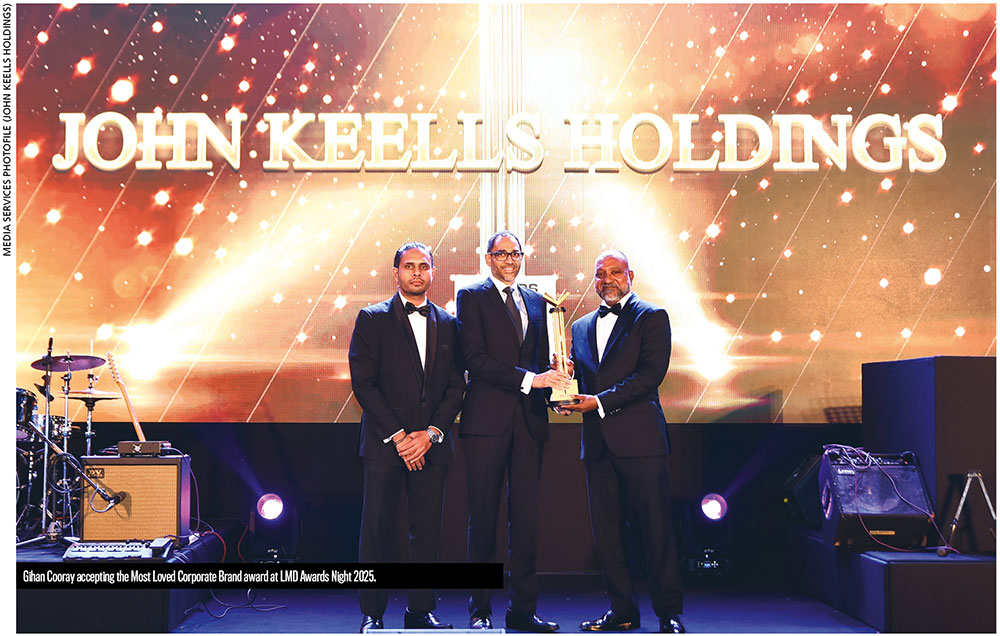
As Sri Lanka’s most respected conglomerate, JKH remains deeply committed to upholding the trust placed in it over not only decades but more than a century of operations. Our reputation has been built on a foundation of integrity, transparency and principled leadership.
Strong governance frameworks continue to guide decision making, and reinforce the group’s commitment to responsible growth, stakeholder value and national progress. We will also focus on further expanding our information systems in line with technological developments, which are expected to drive productivity, create new opportunities and strengthen its competitive edge.
Q: What is your assessment of the country’s image risk profile at this juncture?
A: Sri Lanka’s investment climate continues to show positive signs of recovery. The IMF, World Bank and rating agencies have acknowledged this remarkable progress while noting that the recovery depends on the consistent implementation of reforms. The political landscape has stabilised with no major elections expected for the next few years.
Institutional alignment around the national reform agenda has gradually improved, though maintaining policy continuity and fast tracking reforms will be essential to sustain recovery momentum and provide further impetus to growth.
While the country’s image has improved on the back of these reforms and the government’s focus on better governance, the facilitation of trade partnerships, clarity on strategic sectors for investment, public-private partnerships (PPP) and broad-basing investment in public enterprises will further spur foreign investment and enhance the country’s image.
Q: How can Sri Lanka improve its ease of doing business and competitiveness on the international stage, in your opinion?
A: The country’s competitiveness on the global stage hinges on its ability to implement targeted, high impact reforms. Priorities should include streamlining regulatory approvals through one stop mechanisms, improving land access and offering tailored incentives to attract foreign investment.
Consistent policy execution is not only about stable tax rates; the focus should be on ensuring clarity and continuity.
For instance, the issues and uncertainty surrounding the motor capacity of Build Your Dreams (BYD) electric vehicles (EVs) and the dispute with Sri Lanka Customs, highlight the need for efficient redress mechanisms and timely dispute resolution through impartial and independent means, without always resorting to judicial processes.
The same applies to aspects of taxation and tax administration. These are areas the government should focus on as they influence investor sentiment and the ease of doing business. Any prospective investor carefully studies the landscape and is well aware of the ground realities faced by businesses.
Telephone 2306000 | Email jkh@keells.com | Website www.keells.com