JAPAN ELECTION
Even though the appointment of Japanese Prime Minister Sanae Takaichi as the first female premier of a heavily male dominated legislative system was heralded as a milestone in October last year, she was hampered by the minority government that the Liberal Democratic Party (LDP) had to form based on a confidence and supply deal with the Japanese Innovation Party (JIP) and three independents.
The LDP held only 233 seats in the house of representatives (the lower house of the National Diet of Japan) that comprises 465 seats. It lost its majority when longstanding junior partner Komeito left the coalition, mainly due to unresolved corruption scandals and illegal political financing in the LDP.
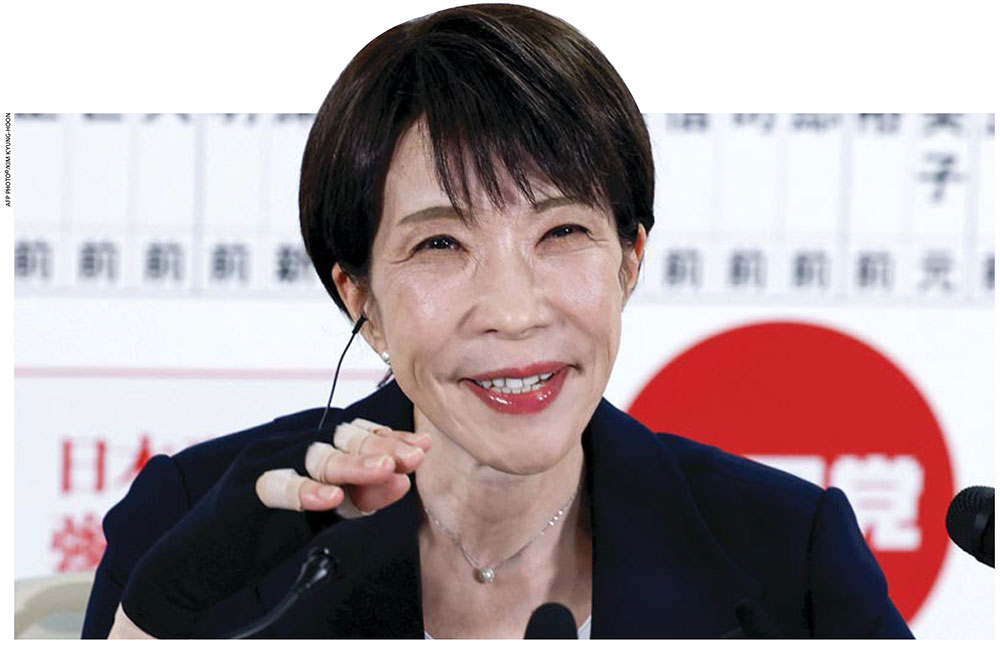
TAKAICHI WINS AN OVERWHELMING MANDATE!
Saro Thiruppathy reports on the landslide election victory that Japanese voters granted Prime Minister Sanae Takaichi at the recent snap poll
SNAP ELECTION This made Takaichi a lame duck premier; and on 19 January, she called a snap election – a decision that was also prompted by her rising popularity. Takaichi dissolved the lower house on 23 January and vowed to resign if she failed to gain the majority she needed in parliament.
Japan went to the polls in freezing temperatures on 8 February and handed Takaichi a two-thirds majority to govern without fear of having her plans fall by the wayside. The LDP bagged 316 out of 465 seats in the lower house and secured a supermajority that gave Takaichi the liberty to do whatever she wants.
As in the case of super majorities around the world however, this is a double-edged sword – because governments often win the freedom of the wild ass, and are then prone to making gargantuan mistakes at both domestic and foreign policy levels.
While Takaichi isn’t exactly a first timer as a leader and was an ardent prodigy of the late former prime minister Shinzo Abe, her extreme right-wing policies may be of some concern to the more liberal and democratic people of Japan.
Perhaps that’s why the average nationwide voter turnout, according to the Japanese Ministry of Internal Affairs and Communications, was around 55 percent.
Takaichi aims to cut subsidies and review special tax measures so that she can avoid creating new debt
THREE PROMISES So what did Takaichi promise the Japanese people to help her secure this stunning victory?
Her commitments fell into three broad categories: economic relief, security and foreign policy, and domestic and social issues. Japan has experienced extremely high economic costs over the past few months due to rising inflation, a weak Japanese Yen and rising food prices.
Although pay levels had risen, inflation adjusted wages dropped and placed a huge strain on households. This is in addition to the increased taxes and social security payments levied on an already struggling people.
Extreme weather events also impacted climate yields and food production, and the weakened yen increased the cost of imported goods and services including food and energy.
Takaichi promised to scrap the consumption tax of eight percent on food and beverages for two years to provide economic relief in terms of the cost of living. She proposes to implement this pledge by autumn and aims to fund the US$ 32 billion requirement by reallocating existing budgeted funds, rather than issuing deficit financing bonds.
But the specifics on how the premier plans to do this aren’t particularly clear.
Takaichi aims to cut subsidies and review special tax measures so that she can avoid creating new debt. However, analysts claim that this would be a policy shift since Takaichi had previously been cautious about cutting taxes.
Furthermore, she wants to revive ‘Abenomics’ (her erstwhile mentor Abe’s economic policies) by introducing large supplementary budgets, and crisis management investments in areas such as food security and innovation. Takaichi also wants to focus on reducing Japan’s debt to GDP ratio through her ‘work, work, work’ mantra.
In terms of security and foreign policy, she plans to increase military spending, as well as beef up defence and anti-espionage legislation. Takaichi plans to amend Article 9 of Japan’s pacificist constitution and formalise the status of its military.
And as she is extremely aggressive towards China, the Japanese prime minister has vowed to respond to any potential attack by Beijing against Taiwan. Takaichi is also keen to strengthen ties with US President Donald Trump.
With regard to domestic and social policies, she aims to tighten immigration regulations and increase the policing of foreign residents. Takaichi is also keen to maintain conservative social practices such as opposing different surnames for married couples and encouraging the imperial succession of males only.
She is currently boosting energy security by restarting Japan’s nuclear energy programme, which had been temporarily placed on the back burner after the Fukushima fallout.
And Takaichi wants to establish a new centralised national security agency as a response to intelligence gaps as regards threats from China, North Korea and Russia.
Her extreme right-wing agenda has been driven through fearmongering and though it paid dividends at the polls, it’s left to be seen whether her victory will be a boon or bust when the time comes to deliver, particularly on economic relief.