EDUCATION SECTOR
Q: How have classroom practices in schools changed over the past 10 years – and what changes do you think are permanent?
A: Over the past decade, schools have increasingly shifted towards student centred learning. Teachers are encouraged to place a greater emphasis on clear learning outcomes and use effective questioning techniques to promote critical thinking.

Compiled by Yamini Sequeira
ENDLESS LEARNING JOURNEY
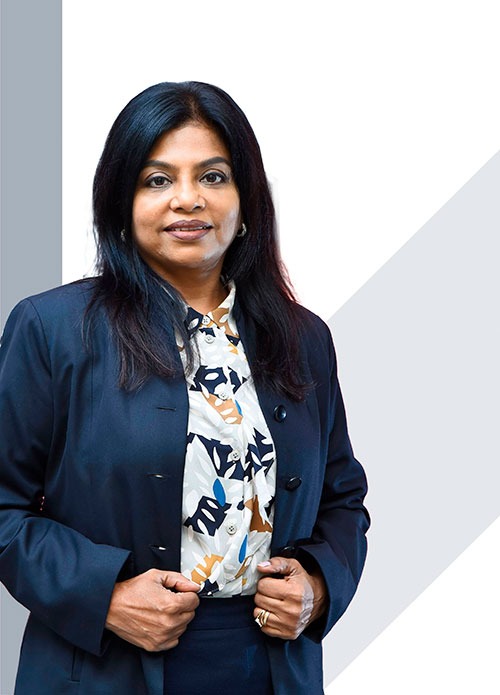
Premila Paulraj urges the education sector to align with emerging growth segments
There is now a stronger focus on creating inclusive and supportive classrooms, where different learning styles are respected and students encouraged to learn from mistakes. In terms of assessment methods, formative assessment and timely feedback – often supported by digital tools and interactive platforms – have become more common.
Positive behaviour strategies and clear routines are widely used to create structured, respectful learning environments. These approaches reflect a broader pedagogical shift that is likely to remain a permanent part of classroom practice in Sri Lanka.
Q: What blended learning or educational technology (edtech) approaches have shown real impact in your classrooms?
A: A range of blended learning and edtech platforms are used to support both teaching and learning in international schools and institutions. These platforms provide access to high quality resources and question banks, helping ensure consistency and standardisation of content across classrooms and geographies.
As a result, students find learning more interactive and engaging, while teachers benefit from efficient and effective delivery.
However, barriers to wider adoption remain. Limited infrastructure especially in less resourced settings and concerns about young children’s access to devices continue to restrict the full integration of edtech in classrooms.
Q: How do you support teachers’ professional development so that pedagogical change is sustained?
A: Unlike in many countries, a formal teaching qualification such as a B.Ed or M.Ed is not mandatory here and many enter the profession with only subject based qualifications.
While the National Institute of Education (NIE) provides training for government teachers, there is growing recognition of the value of structured teacher professional development across the sector.
Sustaining pedagogical change requires more than one-off training; it involves ongoing investment by both awarding bodies and educational institutions, as well as a personal commitment from teachers to continuously develop their practice.
Q: How do you ensure assessment practices measure deeper learning (i.e. transferable skills) rather than rote recall?
A: Effective assessment goes beyond memory tests, and measures how well students can apply, analyse and evaluate knowledge.
Certain international qualifications are designed to move progressively from recall to higher order thinking, encouraging critical reasoning and communication.
To achieve this, assessments use real world contexts, data interpretation and command verbs to prompt deeper engagement. Case studies, graphs and problem based scenarios test how students think, not merely what they know.
By combining authentic contexts with analytical challenges, these assessments measure skills such as critical thinking, problem solving, communication and adaptability, preparing learners for university, work and lifelong learning.
Q: How do you see higher education contributing to the development of students?
A: Higher education plays a vital role in shaping both the personal and professional development of students in an increasingly fast changing world.
Beyond academic knowledge, it fosters critical thinking, discipline, resilience and a commitment to continuous learning – qualities that are highly valued by employers and essential for personal growth.
Earning a higher education qualification signals an individual’s ability to meet structured academic standards, demonstrating focus, perseverance and adaptability.
However, obtaining a qualification is not the end of the journey. With many traditional industries transforming or disappearing, graduates must take personal responsibility for lifelong learning and skills development.
Q: In what ways do recognised credentials continue to influence employability and global mobility?
A: Recognised credentials such as diplomas and degrees continue to play a critical role in enhancing employability and global mobility. They provide individuals with the foundational knowledge and theoretical understanding required to enter and succeed in specific industries.
However, many roles require practical skills, industry specific competencies and soft skills, such as language proficiency, adaptability and cross cultural communication. Modern diploma and degree programmes increasingly integrate coursework, projects, internships and practical assignments, to bridge the gap between theory and real world application.
Q: How can Sri Lanka strengthen the link between higher education, industry needs and national development priorities?
A: Sri Lanka can strengthen this link by aligning skills and qualifications with key growth sectors – such as the digital economy, renewable energy, modernised agriculture, the blue economy, and tourism tech and wellness.
Focussing on renewable energy, agricultural modernisation and innovative tourism will boost productivity, exports and employment while supporting national sustainable development goals. Universities and vocational institutes should embed digital skills, practical training and industry partnerships into their curricula to prepare graduates for these high demand roles.
Soft skills such as communication, adaptability, collaboration and problem solving are common threads across these sectors, enabling professionals to thrive in complex environments.