DISASTER PREPAREDNESS
Cyclone Ditwah has exposed both the strengths and weaknesses of Sri Lanka’s political system and society. In the immediate aftermath of the disaster, some opposition political parties attempted to turn the calamity to their advantage by focussing narrowly on government failures – particularly the alleged delay in responding to meteorological warnings.
While accountability is important, a disaster of this magnitude should have prompted political unity rather than competition. Failure to rise above partisan interests in such moments risks signalling political and moral bankruptcy.
WHAT CYCLONE DITWAH UNEARTHED
Social solidarity is a resource that can’t be ignored – Dr. Jehan Perera explains
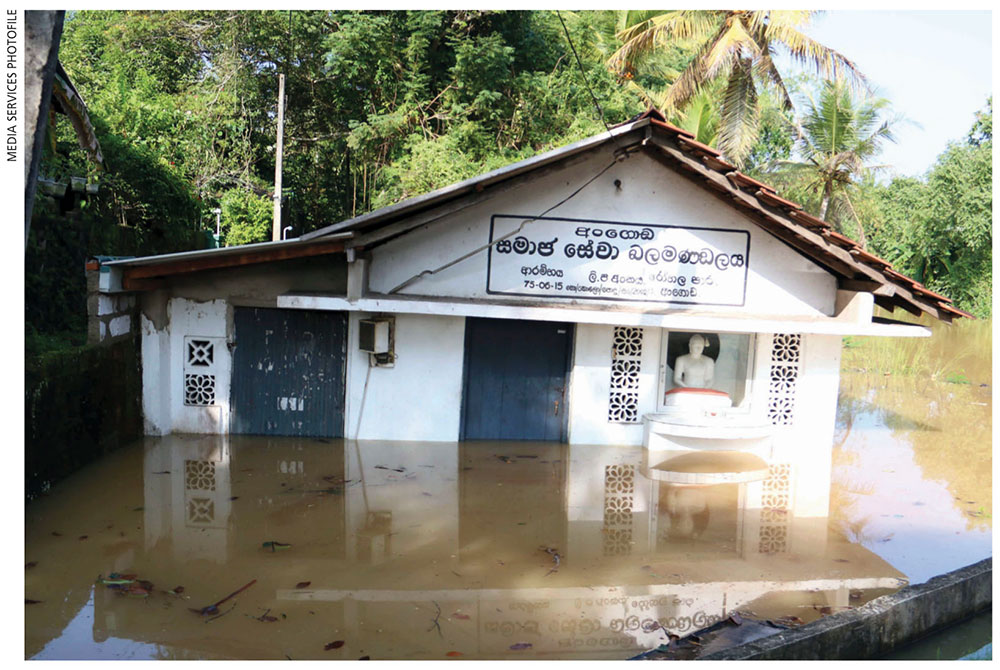
The devastation caused by Cyclone Ditwah can’t be attributed to the present government alone because the scale of destruction was compounded by decades of neglect of disaster preparedness systems.
Successive governments have failed to use allocated funds for disaster management in a transparent and effective manner. Land identified as high risk or Red Zones by the National Building Research Organisation (NBRO) was repeatedly built on, despite warnings that date back nearly four decades.
The institutional process of identifying landslide prone areas began in the mid-1980s, yet enforcement was weak and public awareness limited. Civil society, the media and political leaders across various administrations all share responsibility for allowing unsafe settlement patterns to continue.
And Sri Lanka’s experience wasn’t unique.
Other countries in the region including Indonesia, Thailand and the Philippines suffered severe damage from cyclones occurring around the same time. Climate change has intensified rainfall patterns across South and Southeast Asia.
During Cyclone Ditwah, parts of Sri Lanka’s central highlands received over 500 millimetres of rain in a short period, a volume approaching a substantial proportion of the average annual rainfall in some areas. Such extreme weather events now exceed the assumptions upon which older disaster management systems were designed.
These realities point to the need for a fundamentally different approach.
Climate change joins economic crises, ethnic divisions and corruption as challenges that no single party or government can address alone. An inclusive approach that brings together government, opposition, civil society, religious institutions and the private sector is essential.
Meaningful public consultation must be central to this effort. Policies on disaster preparedness, land use, resettlement and environmental protection will only succeed if they are openly discussed, contested and refined, by way of participation of affected communities and independent experts.
The public response to the cyclone demonstrated what such inclusivity can look like in practice. Within hours of the disaster, spontaneous relief efforts emerged across the island, driven largely by younger people using digital platforms.
There was no central organiser. Volunteers mobilised resources, set up community kitchens in schools, places of worship and private spaces, and coordinated transport to areas cut off by floods and landslides. Social media was used to match donors with needs in real time. This informal network often proved more agile and effective than formal institutions.
In moments of crisis, Sri Lankans responded to one another as fellow human beings rather than members of separate communities. This social solidarity is a resource that can’t be ignored. The challenge now is to ensure that this unity extends beyond emergency relief into long-term reconstruction.
President Anura Kumara Dissanayake has spoken of resettling people living above 5,000 feet and reforesting those areas. Such proposals raise complex questions that can’t be resolved without broad public consultation. Resettlement requires land, livelihoods, infrastructure and social acceptance, and it directly intersects with unresolved issues of land rights.
And any resettlement programme in the hill country must address the historical marginalisation of the Malaiyaha Tamil community. Since independence, they have been denied secure land ownership – first through citizenship policies and later, because of entrenched poverty and structural neglect.
Their labour sustains the plantation economy, yet they remain among the poorest communities in the country. A equitable solution requires more than relocation, and demands inclusive planning, political consensus and a willingness to confront longstanding inequities.
While Cyclone Ditwah has exposed the failure in governance and preparedness, it has also revealed a powerful example of public solidarity and initiative. The government and the more responsible sections of the opposition need to be willing to engage sincerely with the public through open consultation.
Sri Lankans have shown what unity and energetic action look like; it’s now up to the political leadership to emulate or reject at its peril.