CYCLONE DITWAH REVISITED
What began as a seemingly ordinary end to November escalated into one of the most devastating flood events in Sri Lanka’s history. According to the Director General of the Department of Meteorology on 29 November, the cyclone had been reportedly detected on 12 November but little action was taken till the moment it struck.

SRI LANKA’S WORST NATURAL DISASTER
In the aftermath of the cyclone, humanitarian assistance efforts from state institutions and NGOs, as well as religious organisations and the international community, have been mobilised to address the widespread destruction.
Alongside these endeavours, large-scale voluntary efforts from citizens across the island have coalesced to assist those in need. Organisation and coordination have taken place rapidly through social media, combining the spirit of human compassion and charity, with the efficiency and convenience of technology.
Ditwah was the 14th tropical depression and fourth cyclonic storm of the 2025 North Indian Ocean cyclone season. Heavy rainfall and high velocity winds precipitated into a severe storm with the highest recorded wind speeds hitting the island at 75 km/h.
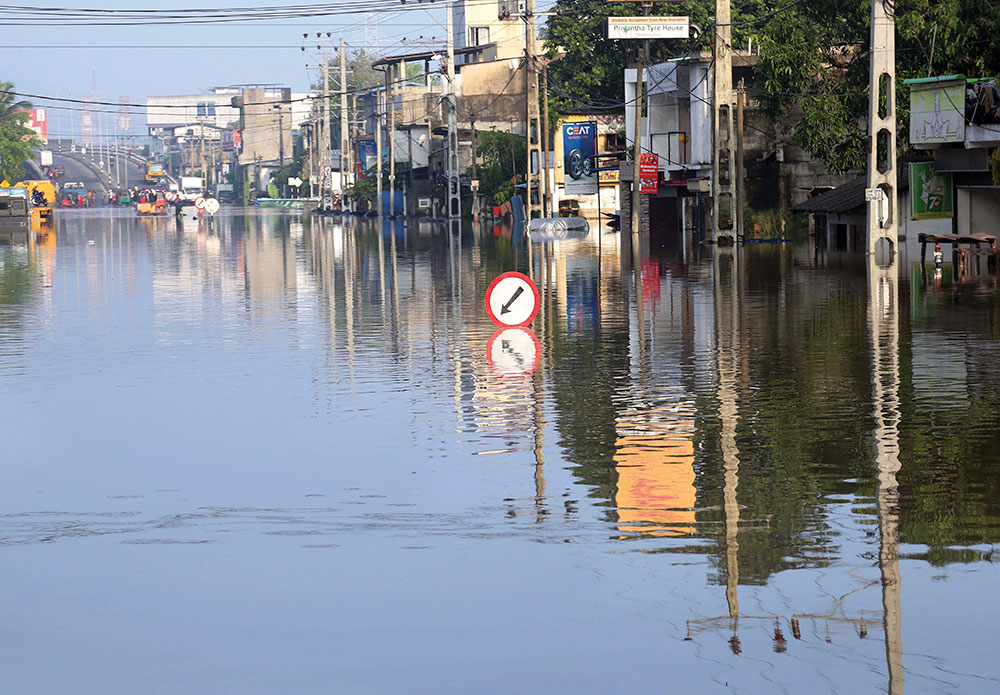
Torrential rainfall from 27 to 29 November accompanied by high velocity winds led to widespread flooding, landslides and destruction of infrastructure – contributing to deaths, resource scarcity and population displacement.
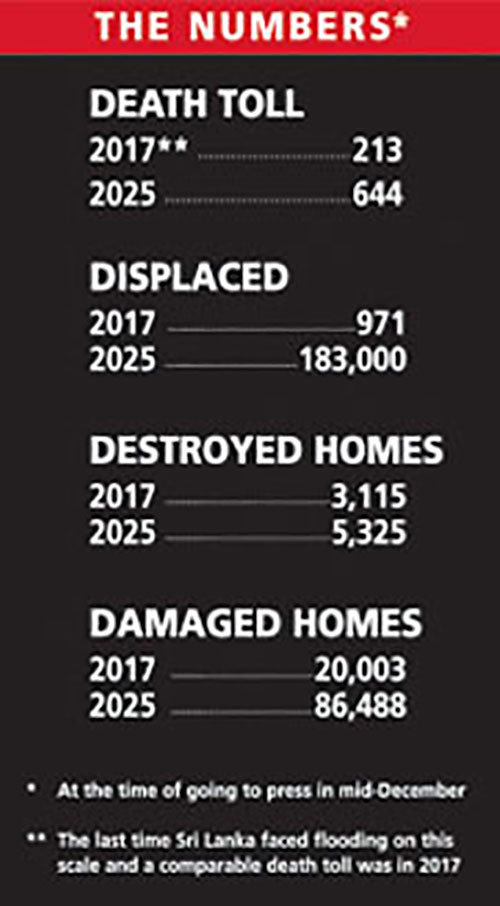
Described in many quarters as a crisis worse than the 2004 tsunami, the death toll so far has been recorded at 644, with more than 180 people still reported missing, on 14 December – and these numbers are expected to rise.
The hardest hit areas include Batticaloa, Ampara, Puttalam, Polonnaruwa, Gampaha, Badulla, Kegalle, Kurunegala, Nuwara Eliya, Kandy, Matale, Gampola and Colombo.
Continuous rainfall beyond the storm’s cutoff point worsened displacement, forcing many temporary shelters to be installed. Kandy reported the highest death toll. Bridges and roads collapsed, houses were destroyed and concerns have grown over the spread of waterborne diseases such as rat fever.
Meanwhile, President Anura Kumara Dissanayake declared a state of emergency on 29 November and appealed for international aid. Several nations including India, Pakistan and Japan pledged assistance. And the tri-forces carried out rescue operations, working with foreign military personnel including the Indian and Pakistan armies, rescuing the displaced and delivering aid.
The UK and US have pledged US$ 890,000 and two million dollars in relief respectively, while China has approved US$ 1 million as a donation and 10 million Chinese Yuan worth of relief supplies.
Despite the devastation however, the sun still rises. The spirit of voluntarism shining through coordination efforts of both organisations and citizens is being seen as the silver lining among the rain clouds, although more – much more – needs to be done.
Going forward, the recovery of damaged infrastructure, resource scarcity and emotional trauma will take time. However, with strong concerted efforts, cross community involvement and organised support, Sri Lanka can – and will – weather this storm.