
AGRICULTURE SECTOR
Although Sri Lanka is blessed with monsoonal rains and a long history of irrigation systems that date back to the ancient tank era, water scarcity is a pressing challenge.
Agriculture consumes nearly 80 percent of the country’s freshwater resources but unfortunately, a considerable portion is lost due to inefficient irrigation practices.
SMART IRRIGATION FARMING
Akila Wijerathna reflects on the value of precision agriculture for farmers
Meanwhile, climate change has disrupted rainfall patterns, and causes prolonged droughts in the Dry Zone and flooding in others.
Since paddy cultivation is central to Sri Lanka’s food security – and crops such as tea, vegetables and fruits are vital to the economy – managing water wisely has become a matter of survival.
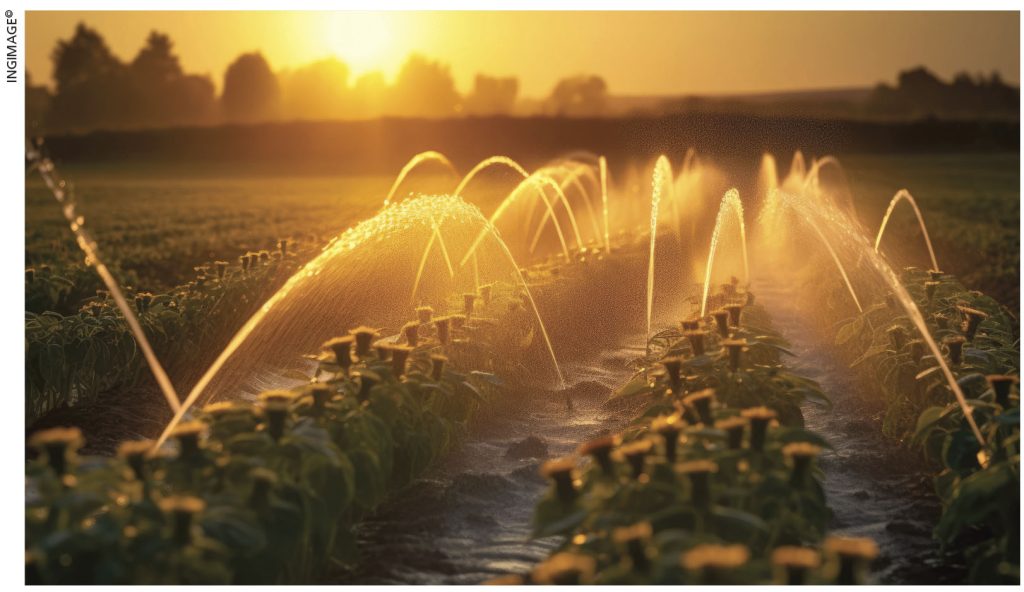
Smart irrigation systems with tech driven tools that optimise how, when and where water is delivered are emerging as solutions across the world.
Water scarcity isn’t a new phenomenon. Farmers in Anuradhapura, Polonnaruwa and Kurunegala have long relied on reservoirs and canals for irrigation. However, traditional flooding methods used in paddy fields and open channel systems for vegetables often result in massive water loss through seepage and evaporation.
In some areas, farmers apply the same quantity of water regardless of soil conditions or weather, and this results in wastage and even crop damage.
Urban and peri-urban agriculture in Colombo and Kandy face similar issues with smallholder farmers using more water than is necessary to ensure crop survival due to unpredictable weather conditions.
With the country’s population projected to grow and climate variability threatening rainfall reliability, Sri Lanka’s agri sector needs to adopt practices that conserve every drop of water.
Smart irrigation offers a modern alternative through systems that rely on soil moisture sensors, automated valves and weather based controllers to provide water only when crops need it.
Unlike fixed timetable irrigation, smart systems adjust in real time; and they respond to local rainfall, humidity and temperature.
IoT enabled devices can be linked to smartphones, and allow farmers to monitor and manage irrigation remotely. Data analytics and AI are increasingly being used to fine-tune schedules to prevent overwatering and ensure its efficient use.
The technology works by combining real-time data with automated delivery. Sensors placed in paddy fields or vegetable plots measure soil moisture and send signals to a central controller. If the soil already has sufficient water, irrigation is postponed.
When water is needed, the system applies the right quantum to the root zone to minimise evaporation. Weather forecasts are also integrated into the process to avoid irrigating land ahead of expected rainfall.
For high value crops such as tea, pepper or greenhouse grown vegetables, drip irrigation systems combined with sensors ensure that water is delivered drop by drop to improve both plant health and resource efficiency.
Studies in South Asia show that smart irrigation can cut water use by between 30 and 50 percent, and also improve crop productivity. For Sri Lanka, this would mean better yields in drought prone districts and healthier tea estates in the hill country.
Reducing overwatering also reduces fertiliser runoff, which pollutes rivers and reservoirs. Energy costs fall too since less water pumping is required.
Farmers investing in these systems may face higher initial costs but the long-term financial benefits through reduced water bills, lower energy use and improved crop returns can outweigh the expenses.
For a country that spends heavily on agricultural subsidies, promoting efficient irrigation will ease the burden on the national budget.
But challenges exist…
Smart irrigation technologies are often expensive and designed for larger scale farms while Sri Lanka’s agriculture is dominated by smallholders with limited resources.
Technical expertise is required to install and maintain systems, and poor internet connectivity in rural areas makes IoT based devices difficult to operate. Awareness is another barrier as many farmers are unfamiliar with the potential of precision agriculture.
Without government support and training programmes therefore, adoption is likely to remain slow.
Despite these obstacles, the future is promising. As costs decline and technology becomes more accessible,Sri Lanka can integrate smart irrigation into its long tradition of water management.
Artificial intelligence and satellite imagery are expected to enhance prediction accuracy while integration with the Irrigation Department’s reservoir management systems can optimise water release from tanks to match actual crop needs.
Pilot projects conducted with farming communities in the Dry Zone will demonstrate the benefits and help encourage wider adoption. And government incentives such as fertiliser subsidies will accelerate the process and make smart irrigation affordable to smallholder farmers.