
BIOINFORMATICS SECTOR
THE WET LAB OF SKILL SETS
Akila Wijerathna presents a host of pertinent opportunities for Sri Lanka
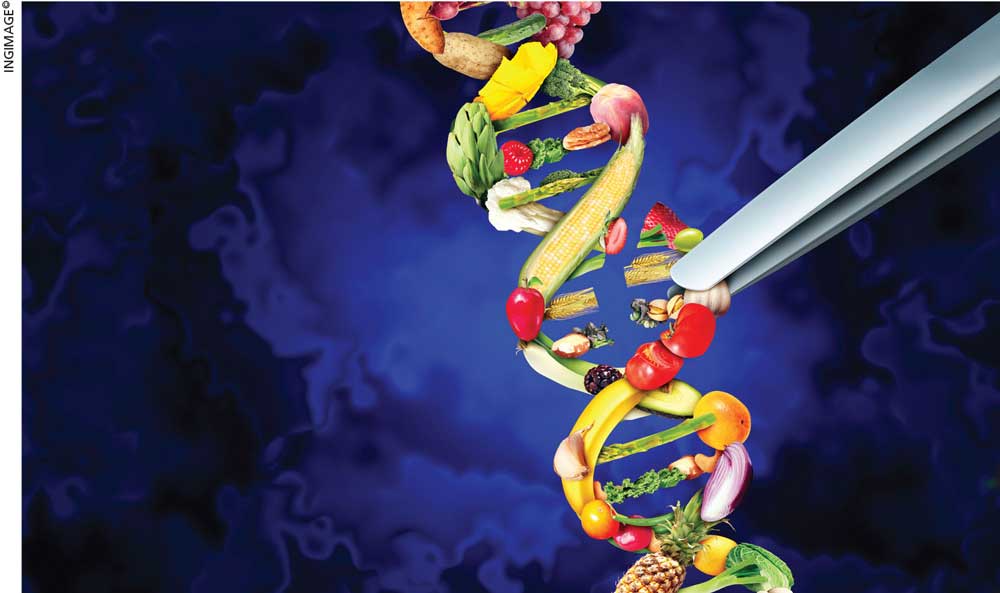
Bioinformatics sits at a junction that suits Sri Lanka rather well: one side is rooted in biology and the other in computation. Though this country has never had the capital base to compete in wet lab infrastructure at the scale of larger economies, it has spent two decades quietly building the exact skill set that the computational side of life sciences now demands.
This mismatch between modest laboratory capacity, and unusually strong software and data talent, is an opportunity rather than a limitation.
The evidence for the talent base is already visible outside biology only. Sri Lanka’s IT and business process management sector employs more than 150,000 professionals. And it earned in excess of US$ 1.6 billion in export revenue in 2025 with growth accelerating into this year.
Software exports rose more than 60 percent year on year in January. The workforce is built on strong science, technology, engineering and mathematics (STEM) education, and English language fluency – and it lies in a time zone that overlaps productively with European and Asian working hours.
This allows local teams to present work to European clients each morning.
None of this was built for biology; but all of it is directly transferable since genomic data analysis, protein structure prediction and statistical pipelines used in drug discovery have similar issues.
And a country that already exports coding and analytics talent at scale has a head start over most biotechnology poor nations.
The academic foundations are smaller but real. The University of Colombo School of Computing (UCSC) runs a dedicated bioinformatics and computational biology research group that works on evolutionary gene analysis, cancer subpopulation genomics and the molecular evolution of the dengue virus, which is a pathogen of direct national relevance given Sri Lanka’s recurring burden since the late 1980s.
The Institute of Biochemistry, Molecular Biology and Biotechnology (IBMBB) at the University of Colombo (UoC), which is a national node of the European Molecular Biology Network (EMBnet), offers postgraduate bioinformatics training that draws students from both biological and computing backgrounds.
And the UoC’s Faculty of Science also runs an undergraduate bioinformatics degree programme while the Institute of Biology – Sri Lanka (IOBSL) periodically runs short courses in sequence analysis, phylogenetics and protein structure prediction that’s aimed at building practical skills among young researchers.
These programmes aren’t large by international standards but they demonstrate that the pipeline from computing graduate to computational biologist exists in embryonic form.
What’s missing are scale and connection to industry – and that’s precisely where the opportunity lies. Global biotechnology and pharmaceutical companies increasingly outsource computational rather than laboratory work in the traditional sense.
Genome annotation, variant calling, clinical trial data analysis, drug target screening through molecular docking and machine learning models now being used in protein structure prediction can all be performed remotely on standard computing infrastructure by analysts with the right training.
This is functionally the same value proposition that Sri Lanka has already proven in software outsourcing and shared services, which are applied to a higher margin, faster growing sector. A Fortune 100 financial group has already cited Sri Lanka’s niche skills and cost efficiency as reasons for expanding a shared services centre in Colombo.
There is no structural reason a similar case couldn’t be made for a computational genomics or clinical bioinformatics unit that serves pharmaceutical or diagnostics clients abroad.
Domestically too, the applications are tangible. Agricultural genomics could support Sri Lanka’s rice and tea breeding programmes, where marker assisted selection and genomic prediction shorten breeding cycles that traditionally take a decade or more.
Public health genomics has an obvious local case in dengue where the country has an active research base tracking viral evolution and could be extended to include antimicrobial resistance surveillance, an area the WHO flagged as a growing threat across South Asia.
Clinical genomics, still nascent locally, could eventually support rare disease diagnosis and pharmacogenomics by reducing dependence on sending samples abroad for interpretation.
Each of these is a case where computational skill rather than laboratory infrastructure is the binding constraint, and is the one input that Sri Lanka can produce relatively cheaply and at volume.
Realising this will require deliberate bridge building rather than organic growth alone.
Universities need stronger links between computer and life science faculties, as the most useful graduates are those who are fluent in both statistics and biology, instead of being specialists in one or the other.