‘GO DEEP, NOT WIDE’: ENTREPRENEURSHIP EXPERTS URGE ACCOUNTANTS TO MOVE FROM PRECISION TO DOMINANCE

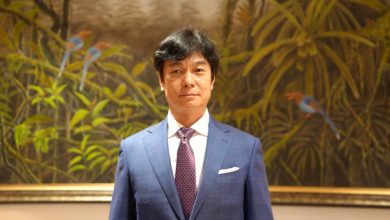
Panelist-Mr. Mathew Abeysinghe OLY(Head Coach, Killer Whale Aquatics Two-time Olympian.)Panelist-Dr. Lakmal Kulasekara (Founding Director – Danthaja Private Limited.Lead Consultant,Danthaja Premium Dental Chambers.)Moderator-Prof. Nagalingam Nagendrakumar (Professor,Department of Information Management,SLIIT Business School.)Presenter-Prof.Poorva RanjanDean (Strategic Initiatives & International CollaborationsDelhi Metropolitan Education College)Panelist-Dr. Shanika Arsecularathne (CEO and Medical Director,
Christell Luxury Wellness.)
Chartered accountants and finance professionals were urged to move beyond technical precision and take an active role in business decision-making, as speakers at the AAT Sri Lanka Conference 2026 discussed how creativity, personal branding, and disciplined execution could be combined to build sustainable enterprises.
The discussions were held on the sidelines of the conference, themed Precision to Power, at Waters Edge, Battaramulla, on 8 and 9 September, and featured a keynote address by Professor Dr. Poorva Ranjan, Dean- Strategic Initiatives – Delhi Metropolitan Education followed by a panel discussion moderated by Professor Nagalingam Nagendrakumar of Department of Information Management ,SLIIT Business School.
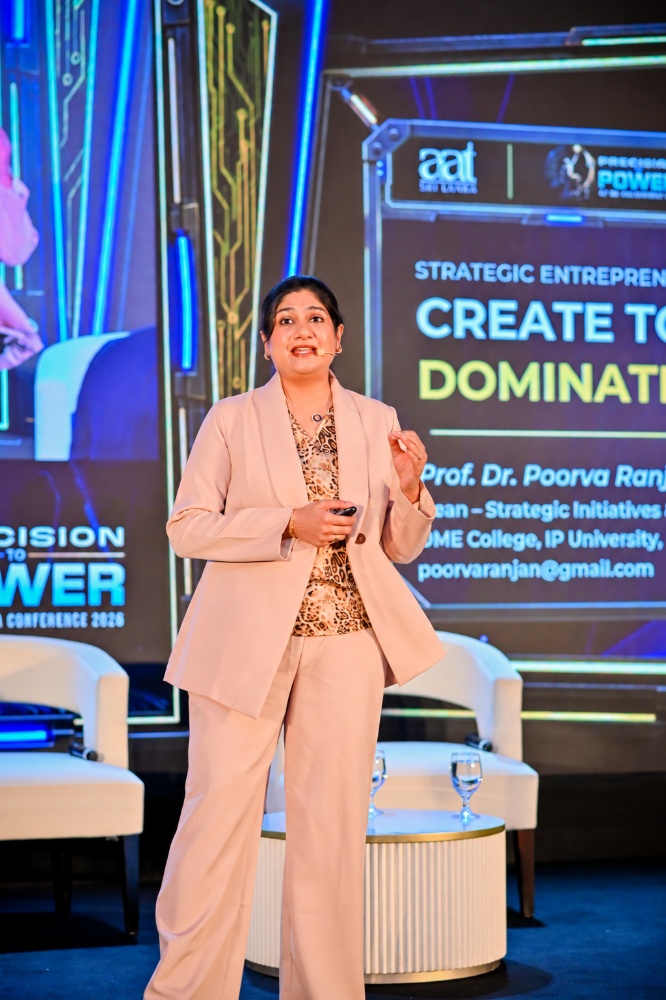
Keynote – numbers alone will not build an empire
Delivering the opening keynote, Dr. Ranjan said entrepreneurship required chartered accountants and company secretaries to go beyond reading financial statements and to actively shape business decisions.
“When you go through financial statements, you are reading a balance sheet containing numbers of somebody else’s dreams,” she said.
She said entrepreneurship, at its core, was about identifying gaps that others had overlooked. “Insight comes when you understand beyond the world of numbers and connect it to the external world. Creativity comes when you read between the lines to discover what is missing and build something even the business owner hasn’t discovered yet,” she said, describing this ability to conduct gap analysis as a skill most imaginative entrepreneurs typically lacked.
“Creativity alone doesn’t drive entrepreneurs; it is your judgment and decision-making power,” she said, adding that professionals should not feel threatened by artificial intelligence (AI) replacing their analytical functions. “AI doesn’t understand the local cultural environment, constraints, limitations, or the dreams and vision of the entrepreneur always remain the human above AI,” she said.
Dr.Ranjan outlined a four-step framework she termed Create to Dominate. She said professionals should move beyond flagging problems as footnotes for supervisors and instead provide actionable solutions; take ownership by proposing solutions directly to business owners; position themselves as go-to figures in decision-making meetings regardless of formal title; and ultimately shift from charging by man-hours to monetising judgement and value. “Managers operate within given resources, whereas entrepreneurs go beyond to solve problems and create value,” she said.
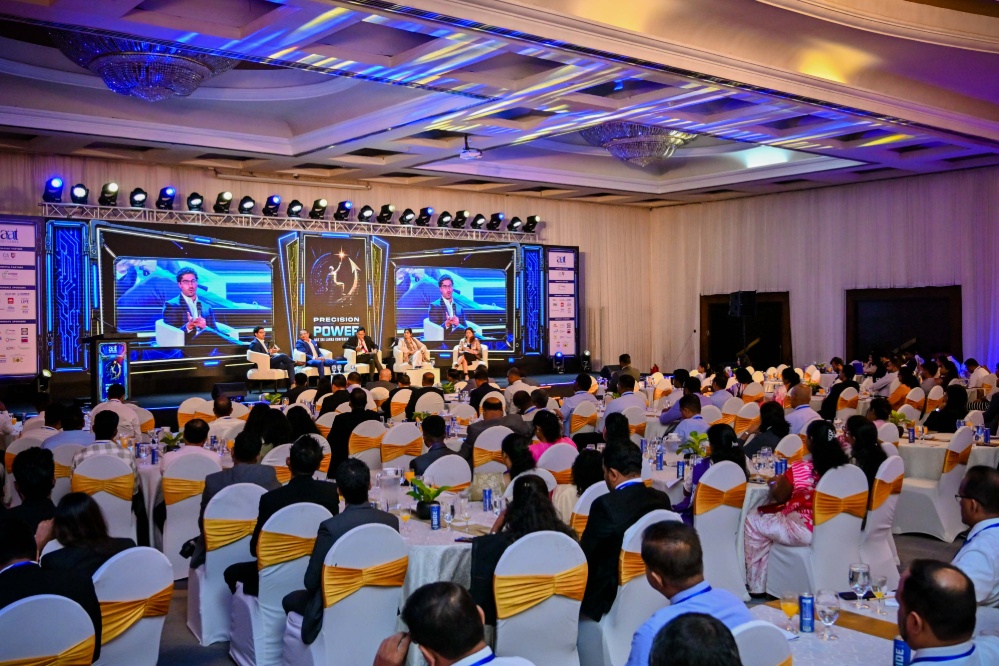
Personal branding rooted in authenticity, panellists say
During the panel discussion that followed, Dr. Lakmal Kulasekara, Founding Director of Danthaja Pvt Ltd, said cultural hesitancy around self-promotion in Sri Lanka could be overcome through authentic storytelling rather than deliberate branding efforts. Recalling his return from training in the United Kingdom to Badulla Hospital, he said he had introduced single-visit root canal treatments to reduce the burden on daily-wage patients who previously required multiple visits. “People connected with these authentic stories, which built a strong brand naturally,” he said, adding that this approach carried into his private practice, where he prioritised reducing patient wait times and improving doctor-patient communication.
He said storytelling needed to be matched by consistent delivery. “You must deliver the exact premium quality in practice that you describe in your stories,” he said, adding that professionals should capture real moments of solving client issues and share that positivity publicly.
Sustainable luxury branding needs niche focus, says wellness CEO
Dr. Shanika Arsecularatne, CEO and Medical Director of Christell Luxury Wellness, said building a sustainable luxury brand rested on four principles: developing deep expertise in a clearly defined area rather than attempting to serve everyone; focusing on high-value, innovative solutions rather than competing as a generalised service provider; building and training specialised teams so that service quality did not depend on a single individual; and continuously innovating while nurturing genuine, long-term relationships with clients.
“A brand is a standard promise or value captured in a customer’s heart,” she said.
On customer loyalty, she said a significant share of revenue in most businesses came from a relatively small base of loyal, repeat clients. “Eighty per cent of revenue comes from twenty per cent of loyal repeat clients; know their stories deeply and support them,” she said. She added that putting the client’s interests first — including referring them to trusted specialists when necessary — was an important part of building and sustaining long-term trust.
Sporting discipline mirrors entrepreneurial resilience, says Olympian
Matthew Abeysinghe, two-time Olympian and Head Coach at Killer Whale Aquatics, said the discipline required in elite sport translated directly into entrepreneurship, citing work ethic, perseverance through failure, time management, and a process-driven approach as shared traits. “Focus on being a doer who finds a way to get things done,” he said, adding that entrepreneurs should prioritise winning the overall war rather than reacting to every individual setback.
On leadership, he said adapting one’s style to each team member, while balancing accountability with recognition, was essential for building high-performing teams. “Building authentic personal relationships with your team makes effective leadership possible,” he said.
Academic research should feed commercial innovation, keynote speaker adds
Responding to a question on bridging academic and business thinking, Dr. Ranjan said traditional academic research often took years to publish and tended to document historical trends rather than anticipate future ones. She recommended that academic institutions convert research into patents, copyrights, and commercial products, and encouraged faculty to partner with students and industry alumni to launch startups grounded in solid business models.
Avoid expanding too quickly, panel warns
Responding to an audience question on the most common strategic mistake made by entrepreneurs transitioning from start-up to market dominance, Dr. Ranjan said premature expansion, often driven by early external funding that prioritised growth metrics over customer relationships, was a recurring pitfall. “Don’t go wide, go deep. Focus on your core skill stack, master your first 100 to 1,000 customers, and scale sustainably based on real value,” she said.
Closing the session, Professor Nagendrakumar summarised the discussion’s central theme, noting that precision in one’s craft could translate into broader influence and, ultimately, market power.