SILK ROAD CITY
Wish you were here
Hybrid in Central Asia
Sandip Hor visits Almaty and takes note of its Soviet era heritage
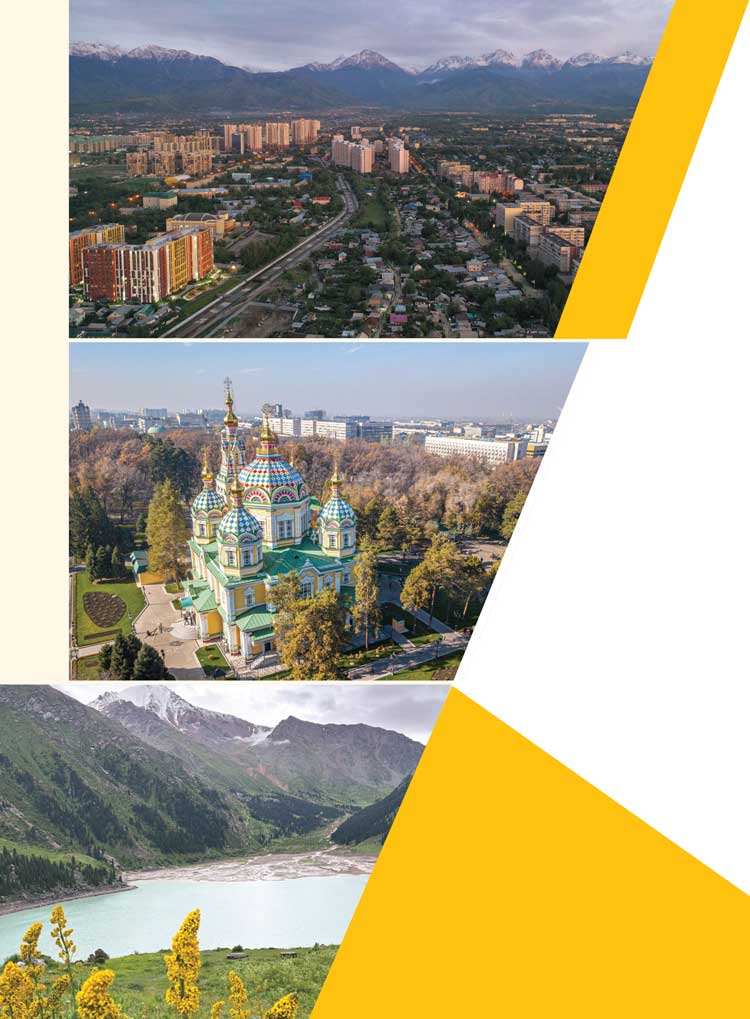
Almaty is the largest city in Kazakhstan, which is situated in Central Asia. It serves as a dynamic cultural, economic and educational hub that sits at the base of the Trans-Ili Alatau Mountains. And Almaty’s natural beauty and modern urban environment blend perfectly with its rich historical heritage and contemporary advancements.
The city boasts a history that spans over a thousand years. Positioned along the historic Silk Road, this region functioned as a major trading and cultural intersection linking the East and West.
It was also later designated as the capital of the Kazakh Soviet Socialist Republic in 1929, a status Almaty maintained until Kazakhstan achieved independence in 1991. And it continues to flourish as the country’s foremost centre for business, tourism and culture.
WHERE TO STAY There are a few modern and comfortable hotels that cater to international visitors. Mildom Residence Hotel with 120 rooms offers guests reasonable service and contemporary facilities.
WHAT TO EAT Kazakhstan’s food is deeply rooted in its nomadic history; it relies on meat, dairy products and hearty portable staples. Because of the harsh steppe climate, traditional dishes are highly nutritious, savoury and designed to provide lasting energy. Its national dish is beshbarmak, which consists of boiled horse meat served on flat square pasta sheets and topped with a savoury onion broth.
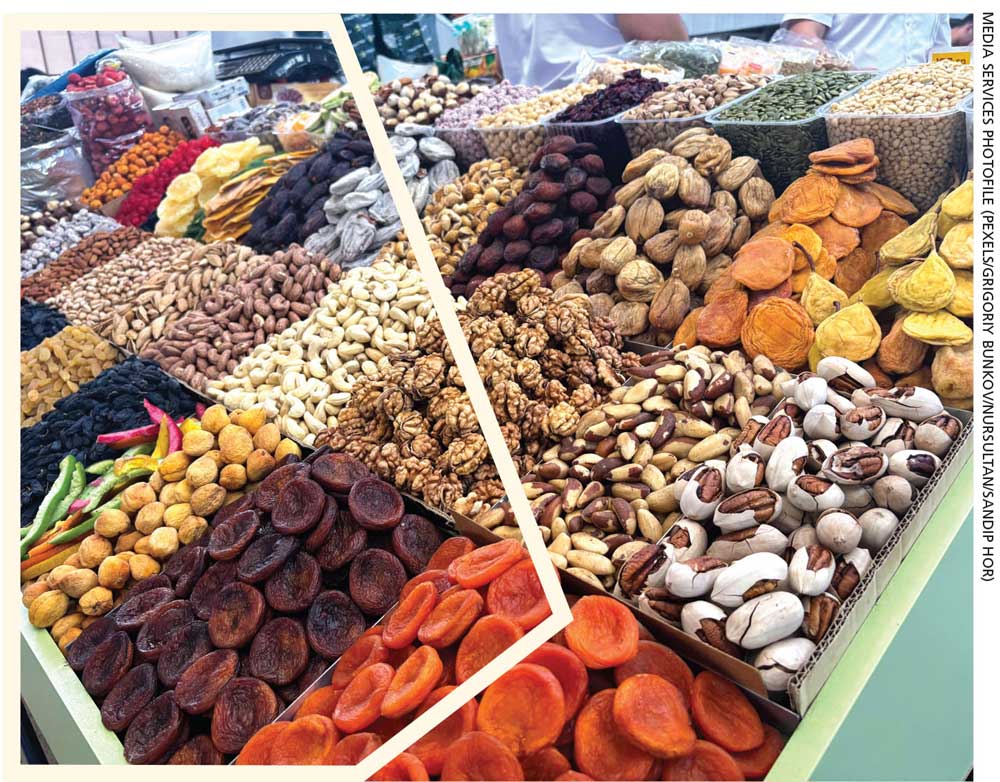
WHERE TO SHOP It’s best to focus on traditional felt and camel wool handicrafts, premium locally made chocolates, authentic dried dairy snacks and regional artwork. While there are a few modern shopping malls, the best retail therapy experience is found at the lively Green Bazaar, where it’s possible to purchase almost everything.
WHERE TO GO Kazakhstan still exhibits significant Soviet influence, particularly in Almaty. The city’s expansive boulevards, residential blocks, public squares and government structures showcase the urban planning and architectural styles that are characteristic of the Soviet era.
Russian is widely spoken alongside Kazakh and remains a testament to the language policies established during the Soviet period.
Cultural institutions, monuments and museums serve to preserve elements of Soviet history, while many older residents continue to hold on to memories and traditions from that time.
Likewise, the transportation systems, educational facilities and industrial infrastructure of the city also trace their origins back to Soviet development.
Nevertheless, contemporary Almaty increasingly prioritises Kazakh national identity, culture and language while striving to balance its Soviet legacy with modern global influences.
To appreciate the sights and sounds of Almaty fully, take a leisurely walk along its tree lined boulevards, which are adorned with parklands, historic Soviet buildings and modern high-rise structures.
Arbat Street is vibrant area of the city – a pedestrian only zone that’s filled with cafes, local street food vendors, eclectic art stands and street performers who provide traditional Kazakh music.
Panfilov Park is a vast expanse of greenery and gathering spot for locals. At its centre stands the colourful Zenkov Cathedral – a.k.a. Ascension Cathedral – which was constructed over a century ago and is similar to Moscow’s Saint Basil’s Cathedral.
This remarkable structure, which is made entirely of wood, represents one of Almaty’s most outstanding buildings from the tsarist era. At night, its illuminated facade creates a magical ambience.
Many excursions depart from Almaty to some of Kazakhstan’s famous natural attractions. At their forefront is Charyn Canyon, often deemed Asia’s Grand Canyon. Shaped by natural forces over millions of years, the sandstone formations stretch over 2.5 kilometres down to the Charyn River.
Nearby are the Kolsay and Kaindy Lakes with turquoise glacial waters that are framed by mountains adorned with pine trees. Another notable site is the Big Almaty Lake, which is located at an elevation of 2,500 metres above sea level.