THE NEW DISCIPLINE OF PROPERTY DEVELOPMENT IN SRI LANKA
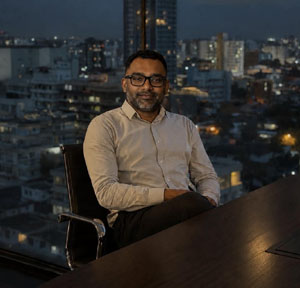
By Subash Thavarajasingam, Founder & CEO, Excello
Sri Lanka’s property sector has experienced a necessary reset. Previously, growth relied on optimism, rising land values, and leverage-driven expansion. That approach is no longer viable. Today, development is more disciplined, structured, and ultimately more accountable.
Developers can no longer rely on momentum alone; projects must demonstrate viability from day one. Financing has evolved beyond traditional bank lending into more blended structures, combining developer equity, pre-sales, strategic partnerships, and, increasingly, private capital. This shift is not just financial; it reflects a recalibration of risk. Interest rates have been central to this transformation.
Redefining Pre-Sales
Pre-sales now serve as an early test of credibility, not just a procedural step. However, relying solely on pre-sales is a misconception. Successful developments require balanced capital structures and genuine developer commitment. Excessive dependence on customer advances weakens projects.
What drives pre-sales today is not marketing, it is trust. Buyers are more informed and more cautious. They are looking for transparency, realistic timelines, sound legal structures, and consistent communication. Developers who understand this are able to build momentum early; those who do not struggle to convert interest into commitment.
Buyer behaviour is also changing. While cash buyers remain in some segments, structured payment plans and mortgage-backed purchases are expanding market access. Responsible flexibility is now essential for sustaining demand.
Risk must be managed
If there is one lesson from recent market conditions, it is this: risk must be actively managed, not assumed away. At a project level, this means disciplined procurement, phased construction, diversified funding, and conservative feasibility assumptions. The era of single-source dependency, whether on banks or pre-sales, is giving way to more balanced capital strategies.
Phasing, in particular, has emerged as a powerful tool. It allows developers to align capital deployment with actual market absorption, reducing exposure while maintaining momentum. In a more uncertain environment, this level of control is invaluable.
Delivering better value
A positive market shift is the move away from purely luxury positioning, reflecting a maturing demand. The focus is now on delivering better value through intelligent design, operational efficiency, and life cycle planning. Buyers increasingly prioritise practicality, usability, and long-term cost efficiency over superficial features.
Management matters most
Long-term success often depends on post-construction management. Treating developments as completed projects, rather than evolving communities, leads to issues such as poor maintenance planning, weak governance, and underfunded reserves.
Efficiency Is the New Sustainability
Sustainability is now viewed as an operational advantage rather than a branding exercise. Energy efficiency, water management, durable materials, and waste reduction directly affect long-term costs and resident experience. Future success will depend on efficiency, not just being “green.”
Technology is accelerating this transition. From digital payments and resident platforms to preventive maintenance systems and smart monitoring, PropTech is improving transparency, accountability, and operational control. Over time, this will become standard rather than optional.
What Buyers Should Prioritise
For buyers and investors, the evaluation criteria must go deeper than location and finishes. If I could give buyers a checklist, it would include – Developer track record, legal approvals, financial structure, maintenance planning, long-term operating costs, and Management capability. Unrealistic promises, unclear timelines, and aggressive pricing should be treated as warning signs, not opportunities.
If there is one factor that ultimately defines long-term success in Sri Lanka’s apartment sector, it is trust. Trust between developers, buyers, investors, and operators. Buildings can be delivered in a few years. Reputation and lasting value are built over generations.