PYRAMID WILMAR
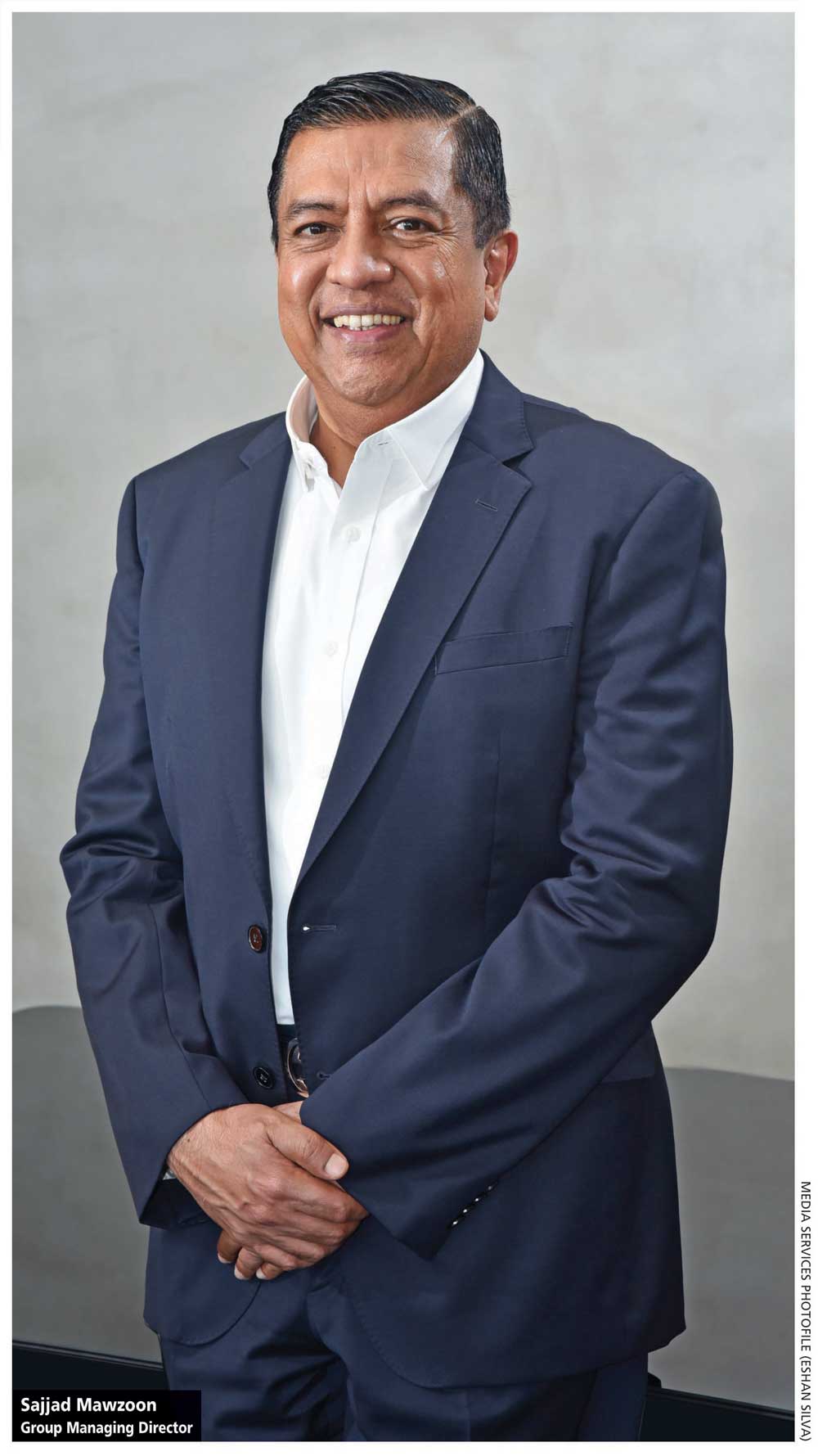
Q: Looking back over Pyramid Wilmar’s two decade journey, what have been the defining milestones that shaped both the company and your own leadership mission?
A: Our journey has been defined by strategic foresight and an unwavering commitment to strengthening Sri Lanka’s food security. There have been many key milestones but a handful fundamentally changed the trajectory of the company.
The most critical one was undoubtedly the formation of the joint venture with Wilmar International in 2004. That decision transformed Pyramid Wilmar from a local enterprise into a company backed by one of the world’s foremost agribusiness groups. It gave us access to global expertise, international best practices and technical capabilities while allowing us to retain our deep understanding of the Sri Lankan market.
Another defining investment was the establishment of Sri Lanka’s first ultramodern, fully integrated edible oil refinery in Muthurajawela, representing a shift towards creating greater local value addition and reducing the country’s dependence on imported finished products.
This move demonstrated our confidence in Sri Lanka’s manufacturing potential and our commitment to building long-term industrial capability.
Next, the acquisition of Unilever’s fats and margarine business – Masterline – with its heritage spanning more than five decades, marked another important chapter. It strengthened our portfolio while enabling us to build on an established legacy of quality.
Over time, we also diversified beyond edible oils into essential commodities; speciality fats; and trusted consumer brands such as Fortune, Fondré, MeadowLea and Masterline. Today, our products serve households, bakeries, hotels and restaurants, food manufacturers and businesses across the country.
The strategic partnership we entered with Sunshine Holdings to jointly own Watawala Plantations was another important milestone, which resulted in an essential backward integration of our supply chain.
Our partnership with the Shangri-La Hotels and Resorts group, and to become their local partner for the two world-class properties that were developed in Sri Lanka, further strengthened our commitment to the country.
These developments were regarded as one of the largest investments in the country, post-war. This partnership paved the way for Pyramid Wilmar to be recognised as a serious contributor to the economy.
Q: The partnership between Pyramid and Wilmar International has now endured for more than 20 years. What has been the foundation of its long-term success?
A: Sustaining a cross-border partnership over two decades requires shared values, mutual trust and a common vision for the future. From the very beginning, both organisations approached this partnership with a long-term perspective.
Wilmar contributes world-class expertise in global sourcing, research and development, technical innovation and supply chain management. Pyramid brings deep local market knowledge, strong customer relationships, operational agility and an extensive distribution network built over many years. Those complementary capabilities have enabled us to combine global standards with local relevance.
Another defining factor has been our uncompromising commitment to quality. Regardless of where a product is manufactured, our objective has always been to ensure that products produced locally meet international benchmarks.
Equally important is the culture of transparency that exists between both organisations. Challenges are approached collectively rather than individually, and decisions are guided by mutual respect and openness.
I believe those principles have allowed the partnership not only to endure but grow stronger with every passing year.
Q: What have been the chief lessons from working alongside one of Asia’s largest agribusiness groups and how have those lessons influenced Pyramid Wilmar’s own evolution?
A: One of the greatest lessons has been the importance of thinking globally while executing locally. Working with a global organisation such as Wilmar has reinforced the importance of combining strategic vision with disciplined execution.
Scale alone does not guarantee success. It must be supported by operational excellence, rigorous planning and the ability to respond quickly to changing market conditions.
One area where this has been particularly valuable is supply chain management. Global commodity markets are inherently volatile, and successfully navigating those fluctuations requires accurate data, disciplined risk management and the ability to anticipate change rather than simply react to it. Those capabilities have become embedded within our own organisation.
Another important lesson has been the value of continuous reinvestment. Leading organisations never stand still. They continue investing in technology, manufacturing capability, infrastructure and innovation because they recognise that competitiveness is built over time rather than achieved through a single investment.
That philosophy has significantly influenced Pyramid Wilmar’s own evolution. We have consistently invested in strengthening our operations, modernising our facilities and building capabilities that position us for sustainable long-term growth rather than short-term success.
Q: Pyramid Wilmar has set an ambitious target of doubling its turnover over the next five years. What strategic priorities will drive that next phase of growth?
A: Our growth ambitions are underpinned by a clear strategy focussed on creating greater value across the food value chain while strengthening the capabilities that support long-term competitiveness.
The first pillar is portfolio diversification. Consumer needs continue to evolve, creating opportunities for health-conscious, premium and specialised food products. We intend to expand further into these segments while continuing to strengthen our established portfolio.
The second priority is expanding our distribution capabilities. We are leveraging advanced sales force automation to deepen our presence in underserved rural and deep rural markets while strengthening relationships with B2B customers across the hotels, restaurants, catering and industrial sectors. Enhanced market intelligence, stronger execution and business relationships will enable us to serve these segments more effectively.
The third pillar is enhancing our operational capabilities. We continue to invest in manufacturing automation, advanced technologies and the development of our people. Productivity, operational efficiency and product quality will remain central to our strategy as we prepare the organisation for its next phase of growth.
Doubling turnover is not simply about increasing scale. It is about building a stronger, more agile organisation capable of delivering sustainable growth while continuing to create value for consumers, customers, partners and the country.
One of the other most important stakeholders of this success are our employees, without whose commitment and passion we would not be here… in all times of crises they have come forward without hesitation to take the challenges head-on, and we strive to create a workplace that enhances their personal and lifestyle growth.
Q: As the food and beverages industry continues to evolve, where do you see the greatest opportunities for innovation, local manufacturing and value addition?
A: I believe the future of the industry lies in strengthening local manufacturing capability, increasing value addition and reducing dependence on imports through innovation.
One of the most significant opportunities is import substitution. Many specialised ingredients required by the confectionery and bakery sectors continue to be imported despite the potential to manufacture them locally. Developing these capabilities within Sri Lanka would strengthen domestic industry while conserving valuable foreign exchange.
One such example is being able to manufacture world-class brands such as MeadowLea locally. Sri Lanka is the only country in the world to have produced this product other than on its home soil in Australia.
Health and wellness also represent important areas for future innovation. Consumers are becoming increasingly conscious of nutrition and healthier lifestyles, creating demand for products such as trans fat free oils, vitamin fortified foods and plant based alternatives. We see considerable opportunity to support these evolving needs through product development and innovation.
Another important priority is strengthening partnerships with agricultural communities. Building closer relationships with local suppliers enables the creation of more sustainable and traceable supply chains, while supporting rural livelihoods and strengthening the broader agricultural ecosystem.
Ultimately, innovation is not confined to new products alone. It also encompasses manufacturing excellence, supply chain efficiency and creating greater value within Sri Lanka through continued investment in local industry.

Q: How did you navigate the company through the challenges of the COVID-19 pandemic and Sri Lanka’s economic crisis in 2022?
A: The COVID-19 pandemic and the economic crisis of 2022 were among the most challenging periods any business leader could face. Perhaps our greatest test came during periods of economic uncertainty. They reinforced the importance of remaining calm, making timely decisions and never losing sight of the broader responsibility to the country.
As a company operating within the food industry, our priority extended beyond commercial performance; it was about ensuring continuity of supply and supporting the nation’s food security during a period of unprecedented uncertainty.
Nevertheless, through both crises we remained focussed on safeguarding our people, supporting our customers and maintaining the confidence of our business partners.
Leadership during a crisis is about providing stability, remaining adaptable and making decisions guided by long-term principles rather than short-term pressures. Those experiences have strengthened my belief that trust and preparedness are among the most valuable assets any business can possess.
Q: Looking ahead 20 years, what would you like the Pyramid Wilmar name to represent within the corporate and industrial landscape?
A: Commercial success is important but I believe every organisation should aspire to leave behind something far more enduring than financial performance alone.
Twenty years from now, I would like Pyramid Wilmar to be recognised as one of Sri Lanka’s largest food conglomerates and a company that contributed meaningfully to the country’s economic resilience, industrial development and food security.
I hope we will be remembered for consistently raising quality standards while ensuring reliable access to safe, high quality food products for consumers.
Equally, I would like Pyramid Wilmar to serve as a benchmark for how international joint ventures can successfully combine global expertise with local capability to develop talent, invest in world-class infrastructure and create lasting value for the country.
Above all, I hope our legacy will be one of trust – trust earned through uncompromising quality and by honouring our commitments during both favourable and challenging times. Our journey proves that a business can achieve significant commercial success while remaining deeply committed to the wellbeing and progress of the society it serves.
If, two decades from now, Pyramid Wilmar is regarded not simply as a successful business but an institution that strengthened Sri Lanka’s industrial landscape and contributed meaningfully to national development, I believe that would be our greatest achievement. – Compiled by Yamini Sequeira
COMPANY DETAILS
Telephone: 4542910-12
Email: pwpl@pyramidwilmar.com
Website: www.pyramidwilmar.com