VIBRANT BARCELONA
WISH YOU WERE HERE
Art and football icons
Sandip Hor visits the capital of Spain’s Catalonian community and savours its architecture
Located in the northeastern part of the Iberian Peninsula, Barcelona serves as the capital of the autonomous community of Catalonia in Spain. It showcases a diverse array of distinctive districts that showcase its transformation from a medieval maritime centre to the expansive developments of the 19th century and the vibrant boroughs of today.
During the early 19th century, the city underwent a cultural revival that motivated architects of that era to incorporate innovative elements into their designs. This movement was known as Modernisme, which is Catalan modernism and a variant of the art nouveau style.
Barcelona is also deeply passionate about football, which locals consider akin to a religion. It was introduced in the late 19th century by British immigrant workers, miners and sailors. And its popularity soared to such an extent that it necessitated the establishment of a local club.
Subsequently, FC Barcelona was established in 1899. Its extraordinary achievements in both national and European competitions cultivated a football fanatic culture among the locals, and their fervent enthusiasm goes way beyond the city.
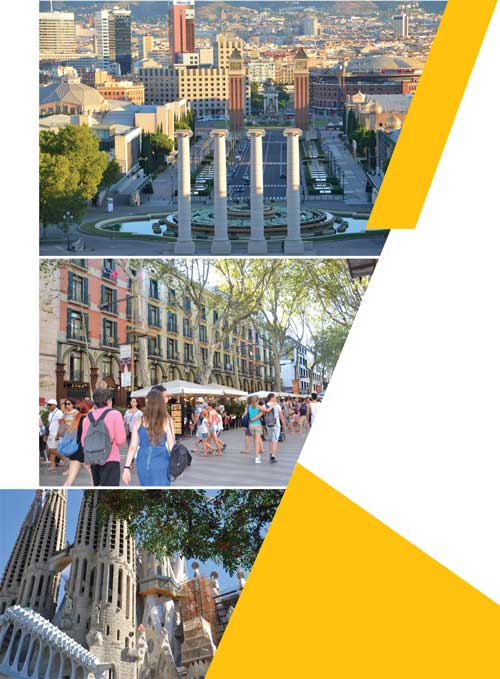
WHERE TO STAY The 347 room Catalonia Barcelona Plaza Hotel is popular among tourists because of its convenient location in the heart of Plaça d’Espanya, which is one of the city’s most monumental and symbolic squares that also serves as the gateway to Montjuïc (Jewish mountain). The hotel is close to most of the attractions and overlooks the Font Màgica (magic fountain), which is famous for its spectacular water, light and music shows.
WHERE TO EAT There are several quality restaurants and cafes around Plaça d’Espanya, which serve authentic Spanish dishes such as paella. This saffron infused rice dish is cooked mainly with seafood, chicken, rabbit or pork and forms the core of traditional Catalonian cuisine.
WHERE TO GO The journey through Barcelona ideally commences at Barri Gotic (the Gothic Quarter) and serves as the medieval heart of the city. This section of the old town features a maze of cobblestone squares and winding streets that are adorned with numerous significant structures – the most notable being the impressive Barcelona Cathedral.
Adjacent to the Gothic Quarter lies La Rambla – the city’s most famous avenue – and is usually bustling with diners in restaurants, cafes and bars.
Barcelona boasts Europe’s finest collection of art nouveau architecture from the early 19th century. Several of these buildings were designed by the remarkable Catalan architect Antoni Gaudí, whose unique style is characterised by organic shapes, vibrant colours and varied textures. Much of his architectural work in Barcelona is recognised as World Heritage Sites.
Gaudí’s first major project was Palau Güell, which is a residence built for the affluent businessman Eusebi Güell. The structure is renowned for its intricate design featuring columns, arches and ceilings that later became hallmarks of Gaudí’s architectural style.
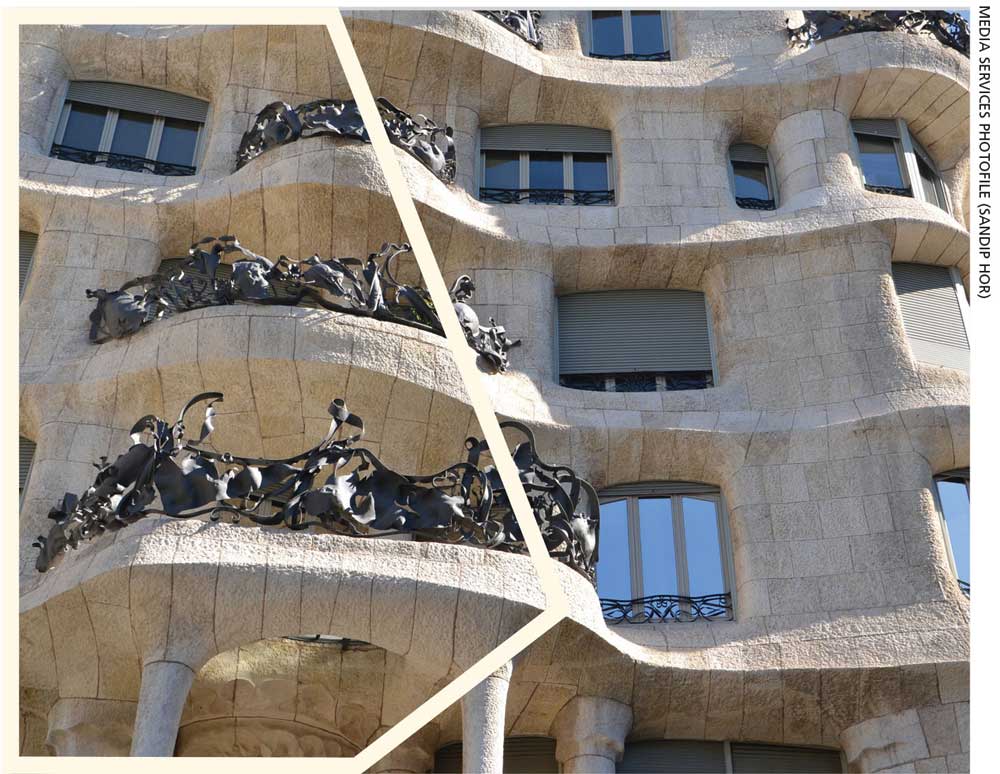
The apartment buildings Casa Batlló and Casa Milà are celebrated for their undulating facades, rooftop chimneys and vents that resemble abstract forms
The apartment buildings Casa Batlló and Casa Milà are celebrated for their undulating facades, rooftop chimneys and vents that resemble abstract forms.
Gaudí’s bold vision is most vividly expressed in the construction of La Sagrada Família, which is often considered Europe’s most unconventional church. Drawing inspiration from Gothic and Byzantine cathedral traditions, it stands as his most significant achievement.
The interior of the cathedral exemplifies an innovative use of light that imbues the architecture with elegance and grandeur.
Gaudi passed away tragically in 1926, and his remains are interred within a crypt to ensure that his presence endures alongside this architect’s remarkable creations.
However, the primary destination for football fans from around the world is invariably Camp Nou stadium, which is the home of FC Barcelona – affectionately known as Barçaby its supporters. The club takes football from a sport to a cultural phenomenon.