SPOTLIGHT
DISASSEMBLING THE ZOO
UNRULY ENCOUNTERS IN THE DEHIWALA ZOOLOGICAL GARDENS
By Pawan Wijesinghe
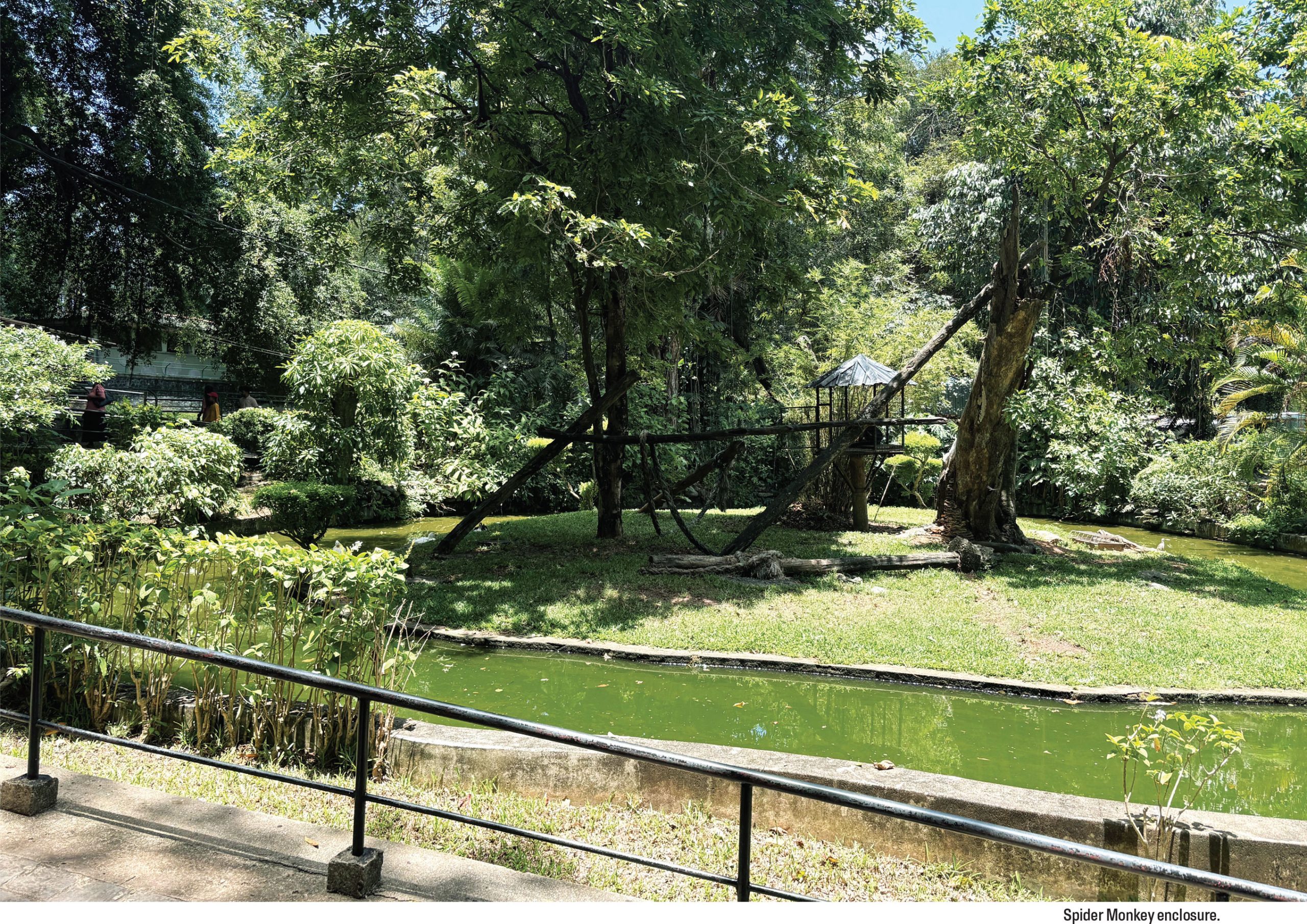
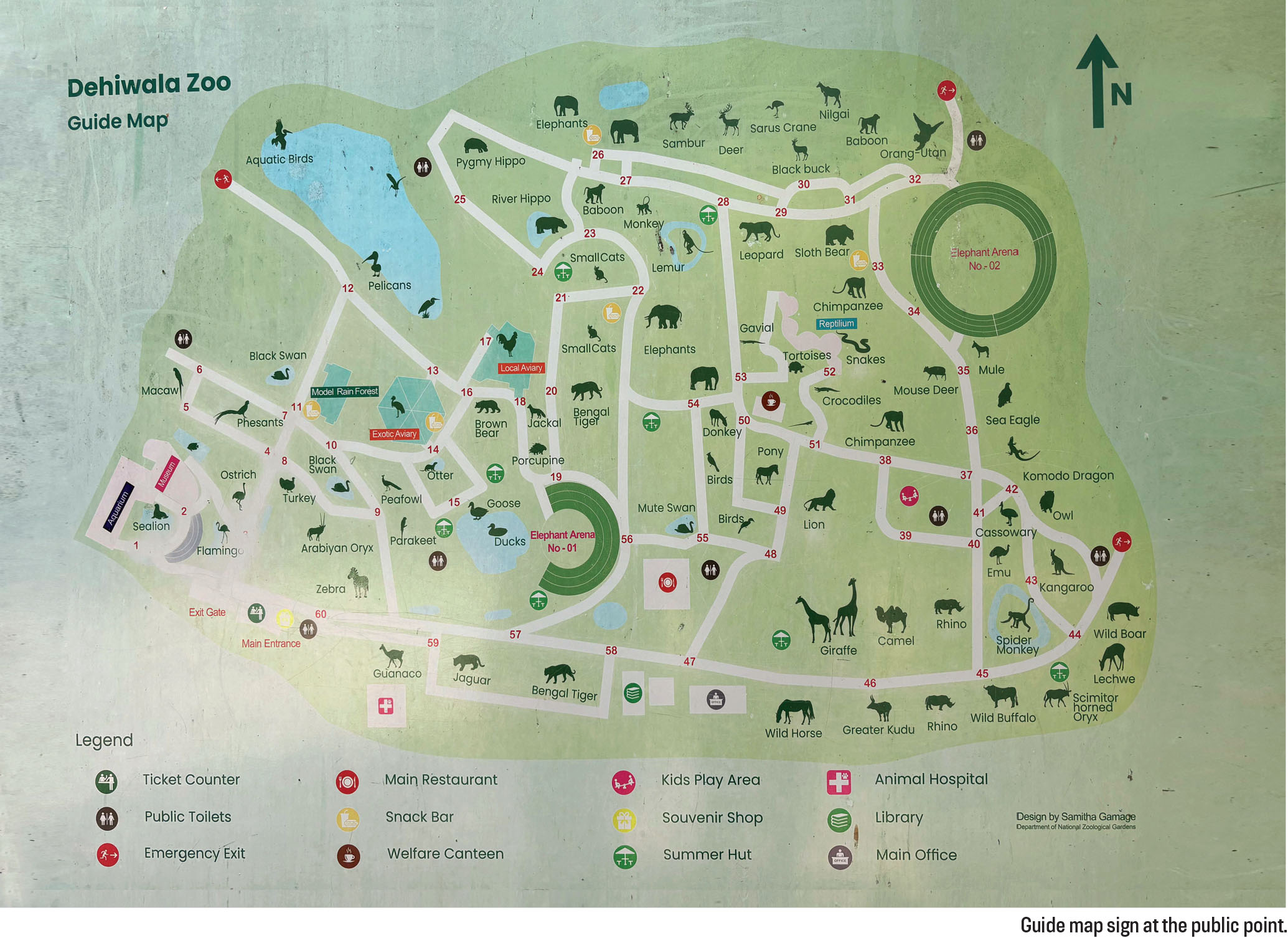
Ambling along the meandering paths of the Dehiwala Zoological Gardens, every visitor invariably comes across a verdant patch of land bounded by a moat – an islet shaped enclosure where a spider monkey sits inside a cage perched atop a wooden stump. The cage – a compact geometric enclosure with a hexagonal floor and a mesh of iron bars in place of walls – appears exposed to the unbarred world, with its door left unlatched. Yet, this is not a mere spectacle of an animal on display. The monkey’s huddled body, the birds that intermittently intrude upon the islet, the densely growing vegetation, the body of water girdling the enclosure and, above all, the iron cage itself together produce a multispecies encounter for the visitor. This encounter, however, neither emerges spontaneously nor remains fixed across time and space. Rather, it is orchestrated through a series of architectural and landscaping decisions that mediate and configure the conditions under which it becomes perceptible.
These efforts to configure enclosures extend back to the preliminary plans that preceded the establishment of the Dehiwala Zoological Gardens. In 1921, Patrick Geddes – the author of the Ceylon Government Sessional Paper titled ‘Town Planning in Colombo: A Preliminary Report’ –proposed housing a range of animals at the site designated for the zoological gardens. This list extended from elephants, deer, leopards and flamingos to rats, mosquitoes, and even hookworms – the latter three being displayed specifically for pedagogical purposes (17). Among these imagined animal exhibits, his detailed vision for an elephant enclosure is especially revealing:
“A goodly tusker with wife and baby – surely one of the most amusing of all babies – and these may be readily lodged upon the side of the canal amid a fine plantation of bamboos too tall for them to destroy, yet showing them at their best against a background of yellow stems and with green foliage overhead” (Geddes 17).
Here, Geddes positions the elephants within a carefully composed enclosure that relies on visual coherence to produce a predetermined experience for the visitors. The bamboo plantation, with the minute detailing of its “yellow stems” and “green foliage,” provides a geographically diluted habitat for the elephants, suggesting colonial impulses to control both animal and plant bodies. As Susan Willis notes, bamboos – which are typical of Asian exhibits – are often deployed to evoke specific geographies within these zoo enclosures (669). Accordingly, in Geddes’ sketch of the elephant exhibit, bamboo is as much symbolic as it is material: the enclosure is designed to emulate a ‘wild’ counterpart, one that is ‘natural’ according to Geddes’ formulation. This pictorial rendering of a pseudo-natural environment resonates with John Berger’s observation that the visitors to the zoo “proceed from cage to cage, not unlike visitors in an art gallery who stop in front of one painting and then move on to the next or the one after next” (23). By manipulating the backdrop to prevent the elephants from interacting with their surroundings, the bamboo – which in other occasions would be subject to consumption or change – is reimagined as a controlled and enduring fixture: a contrived mise-en-scène for a stage like display.
However, the proposed enclosure is not only a still painting but also a preplanned scene enacted within a diorama. The elephants in Geddes’ exhibit are framed through a heteronormative social construct that renders them into a nuclear family unit, albeit one uncommon among the usual matriarchal organisation of elephant herds (McComb et al. 491). This imposed heteronormative narrative, which the visitors are expected to interpret upon encountering the elephants, reinforces human social constructs that obscure the elephants’ complex social lives. As objects of display performing within this anthropogenic script, even the baby elephant is diluted to a one dimensional character – “the most amusing of all babies” (Geddes 17) – lacking interiority and uniqueness. Staged and essentialised, these occupants of the enclosure are not unlike the taxidermied animals in the natural history museum, which Donna Haraway compares with the characters of morality plays1 (24). According to Haraway, each diorama featuring the taxidermy illuminates a “truth” (24) and offers a “window onto knowledge” (24). Similarly, Geddes’ diorama enacts an epistemology that arrests the elephants within a fixed narrative frame, foreclosing embodied and contingent modes of being. In this sense, the legacy of the Dehiwala Zoological Gardens is intertwined with the colonial impulse to configure architecture, landscape and living bodies to produce contrived versions of life within a pseudo-wilderness.
Revisiting the spider monkey, which presently sits amid the moated isle like Tennyson’s Mariana2 reminds the visitor that this dioramic display – perhaps to Geddes’ dismay – is far from a static pictorial space. The visitor’s perception of the spider monkey’s enclosure invariably overlaps with unintended encounters involving multiple animal and vegetal bodies as well as more than human actors that shape this multispecies encounter. For instance, the crows that wander into the enclosure and cranes that wade through the green waters of the moat radically unsettle the taxonomic designation of the spider monkey that ostensibly defines this enclosure. After all, these ubiquitous birds, deemed too ordinary to register as exhibits, move freely across the enclosure benefitting from its very design that gestures towards what Randy Malamaud refers to as landscape immersion – a strategy that conceals captivity under a veneer of unattainable freedom (107) – even as residual elements such as horizontal iron bars demarcate boundaries for the visitor. Yet, this illusion operates unevenly: while the monkey is constrained within an illusion of freedom, the birds traverse the permeable boundaries with relative ease. However, rather than being limited to this enclosure, these porous borders enable the birds to share food, forage and hunt in the moats across the zoo, producing unregulated multispecies encounters. Such intermittent avian presence introduces unpredictability and contingency to the experience, which unsettles each enclosure’s objective of foregrounding a singular object of attention.
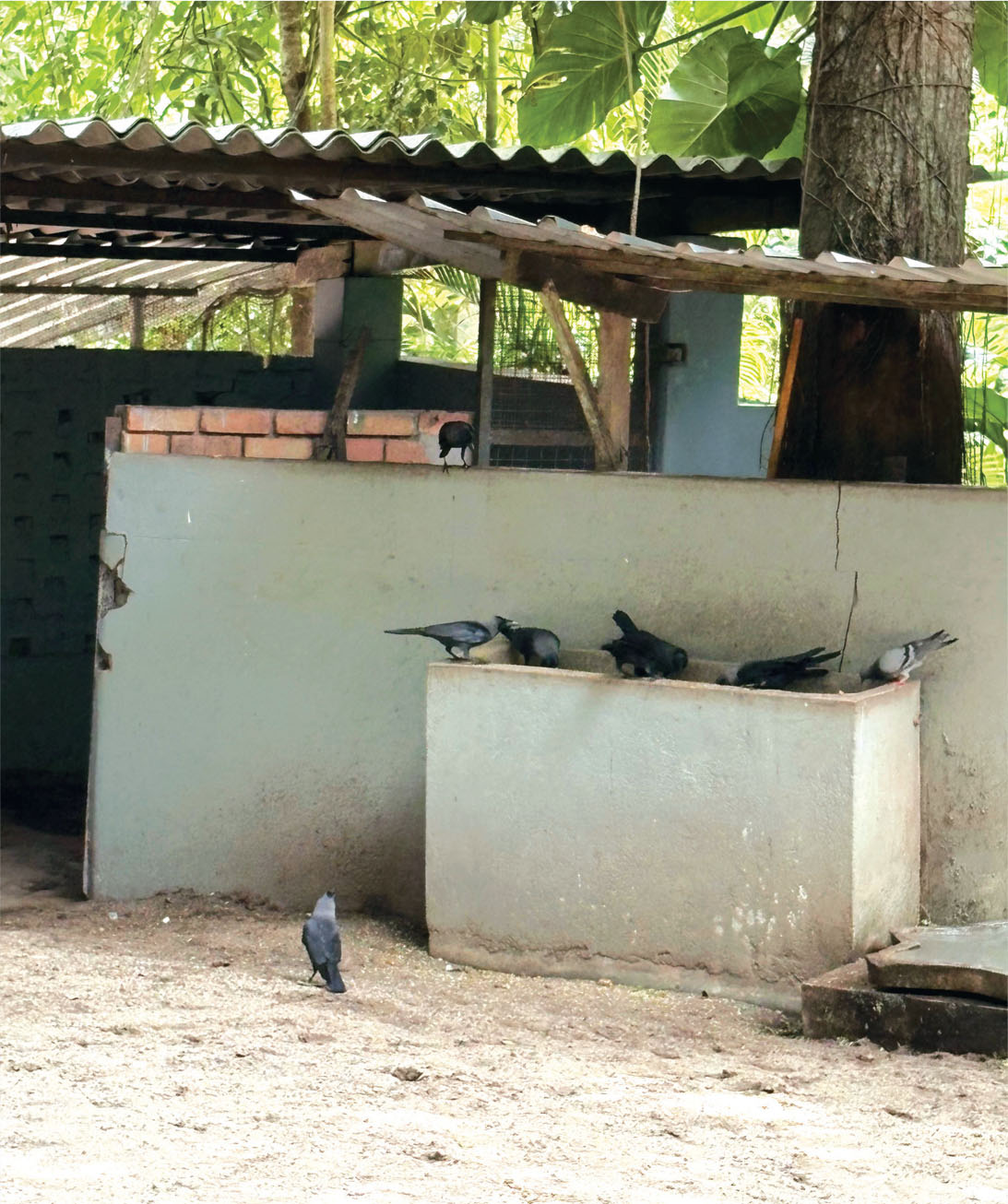
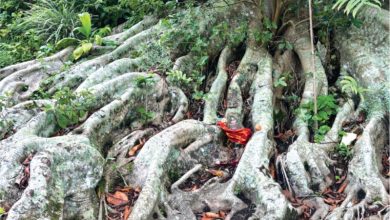
Not only do wandering birds at the margins contribute to this instability but so too does the plant matter occupying the centre of the islet. Flanking the cage are two trees, strategically appended with dead tree trunks and thick cascading ropes, while decomposing organic matter lies scattered across the trimmed lawn. At first glance, this vegetation may seem more cosmetic than practical for the monkey. However, fungal growth on the damp vegetal surfaces signifies an ongoing process of decay alongside thriving microscopic life, both of which operate according to processes that are hardly perceptible to the visitor. Though often read as unhygienic, such activity aligns with Julia Kristeva’s formulation of the abject as that which “disturbs identity, system, order” (4). Echoing Kristeva’s insight, the assemblage of vegetal material, with its proximity to the body of water, may not fulfil its intended purpose of emulating a structured ‘natural’ environment. Instead, the decomposing vegetal bodies foreground transformation and interdependence. What emerges then is a multispecies narrative inflected by abject ecological entanglement, rather than an anthropocentric vision of an artificial environment.
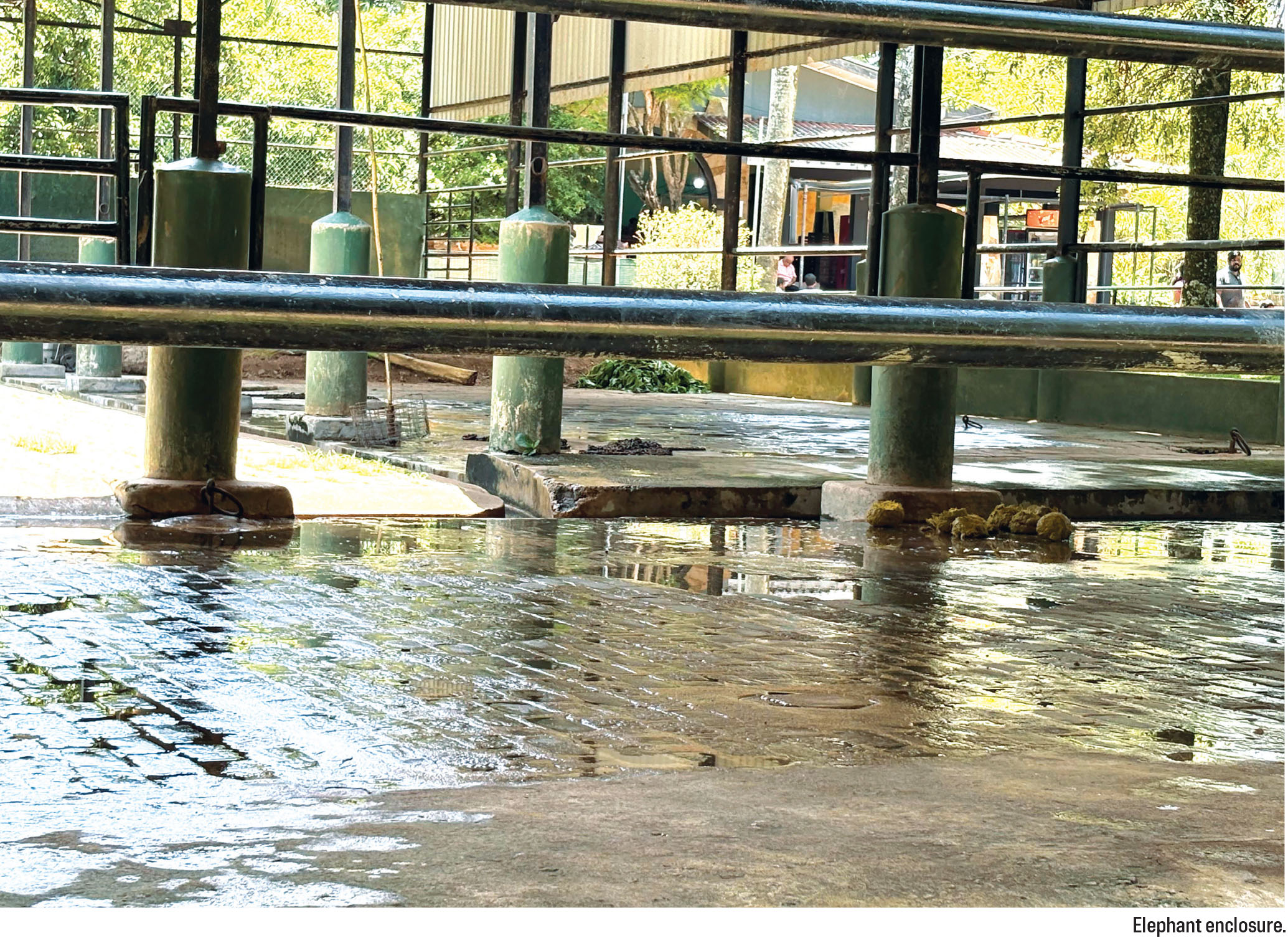
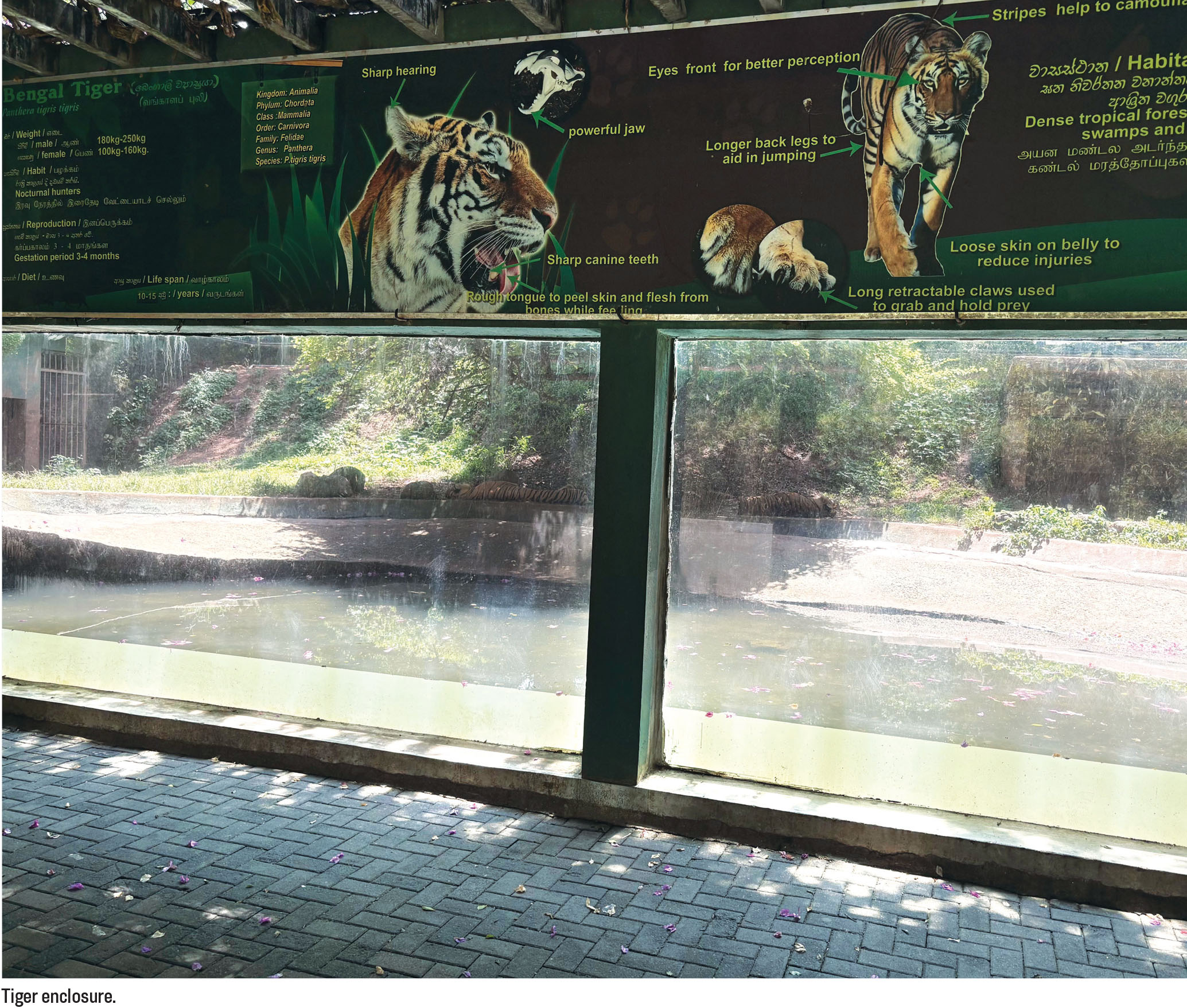
The encounter with the object, however, extends beyond this monkey’s enclosure, intensifying embodied experiences across the zoo. Visitors encounter piles of faecal matter strewn around the elephant compound, splashes of bird droppings on the plate glass viewing wall of the tiger enclosure and the pervading smell of dried bird excrement in the aviaries. As metonymic traces of the animal bodies on display, such matter becomes a constitutive element of the visitor’s visceral engagement with the zoo. In this regard, it resonates with Kristeva who notes that “excrement and its equivalents (decay, infection, disease, corpses, etc.) stand for the danger to identity that comes from without” (72). For instance, even the plate glass viewing wall – boasting of a vivisecting scrutiny of the animal within (Willis 679) – could be rendered temporarily ineffective as the bird droppings on the glass obscures the tiger that already refuses the gaze of its spectators. The scenic projections of the animal bodies against pristine and palatable environments are thus destabilised by the metabolic realities which resist being incorporated into the visual order. After all, zoo architectures may restrain the animal bodies within its contrivances, yet the unpredictable and contingent ontological frictions they generate continually threaten to dissolve the very principles of order they seek to impose.
Despite the fluctuating ecological excess of these enclosures, one sustained contraption endures: the cage, with its iron mesh replacing solid walls, occupying the pivotal centre stage of the spider monkey’s islet. A century earlier, Geddes had proposed following precedents set by the zoos at Amsterdam and Hamburg to efface the “appearance of imprisonment” (17). Yet a hybrid form – merging illusory freedom with lasting constraint – persists. For instance, interposed between the visitor’s perception and the monkey, the iron grid fragments the monkey’s body into shifting segments that disrupt visual clarity. Conversely, the monkey’s perception of the world – already delineated by the moat – is presumably fractured by the immobile grid. Attention is thus drawn not only to the animal but to the crisscrossing iron mesh, and by extension, to the cage as an object. Paradoxically, the door of the cage is seemingly open, collapsing the distinction between interior and exterior, and extending the enclosure into the surrounding islet. This uneasy coexistence of openness and closure recalls the concept of ‘barless enclosures,’ introduced by Carl Hagenbeck3 in the late 19th century as a response to critiques against the imprisonment of animals, marking a transition from explicit caging to concealed mechanisms (Rothfels 147). Yet here, rather than disappearing, the apparatus of confinement remains in visible and obstructive form. The cage thus functions as a residual structure in which the colonial ambition to render captivity invisible remains incomplete, exposing instead a material trace of ongoing violence against non-human life.
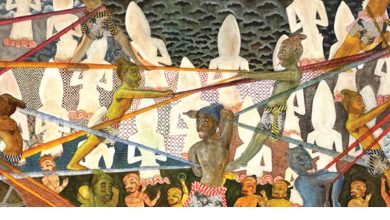
Though Carl Hagenbeck’s Ceylonese Caravan, which exhibited 67 men, women and children alongside 25 elephants, drew large crowds in 19th century Germany (Rothfels 85), the contemporary visitor to the Dehiwala Zoological Gardens encounters no such explicit human enclosure. Yet, this absence does not signal a rupture from the past. Rather, the zoo persists as a spatial and architectural formation grounded in colonial modes of display, where non-human life continues to be rendered visible, knowable and containable within carefully contrived environments. Even as discourses of conservation and pedagogy seek to justify such practices, the question of whether preservation must take the form of spectacle remains unresolved. What endures, then, is not simply a colonial legacy but an ongoing architectural logic that seeks to stabilise animal life within legible frames. Yet, as this essay has shown, such efforts remain incomplete. The abject encounters that permeate these spaces – marked by decay, waste and unpredictable multispecies entanglements – continually unsettle the coherence of these enclosures, exposing the limits of the very structures that seek to contain them.