WTO CONFERENCE
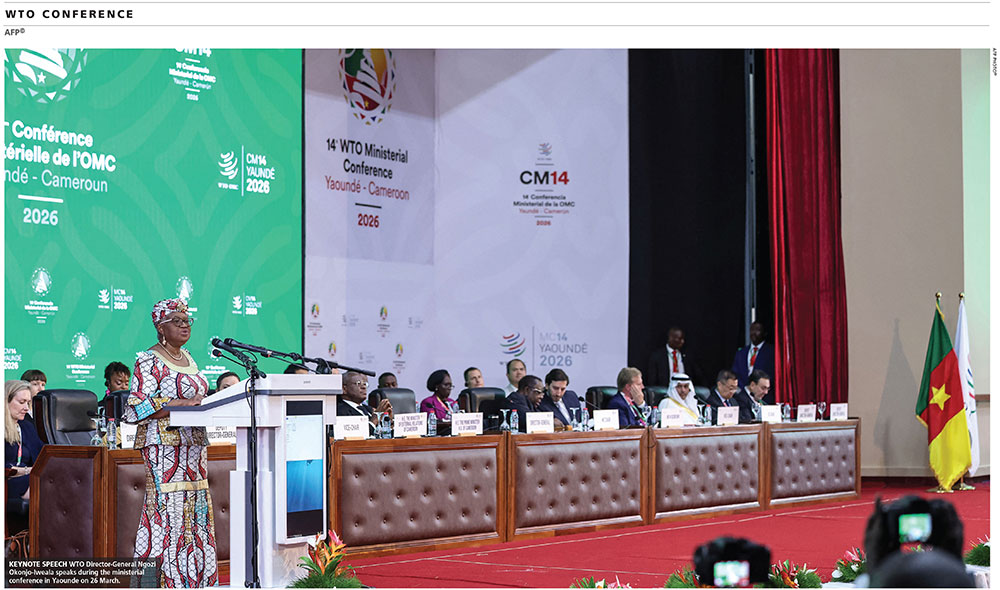
WARTIME REFORM The WTO’s 166 members were deeply divided when ministers gathered in Cameroon’s capital Yaoundé for a recent conference to discuss the global economic turmoil linked to hostilities in the Middle East.
They had aimed to revitalise an institution that’s been weakened by geopolitical tensions, stalled negotiations and rising protectionism against the backdrop of a war that is posing a serious threat to international trade.
Director-General of the World Trade Organization Dr. Ngozi Okonjo-Iweala called for the Yaoundé meeting to launch the next chapter of the multilateral trading system. She slammed the unilateralism that the world has seen, and decried the collective failure of WTO members over the years to confront concerns and frustrations.
This ministerial conference, which is its supreme decision-making body, is usually held every other year.
Ahead of the 14th edition, several countries had expressed hope that the conference would mark a turning point for the organisation. Two years after the last ministerial conference in Abu Dhabi failed to make meaningful progress on key issues such as fisheries and agriculture, member states are facing even more challenges.
Their main task was to develop a plan for reforming the organisation, which has proven to be powerless in the face of rising protectionism and largely incapable of negotiating new agreements.
European Trade Commissioner Maroš Šefčovič called for serious reform of the World Trade Organization, and insisted that a level playing field, overcapacity and market policies need to be better tackled than in the past.
The UK also said it believes that “the WTO is at a pivotal moment” and warned that “without reform, it will slide into irrelevance.”
Several member states called for modification of the organisation’s decision-making procedures, which have long been limited by a rule requiring consensus among all members.