
LMD MAY 2026 COVER STORY
Trade Evolution
Bingumal Thewarathanthri calls for niche positioning and regional integration

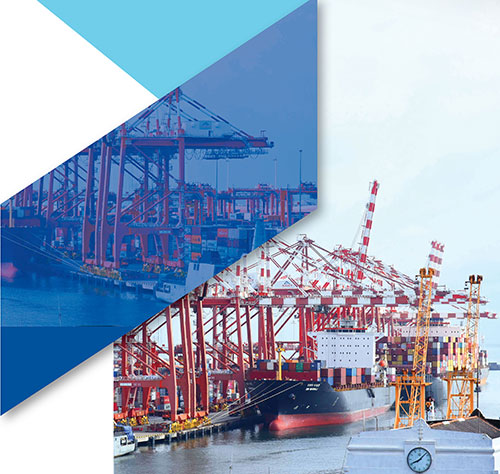
Sri Lanka’s manufacturers are being forced to compete in a global marketplace that is changing faster than ever before. Traditional export playbooks are being rewritten as geopolitical tensions, supply chain disruptions and shifting consumer demand reshape how and where business is executed.
“Survival and growth now depend less on long-term forecasting, and more on the ability to identify immediate opportunities and reposition quickly. The focus is more on day-to-day activities and ensuring businesses are identifying opportunities,” says the Vice-Chairperson of the Ceylon Chamber of Commerce Bingumal Thewarathanthri, pointing out how volatility has compressed planning horizons across industries.
NICHE OPPORTUNITIES Amid global dislocation, Sri Lankan businesses are beginning to discover niches where locally manufactured products can compete more effectively, whether by leveraging logistics strengths, tapping regional tourism flows, integrating into Asian supply chains or expanding value added exports.
“Sri Lanka’s port volumes are expected to exceed 10 million twenty-foot equivalent units (TEUs) this year, reaching close to 11 million TEUs. This positions the country at roughly a quarter of the size of Singapore’s throughput, underscoring its strategic relevance in regional shipping networks,” he notes.
“Logistics accounts for over seven percent of GDP in Singapore while Sri Lanka’s contribution is less than three percent, reflecting structural gaps in ecosystem development. Singapore has built massive bunkering, warehousing and storage facilities around the port, whereas here the focus is limited to ground shipment and minimal bunkering activity,” he explains.
VALUE CHAINS Thewarathanthri opines that strengthening this value chain is crucial if locally manufactured products are to become globally competitive. He believes that “efficient logistics, integrated supply chains, and expanded value added services can notably improve export margins and market responsiveness.”
Tourism provides another lens through which global competitiveness can be understood. Economic pressures in certain Western markets are expected to dampen visitor arrivals; however, regional demand particularly from India presents a significant opportunity.
As he points out, “India’s outbound tourism market is estimated at around US$ 40 billion with about 30 million travellers annually. Despite its proximity, Sri Lanka attracts only about half a million Indian visitors, suggesting considerable room for growth.”
The country’s neutral geopolitical stance is also attracting new forms of interest. Early discussions emerged in March about leasing the Mattala Rajapaksa International Airport (MRIA) to Middle Eastern airlines as a contingency strategy while inquiries to establish data centres in Sri Lanka highlight its potential as a secure digital backup hub.
“We are suddenly seeing the location advantage of Sri Lanka, especially because we’re a neutral nation. The world order has changed and powers are gravitating towards the East,” he observes.
STRUCTURAL CONSTRAINTS Yet, competitiveness remains constrained by persistent structural challenges. Sri Lanka’s performance on the world’s business facilitation benchmarks remains modest with rankings close to 100 in certain indices.
A newer global measure – the Business Ready (B-READY) Index – now adopted by over 50 countries places an emphasis on digital government services and regulatory efficiency. “There is a huge weightage on how easy government services are. Sri Lanka should urgently move towards such frameworks,” he urges.
Thewarathanthri recommends reforms such as digital identification systems and a single window trade platform, alongside customs modernisation and a public-private partnership (PPP) law to attract sustainable investment while improving trade facilitation.
Export oriented manufacturers are already responding to global shifts through diversification strategies. Businesses are exploring new product lines, expanding to alternative markets, and reassessing supplier and buyer relationships.
“The mantra now is diversification from the perspective of products, markets, buyers and suppliers,” he emphasises.
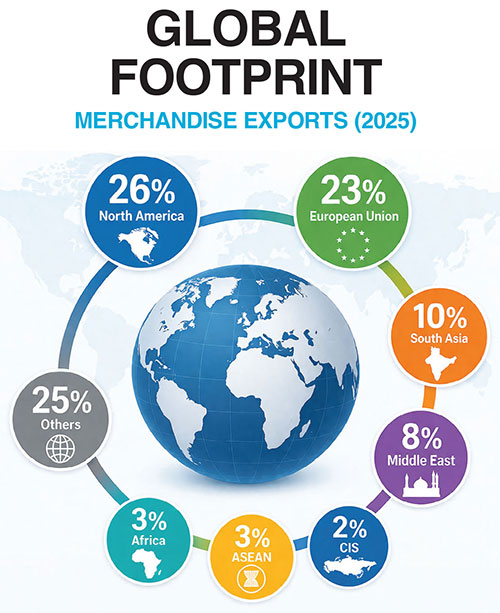
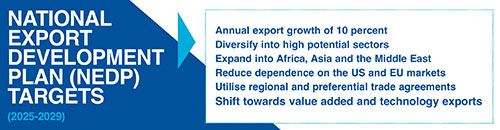
ASIA FOCUS This trend is particularly relevant as Sri Lanka recalibrates its export focus from traditional markets towards Asia. Trade engagement with India and ASEAN economies, as well as participation in regional and free trade agreements, is viewed as critical to future growth.
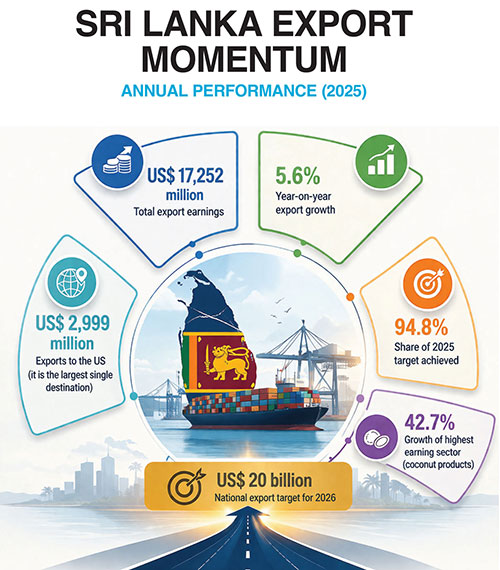
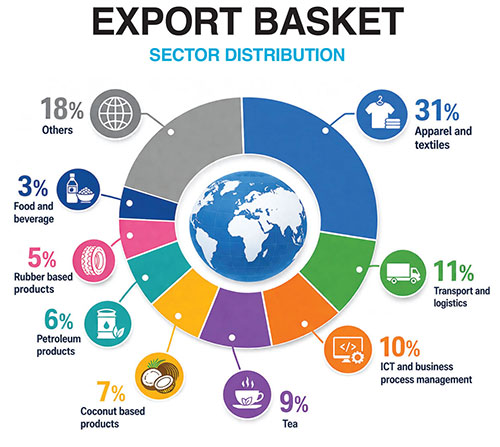
Recent export trends reflect this transition: while traditional sectors remain important, there has been a notable increase in coconut based exports, demonstrating how value addition and niche positioning can enhance competitiveness.
Nevertheless, he cautions that Sri Lanka cannot realistically compete with large economies in mass manufacturing.
One promising pathway lies in integrating more deeply into India’s industrial ecosystem. With substantial Japanese and South Korean investment underpinning India’s automotive sector, Sri Lankan businesses could position themselves as specialised suppliers.
“Can we become part of India’s supply chain, producing sensors, airbags and other components?” he asks, noting that local companies already manufacture parts for the automotive and aircraft industries.
Small and medium-size enterprises (SMEs) are central to this transformation: the sector accounts for close to 50 percent of the labour force, employing approximately four million workers. Yet, they continue to face challenges related to technology adoption, market access, governance standards and financing.
Although digitalisation is reshaping commercial practices, particularly in banking and transactions, the sizeable cash economy presents governance and tax compliance with numerous challenges.
He explains: “Currency in circulation is estimated at around Rs. 1.5 trillion compared to roughly Rs. 300 billion in the interbank liquidity market, illustrating the scale of informal economic activity.”
“Despite these challenges, the long-term outlook for trade and investment climate remains optimistic. The country’s history of resilience – navigating decades of conflict, economic crises and a global pandemic – suggests an ability to adapt to changing global realities,” Thewarathanthri affirms.
– Compiled by Yamini Sequeira
Island Jewels

Chairman
Careem Jewellers
Q: How does the gems and jewellery industry contribute to strengthening the Made in Sri Lanka brand?
A: The industry has a heritage spanning over 2,500 years. The beauty of our gemstones has been recognised throughout history – from the accounts of Marco Polo in the 13th century to modern icons such as Princess Diana and the Princess of Wales, who wears her famous engagement ring featuring a Ceylon blue sapphire.
Over the decades, the industry has built on this legacy by developing exceptional expertise in sourcing some of the world’s finest sapphires and a wide variety of coloured gemstones, cut and polished to high standards. Sri Lankan jewellers combine these with skilled craftsmanship and elegant designs, to create pieces that reflect both tradition and contemporary style.
Offering these rare gemstones and exquisite jewellery to a global clientele elevates the Made in Sri Lanka brand, positioning the island as a destination for luxury and artistry.
Q: Retail purchases by international visitors represent an important revenue stream for the industry. How significant are these sales to overseas clients visiting Sri Lanka?
A: It is extremely significant to both the gems and jewellery industry, and to the broader economy.
With over 2.3 million tourists visiting the country last year, sales to foreign clients were a valuable source of foreign currency earnings. Rising tourist arrivals and higher average spending per visitor present strong opportunities for future growth.
These purchases also maximise value addition: rather than exporting gemstones, retailers sell finished jewellery directly to international customers, supporting livelihoods across the value chain – i.e. from miners and cutters to designers, goldsmiths and retail professionals.
Q: Many tourists view jewellery as a meaningful and lasting purchase. What factors influence buying decisions when selecting gemstones and jewellery?
A: Most tourists are drawn to Sri Lanka’s historic lore and reputation as a premier source of sapphires and a variety of coloured gemstones. As a source destination, buyers can access a wider selection of fine gems and well-crafted jewellery at excellent value.
Today’s travellers are also well informed with the ability to research online. They often visit established Sri Lankan jewellers and rely on knowledgeable experts to guide them in making the perfect purchase.

Q: The jewellery sector combines natural gemstone resources with skilled craftsmanship. How important is design and craftsmanship in creating pieces that appeal globally?
A: Design and craftsmanship are critical to moving up the value chain. Both the private and public sectors recognise that foreign exchange earnings can be increased by maximising value addition.
This requires maintaining the highest standards in gem cutting and ‘goldsmithing’ while developing innovative, contemporary designs for the international luxury market.
Given Sri Lanka’s access to some of the world’s finest gemstones, its jewellery should be positioned as a premium offering. Strong design capability and exceptional craftsmanship are key to achieving this.
Q: Looking ahead, what steps should industry stakeholders take to further position Sri Lanka as a global destination for gemstone and jewellery retail?
A: The private sector continues to engage with the government to position Sri Lanka as a leading jewellery hub. Recent measures such as VAT refunds for tourists and reduced taxes on rough gemstone imports are positive steps.
Further liberalisation of imports for raw materials, machinery and packaging would enhance global competitiveness.
Equally important is human capital development: establishing internationally accredited goldsmith training institutes and jewellery design schools will strengthen the talent pipeline.
And finally, greater investment in international branding and marketing is essential to promote Sri Lanka as a premier destination for fine gemstones and jewellery – and attract discerning global consumers.
Apparel Engine

Chairman
Joint Apparel Association Forum (JAAF)
Q: The apparel industry has long been the country’s largest export segment. What role does the industry continue to play in strengthening the ‘Made in Sri Lanka’ proposition globally?
A: Sri Lanka’s apparel industry has been a cornerstone of exports since the late 1980s, now contributing around 40 percent of total exports of goods.
Unlike products such as Ceylon Tea or cinnamon, apparel is not origin branded. Instead, Sri Lanka has built its reputation as a trusted manufacturing partner for leading global brands.
While the absence of strong local labels is noted at times, the industry has successfully integrated into global value chains, producing for many of the world’s top apparel names.
Made in Sri Lanka is synonymous with quality and reliability, built on consistent delivery, high standards and strong buyer relationships. This reputation continues to drive global demand.
The onus should be on expanding markets, enhancing quality and innovation, and strengthening Sri Lanka’s positioning as a source of high value apparel.
Q: Global apparel supply chains are evolving rapidly with an increased emphasis on speed, sustainability and resilience. How is Sri Lanka positioning itself in this changing landscape?
A: Internationally, the competition has intensified, which in turn has contributed to Sri Lanka’s slower growth compared to countries such as Bangladesh.
However, in areas such as sustainability and resilience, we perform strongly and often outpace our competitors. Speed remains a challenge due to reliance on imported raw materials.
With limited local fabric production, meeting only part of domestic demand, sourcing delays can affect time to market compared to countries like Vietnam. That said, the industry has demonstrated strong resilience, particularly during the COVID-19 pandemic and economic crisis, maintaining operations and buyer confidence.
On sustainability, Sri Lanka has made solid progress, though rising global requirements – especially from the EU – will demand further improvements.
While larger exporters are adapting, smaller players will need greater support to meet these standards. Despite speed constraints, we remain well positioned to strengthen competitiveness through sustainability and resilience.

Q: How is Sri Lanka’s apparel industry moving beyond traditional manufacturing to offer higher value solutions such as design, innovation and product development?
A: Sri Lanka’s apparel industry has moved beyond its traditional cut, make and trim (CMT) model, with larger manufacturers adding value through design, product development and innovation.
Companies increasingly present their own seasonal collections, reflecting a more proactive approach with buyers.
While international design capabilities are still evolving, apparel manufacturers are investing in innovation and strengthening backward integration, to improve efficiency and value addition. The industry is also shifting towards higher value, technically complex garments that offer better returns.
Future growth will depend on strengthening these capabilities, addressing labour constraints and adopting hybrid models that combine local value addition with regional scale.
Q: What trade policy priorities and collective actions are needed to strengthen market access and ensure the continued growth of Sri Lanka’s apparel exports?
A: Trade policy and market access are critical to Sri Lanka’s apparel exports, especially amid rising global competition and new US tariffs. Competitors such as Bangladesh and Vietnam benefit from broader trade agreements, which provide them duty advantages in key markets.
While Sri Lanka has Generalised System of Preferences Plus (GSP+) access to the EU, its use is limited by strict rules of origin, making alternative sourcing often more cost effective. This places the country at a relative disadvantage.
To remain competitive, Sri Lanka must pursue new trade agreements (for example, with Japan, Australia, South Korea, Canada and China), strengthen existing arrangements (e.g. with India) and diversify beyond traditional markets.
At the same time, a stable policy environment, efficient regulations and improved investment conditions are essential to gaining manufacturing growth. Equally important is adopting an export driven mindset, encouraging more businesses to enter world markets. Strengthening infrastructure, logistics and digitalisation will also enhance competitiveness, and support the industry’s continued growth.
Marine Hub

Chairperson
Neil Fernando & Company
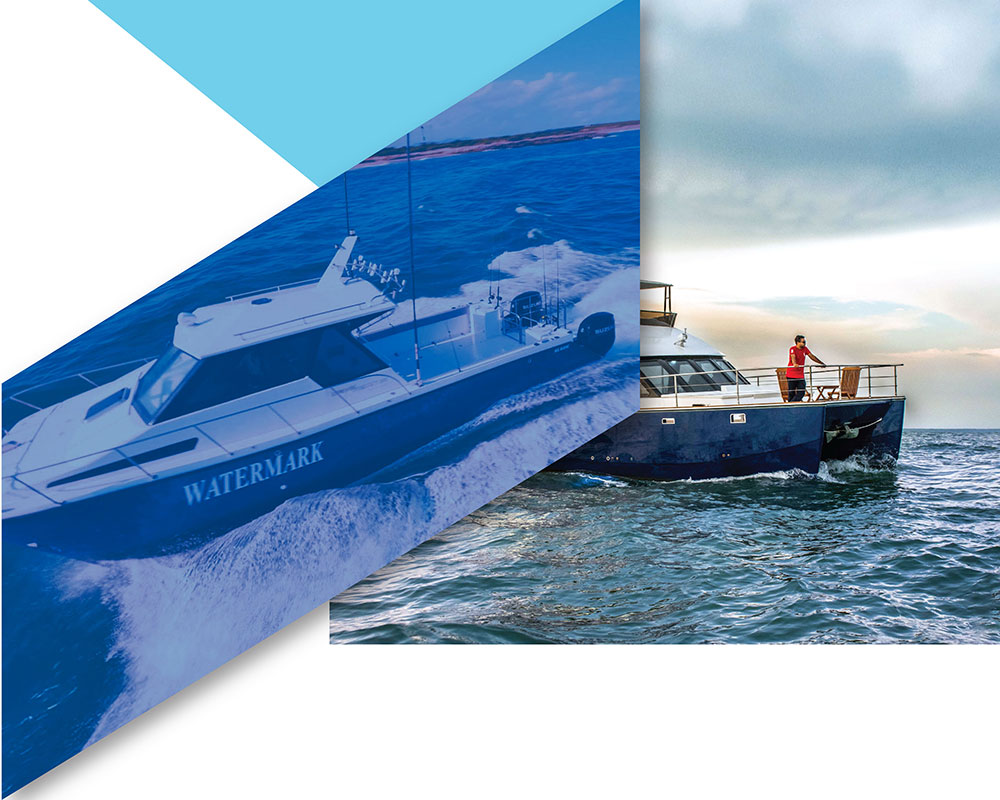
Q: Sri Lanka’s boatbuilding sector has quietly developed into a specialised manufacturing engine. How does boatbuilding contribute to strengthening the global ‘Made in Sri Lanka’ brand?
A: Over the past decade, the boatbuilding sector has evolved from traditional craftsmanship into a high tech manufacturing segment, elevating the Made in Sri Lanka brand on the world stage.
By moving beyond commodities such as tea and rubber into complex marine engineering, it has positioned the country as a hub for precision, durability and innovation.
This progress has been driven largely by the private sector, achieving notable milestones despite limited government support. However, the absence of consistent policies and long-term strategic backing has constrained its full global potential.
The sector’s international recognition is a testament to the resilience and commitment of private enterprises and chambers. With structured policy support, a clear national strategy, a skilled workforce and strong craftsmanship, Sri Lanka could secure a far more prominent position in the global marine manufacturing sector.
Q: Local boatbuilders export a wide range of vessels including fishing boats, patrol craft and leisure boats. What trends are you observing in global demand for these vessels?
A: We are seeing strong and diverse global demand. From Europe, there is a steady increase in inquiries for leisure craft. At the same time, African regions are showing a growing interest in multi-day fishing vessels and high-speed boats, for healthcare and transport purposes.
In the context of prevailing global uncertainties including geopolitical tensions, there is a heightened demand for versatile and reliable vessels. An added advantage is that many of these boats can be delivered under their own power to African regions, greatly reducing freight costs and improving overall competitiveness.
Q: Compared with larger shipbuilding nations, Sri Lanka operates at a smaller scale. What competitive advantages enable local manufacturers to succeed in international markets?
A: With each passing year, Sri Lanka is gradually losing its competitive edge as a boatbuilding hub. A key challenge is the outflow of trained talent, as government supported overseas employment programmes impact this niche sector, which relies heavily on specialist skills.
In addition, most raw materials, marine accessories and engines are imported to meet international standards. Rising global prices and freight costs continue to increase production costs, thereby reducing competitiveness.
Countries such as India, China, Türkiye, Thailand and even the Maldives produce quality boats at lower costs, due to scale and cheaper labour. To remain competitive, private sector efforts alone are insufficient; strong and consistent government support is essential to sustain the sector and deliver world-class products to the international market.
Q: Export industries often depend on strong supply chains and specialised components. What challenges does the boatbuilding sector face in sourcing materials, engines and marine technology?
A: While Sri Lanka has strong institutions that provide quality technical knowledge and training, the sector faces challenges in sourcing critical inputs.
Advanced software and marine technologies required for modern boatbuilding are costly, increasing overall production costs.
Delays in goods clearance and regulatory processes create supply chain inefficiencies. With a heavy reliance on imported raw materials, engines and specialist components to meet international standards, the sector remains vulnerable to global disruptions.
During geopolitical conflicts or pandemics, rising import costs impact competitiveness and placing additional pressure on local manufacturers.
Q: Looking ahead, what steps should stakeholders and policymakers take to position Sri Lanka as a stronger hub for boatbuilding and marine engineering?
A: Sri Lanka needs strong, consistent and long-term policies developed in consultation with all key stakeholders – including boatbuilders, industry chambers and the fishing community – while also addressing environmental considerations.
Policy stability is critical. A unified and structured national framework, which remains consistent despite changes in government, will provide the confidence and direction needed to protect and grow the boatbuilding sector.
Market Flavour
President
Consumer Foods Industry Group
John Keells Holdings (JKH)
Q: Sri Lanka’s consumer food sector has a long history of producing trusted household brands. How does the sector contribute to strengthening the ‘Made in Sri Lanka’ identity in both domestic and international markets?
A: The strengthening of the Made in Sri Lanka identity comes from combining local heritage with consistent quality, modern manufacturing and reliability over time.
Many brands draw on local ingredients and flavours, combined with international expertise in processing and packing, to meet both domestic expectations and global standards.
Within the country’s consumer food sector, locally inspired products and innovations demonstrate how strong cultural identity can be translated into export markets. At the same time, export growth depends on meeting strict regulatory and quality requirements, making credibility just as important as authenticity.
Q: Consumer preferences around the world are evolving rapidly, particularly in healthcare, convenience and sustainability. How are Sri Lankan food manufacturers adapting to these changing trends?
A: Across the sector, there is a clear shift towards healthier formulations, portion control and products suited to modern lifestyles, alongside a growing focus on environmental impact. This has become more established due to increasing awareness among key consumer segments and the wider use of social media.
Sri Lanka’s consumer food sector highlights how culturally rooted product innovation can effectively position a strong Sri Lankan identity in export markets.
There is also a gradual shift towards more sustainable packaging formats, supported by recycling and waste management initiatives. The challenge is to keep pace with these changes while maintaining taste and affordability.
Q: Value addition has become increasingly important to local manufacturing. How can the consumer food sector expand its export footprint through product innovation and brand development?
A: Value addition is central to expanding Sri Lanka’s export footprint in consumer food. Moving beyond raw or semi processed exports to finished, branded products allow manufacturers to differentiate on quality, flavour and storytelling rather than compete purely on price.
Product innovation – whether through unique local flavours, improved formulations or convenient formats – helps create relevance in diverse markets while strong brand development builds trust and recall.
Across Sri Lanka’s consumer food sector, branded exports help deliver a holistic consumer proposition with the Sri Lankan identity providing a distinctive competitive edge. At the same time, success depends on adapting products to market specific regulatory, labelling and ingredient requirements.
Striking the right balance between authenticity and compliance is what ultimately sustains export growth.

Q: Food safety, traceability and international standards are essential for export markets. How is the sector strengthening its capabilities in these areas?
A: Food safety and quality assurance are fundamental to competing in export markets – the sector has made steady progress in strengthening these capabilities.
Many manufacturers operate under internationally recognised standards such as ISO 9001, ISO 14001, ISO 45001 and ISO 22000, with HACCP principles embedded across their operations to ensure consistency, traceability and regulatory compliance.
These frameworks support robust quality systems across product categories, enabling end-to-end traceability and confidence in product integrity. In addition, certifications such as Halal play an important role in meeting the requirements of specific international markets.
Q: Sri Lanka has the potential to develop stronger regional food brands. What opportunities do you see for local consumer food products in international markets?
A: Sri Lanka has great potential to build regional food brands, supported by its unique ingredients, culinary heritage and growing manufacturing capabilities.
Demand in markets such as South Asia and the Middle East continues to increase for authentic, flavour driven products. Growth lies in combining local identity with market specific adaptation of flavours, formats and packaging. Proximity to regional markets also supports distribution and responsiveness.
With a continued focus on value addition, innovation and branding, Sri Lanka can build a stronger and more competitive regional presence.
Island Heritage

Chairman
Colombo Tea Traders’ Association (CTTA)
Q: Tea is one of the country’s most iconic export products. How would you describe the role of the tea industry in strengthening the global reputation of ‘Made in Sri Lanka’?
A: From an industry perspective, tea has long been one of Sri Lanka’s most important global ambassadors. Ceylon Tea has carried the country’s name into international markets, often serving as the first point of recognition among consumers across the world.
Its significance lies in the trust built over time: Ceylon Tea is seen not merely as a product but a mark of quality, consistency and authenticity. This reputation has been maintained through a collective effort across the value chain, supported by strong standards and a shared commitment to ensure product integrity.
This extends beyond tea, shaping perceptions of Made in Sri Lanka through values such as reliability, heritage and quality. It is essential to protect and strengthen this position, ensuring that Ceylon Tea remains a credible and respected global representation of Sri Lanka.
Q: Sri Lanka exports tea to more than 140 markets worldwide. What trends are you currently observing in demand and how are they shaping tea export strategy?
A: Global tea consumption is evolving rapidly. While traditional black tea markets remain important, demand is rising for specialty, wellness, flavoured, organic and premium value added teas.
And consumers are more informed, seeking transparency on origin, production and uniqueness.
There is also a shift towards convenience formats such as premium teabags, pyramid infusions and ready to drink beverages. Sustainability, organic cultivation and ethical sourcing are increasingly important, particularly in European markets.
Sri Lanka is well positioned with a strong reputation for quality and credibility. The Lion logo and strict export standards continue to reinforce buyer confidence, especially where authenticity and origin matter.
Q: What differentiates Ceylon Tea in the marketplaces of the world – and how can the industry strengthen this positioning even further?
A: Competition has increased, particularly in volume driven segments. However, Sri Lanka’s strength lies elsewhere.
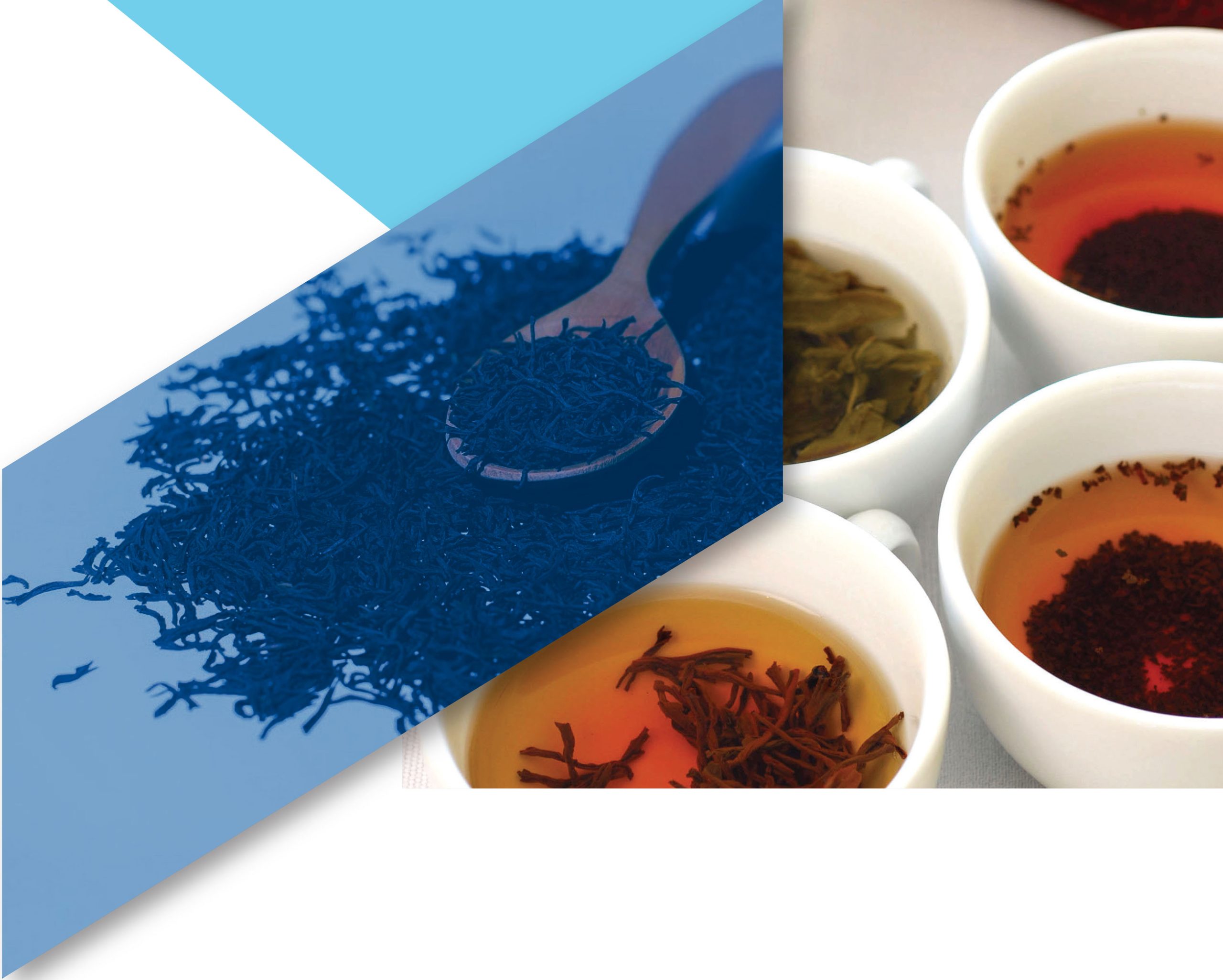
A key advantage is its leadership in orthodox tea production, which is known for quality, character and preservation of the leaf’s natural attributes. This gives Ceylon Tea a distinct identity, supported by diverse agro climatic regions that produce varied flavour profiles.
With a national focus from government and industry to expand orthodox tea production by 2030, the priority remains clear: maintaining quality, consistency and strong positioning in segments that value authenticity over volume.
Q: How is Sri Lanka’s tea industry evolving beyond bulk exports, and towards branded, specialty and value added products?
A: While bulk exports remain important, there is a steady shift towards value addition.
Exporters are investing in branded teas, specialty collections, seasonal offerings and improved packaging, alongside a growing interest in artisanal, small batch teas that highlight origin and craftsmanship.
This transition is supported by investment in advanced machinery and processing across production and export stages with a focus on modernising operations. Companies are also adopting internationally recognised certifications to meet evolving international standards and consumer expectations.
These efforts help retain more value locally while strengthening connections with end consumers. There is also greater emphasis on storytelling – highlighting origin, people and heritage – which is key to differentiating our tea globally.
Q: Which emerging markets or product segments present the most promising opportunities for Sri Lanka’s tea exporters?
A: While traditional markets in the Middle East, Russia and parts of Europe remain important, growth is emerging in East Asia, Southeast Asia and parts of Africa, particularly for premium black teas and specialty blends.
Segments such as wellness teas, herbal infusions, organic teas and ready-to-drink beverages are gaining global popularity, with younger consumers exploring cold brews, fruit infused options and functional blends.
Sri Lanka’s opportunity lies in combining its orthodox tea heritage with innovation in product development. Continued investment in branding, quality and value addition will ensure competitiveness in the evolving global beverage landscape.
Premium Offerings

Chief Executive
CEAT Specialty
Q: Sri Lanka has developed strong capabilities in rubber based manufacturing. How does the tyre industry contribute to strengthening the global ‘Made in Sri Lanka’ proposition?
A: The country has moved well beyond raw material exports and into value added manufacturing. When OEMs in Europe and North America choose Sri Lankan tyres for their most demanding industrial and agricultural equipment, that’s a market verdict.
The construction tracks and off highway tyre (OHT) category continues to strengthen its position as a premium segment, driven by global technology partnerships, consistent quality and manufacturing practices that meet some of the world’s toughest standards. That’s what Made in Sri Lanka means in our industry today.
With a clear vision of expanding the global off-highway tyre market, the industry sees great potential for Sri Lanka as a strategic manufacturing base. Continued investment will not only bring more opportunities but also position the country as a global hub for OHT manufacturing, playing a central role in future growth.
Q: Sri Lanka’s tyre manufacturers compete with producers from much larger manufacturing economies. What competitive advantages enable local companies to succeed in regional and world markets?
A: The country competes on specialisation, quality and relationships. Sri Lanka’s natural rubber is among the best in the world, grown and processed locally, which gives us a material advantage that’s hard to replicate.
In segments such as OHT, buyers want durable, reliable products and services that enable them to service the toughest grounds and tasks. That’s where Sri Lanka wins – and we’re also genuinely agile.
With the engineering merit, industry expertise and a global talent pool, we can customise, move quickly and partner with customers rather than merely supply products.
Q: Sustainability and environmental responsibility are becoming increasingly important across the automotive supply chain. How is the tyre industry responding to these expectations?
A: At a time when manufacturing must reduce its environmental impact without sacrificing productivity, we need a combination of smart and responsible engineering to cater towards protecting the planet.
Sustainability has become a central priority with a growing emphasis on integrating environmentally conscious practice across the entire value chain – from manufacturing processes to final products.
There is a strong shift towards reducing carbon footprints through improved efficiencies, cleaner production methods and responsible sourcing – including manufacturing tyres by incorporating 90 percent sustainable materials.

Q: Export diversification is essential for manufacturing industries. Which markets present the most promising opportunities for Sri Lanka’s tyre exports?
A: North America remains the most valuable market for the off-highway tyre segment, where premium positioning resonates strongly.
Europe is experiencing steady growth, supported by the ability to meet regulatory standards. Across Asia – particularly in India – rising equipment ownership is driving strong volume growth.
And Africa is genuinely interesting with demand across agriculture, mining and infrastructure for durable, purpose built tyres. In addition, Sri Lanka has a strong footprint in South America, Australia and New Zealand – they continue to offer growth opportunities, particularly with the introduction of new product ranges and services.
Q: Manufacturing competitiveness often depends on infrastructure, logistics and policy support. What steps could strengthen Sri Lanka’s position as a regional hub for tyre manufacturing?
A: First, predictability – manufacturers plan for decades, not quarters; so we should be able to anticipate the long-term demand-supply outlook.
And second, energy – tyre manufacturing requires robust infrastructure to support operational requirements.
Third is logistics – the Port of Colombo is a genuine asset; however, improved turnaround times and cost efficiencies are essential to remain globally competitive. With these in place, Sri Lanka has a very strong story to tell.