
PORT CITY COLOMBO

INVESTOR MOMENTUM UNDER WATCH
Prashanthi Cooray assesses how Port City Colombo’s evolving infrastructure is translating investor interest into visible progress

The flagship special economic zone (SEZ) on Colombo’s western seaboard is one of the most closely watched indicators of investor sentiment in Sri Lanka’s economic landscape.
Indeed, the pace at which capital enters the zone – and advances through regulatory and construction milestones – offers a proxy for how investors are reassessing risk, policy credibility and long-term opportunity after years of macroeconomic volatility.
At the beginning of this year, US$ 1.2 billion worth of projects within the SEZ had received approval and are set to begin construction soon. Additionally, a further 732 million dollars of investment applications are awaiting approval – all forming part of a broader investment pipeline totalling some US$ 3.9 billion.
The pipeline itself comprises a mix of projects from residential developments to mixed use commercial plans and long-term ventures.
While most projects – once approved – quickly start taking shape on the ground, pending applications serve as a reminder that regulatory certainty remains central to investor confidence.
A key factor shaping current investment flows is the revision of Port City Colombo’s (PCC) incentive structure. The legal and regulatory framework governing investments has undergone considerable changes in recent years, particularly in areas such as tax incentives and fiscal oversight.
Under earlier frameworks, strategic investments could qualify for extended tax holidays, including employment income tax exemptions with no clearly defined sunset clauses.
These provisions have since been revised.
Amendments to the Colombo Port City Economic Commission Act, certified in January, introduced clear time limits on employment income tax exemptions, granting relief of up to three years for existing authorised entities and excluding new entrants from such exemptions altogether.
Corporate tax incentives for businesses of strategic importance (BSI) have also been restructured. Rather than open-ended or discretionary relief, incentives are now capped, time bound, and subject to performance conditions and periodic review.
A key factor shaping current investment flows is the revision of Port City Colombo’s incentive structure
Under the revised rules, tax exemptions for primary strategic investments are limited to a maximum of 15 years while secondary strategic businesses qualify for a concessionary corporate income tax rate of 7.5 percent for four years from the start of commercial operations before reverting to the standard rate.
The amended framework also strengthens transparency and governance: all incentives are subject to technical assessment by the Ministry of Finance, mandatory tax filings and ex-post performance monitoring against agreed key performance indicators. The framework mandates the publication of tax expenditure related to PCC incentives and a review of BSI exemptions every five years.
Foreign currency transactions within the SEZ are now required to comply with Sri Lanka’s Foreign Exchange Act while offshore banking operations are subject to regulatory oversight covering capital, liquidity and reporting standards.
Even with tighter incentive structures, investor engagement has continued. Most investors who entered discussions under previous regimes have indicated their intent to proceed under revised terms while others remain under evaluation.
This mix of approved projects, ongoing applications and regulatory adjustment points to a cautious but steady level of interest.
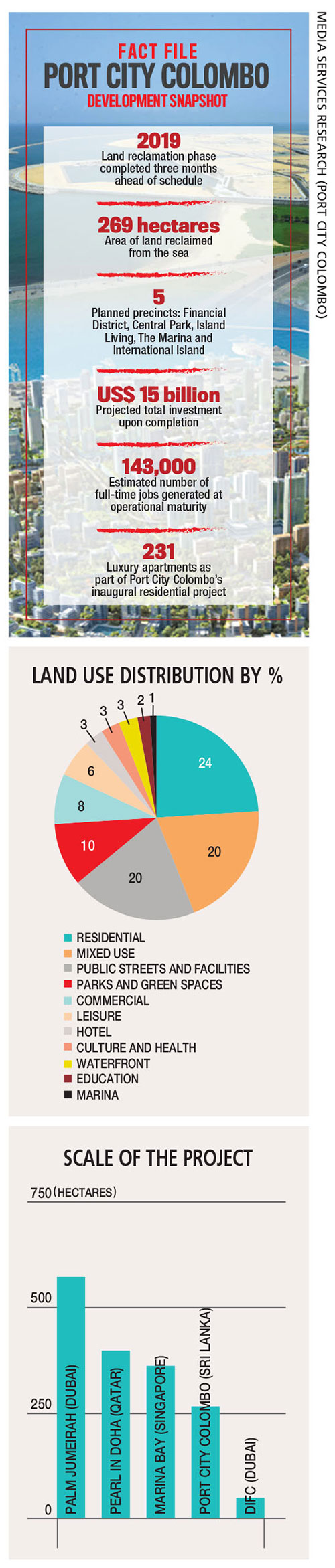
Recent milestones at Port City Colombo underscore the SEZ’s shift from planning to tangible progress. The commissioning of core utilities – i.e. water, electricity and sewage – last October marks a major step towards full operational readiness.
Building on this, a US$ 300 million foreign direct investment (FDI) for Phase II will expand infrastructure, including transport corridors and other foundational systems. This capital injection will support commercial activity across sectors such as finance, logistics, technology and professional services, and generate sustained employment.
PCC is Sri Lanka’s chance to become a ‘go to’ hub for finance, e-commerce, arbitration and other high value services in the region. With clear incentives, streamlined visas and the freedom for 100 percent foreign ownership, it’s designed to make life easier for investors while connecting the island to South Asia’s trade and business networks.