AITKEN SPENCE
RANK 22
“ESG and sustainability go hand in hand, and have long been priorities at Aitken Spence, guided by our integrated sustainability policy”

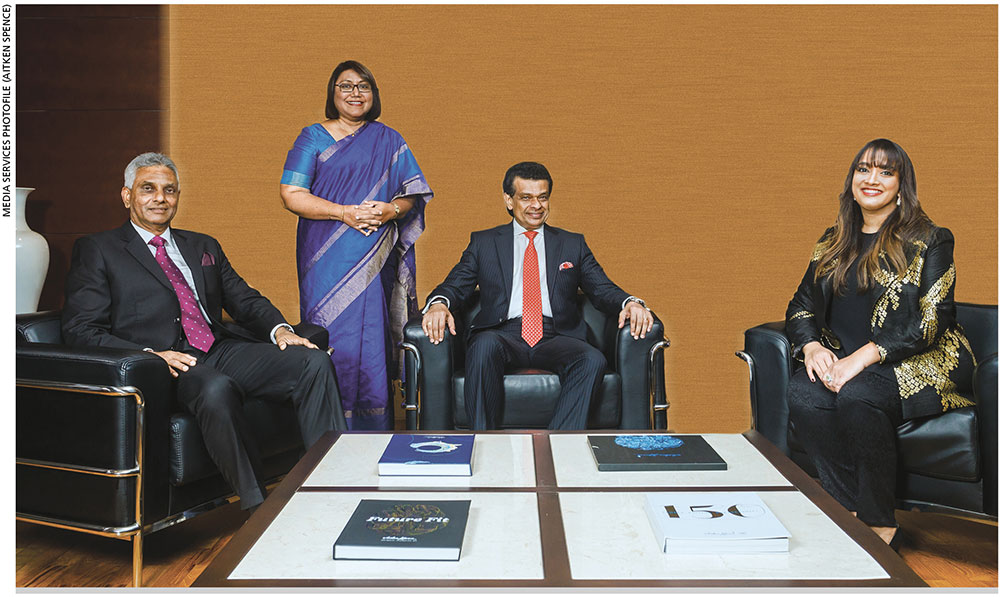
Chairman/Chairperson
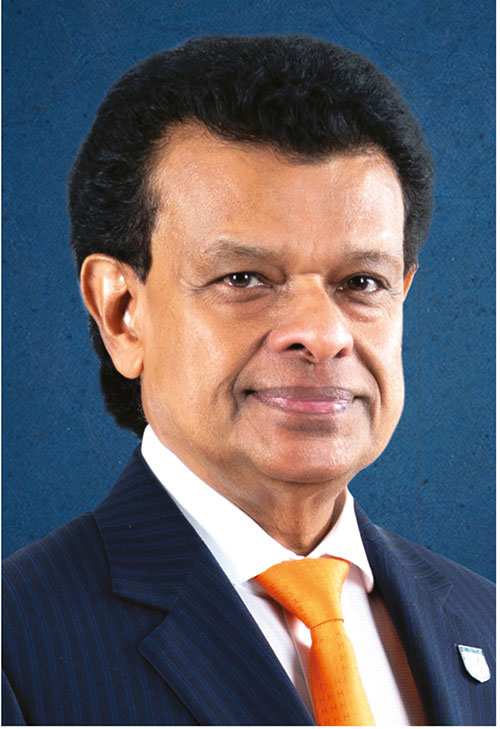
Deputy Chairman and Managing Director
Q: As Sri Lanka continues to pursue economic and political stability, how is the corporate sector driving growth while overcoming challenges that persist on many fronts?
Dr. Parakrama Dissanayake (PD): The corporate sector continues to be a key driver of recovery despite persistent challenges related to fiscal pressures, talent gaps, and more recently, climate shocks. Businesses are stepping up by mobilising humanitarian aid, restoring connectivity and supporting national rebuilding through key public private partnerships (PPPs).
In doing so, the corporate sector is better positioned to align with and support national priorities. Climate shocks continue to test our strength and resilience, demanding that we integrate disaster risk reduction strategies into everyday operations, accelerate digital transformation, and pushing us to make bold, climate smart investment decisions.
It is likely that we will experience some setbacks in tourism and exports and so will the SMEs, and micro, small and medium enterprises (MSMEs). However, collaborative strategies aligned with government and global partners will be aimed at reviving growth.
By coupling relief efforts with long-term sustainability policies and inclusive development, the private sector is driving recovery while reinforcing Sri Lanka’s path towards long-term stability and resilience.
Q: How can Sri Lanka improve its ease of doing business and competitiveness on the international stage, in your opinion?
Stasshani Jayawardena (SJ): The country has strong global appeal as a tourist destination. However, more must be done to create a business friendly environment amid notable economic recovery efforts. To attract investment and drive growth, Sri Lanka must accelerate regulatory reforms, simplify business registration processes and ensure transparency.
Further efforts must be directed towards expanding digital infrastructure and e-governance, which will improve efficiency and reduce corruption, while stronger legal protections will help build investor confidence. PPPs in key infrastructure sectors and the privatisation of state owned enterprises (SOEs) can also drive resilience.
Leveraging Sri Lanka’s strategic location and advancing projects such as Port City Colombo, alongside sustained infrastructure investment and greater policy consistency, will lead to stability and reassure investor confidence. Together, these measures can position Sri Lanka as a competitive regional hub in the years ahead.
Q: In the wake of the brain drain, what strategies have you put in place to retain talent and overcome the challenges that many businesses are facing?
PD: In response to the ongoing brain drain, one of our core priorities is to deliver an unmatched employee experience that encourages talent to grow and thrive within the organisation. We actively engage with Spensonians to understand their needs and aspirations, ensuring their voices shape our workplace practices.
Initiatives such as remote and flexible working, Employee Assistance Programmes and extended parental leave were introduced directly in response to employee feedback. We place strong emphasis on talent development through continuous learning opportunities, transparent career pathways, internal mobility and accelerated progression for high-potential employees.
Alongside this, we are driving a cultural transformation focussed on building a purpose driven, inclusive environment where employees feel valued, heard and connected to the organisation’s mission. Talent retention begins at entry and we therefore adopt a values based recruitment approach, ensuring alignment between individual aspirations and organisational culture.
To further support growth, we have introduced an in-house mentoring platform, Spence Luminary, complemented by a strong open-door policy that enables ongoing guidance and career conversations. These initiatives are underpinned by a holistic total rewards philosophy that balances competitive compensation with wellbeing, education support, subsidised childcare and targeted financial assistance during challenging times.
Q: How should businesses operating in Sri Lanka nurture enabling organisational cultures to make the most of a diverse workforce?
SJ: At Aitken Spence, we balance a proud 157 year legacy and a multigenerational workforce with deliberate transformation to meet evolving workforce norms. Building an enabling culture begins with flexibility. Therefore, depending on the area of work, we have introduced initiatives such as remote working options, flexi hours and clear policies that empower teams while maintaining accountability.
Inclusivity is crucial. Enhanced parental leave, transparent grievance channels, and merit based hiring foster trust and diversity. We actively engage Gen Z through platforms for idea sharing, recognition programmes and purpose driven initiatives. Digital HR systems have been implemented to streamline processes, freeing leaders to focus on experience and mentoring.
Regular pulse checks through employee feedback surveys and focus groups ensure continuous listening and adaptation. By combining tradition with innovation, we create a culture where diverse talent thrives and transformation is inspired by values.
“At Aitken Spence, we balance a proud 157 year legacy and a multigenerational workforce with deliberate transformation to meet evolving workforce norms”
Q: How is your group embracing environmental, social and corporate governance (ESG) standards?
PD: ESG and sustainability go hand in hand, and have long been priorities at Aitken Spence, guided by our integrated sustainability policy. Driven by leadership, this framework ensures group wide consistency while allowing sector specific flexibility, embedding ESG into daily decisions, robust systems and cross functional collaboration.
With this foundation in place, we have progressed to the next level through global commitments such as the Science Based Targets Initiative (SBTi), aligning our climate ambitions with the 1.50 C degree pathway. We were the first Sri Lankan conglomerate to commit to the SBTi and the premier large-scale diversified holdings company in Sri Lanka to have near term emission reduction targets validated by the initiative.
Our direction continues to be shaped by the Spence IMPACT strategy, which sets priorities on inclusive development, mitigation of adverse impacts, partnerships for progress, accountability, community development beyond philanthropy and transformation through sustainability.
We are also guided by international benchmarks – embedding UN Global Compact’s The Ten Principles, the Women’s Empowerment Principles (WEPs) and seven priority United Nations Sustainable Development Goals (SDGs).
Q: Could you outline your group’s plans – especially in regard to expansion?
SJ: Aitken Spence is actively seeking opportunities to participate in public private partnership initiatives, leveraging Sri Lanka’s strategic geographic location to strengthen its position as a maritime and logistics hub. We also recognise potential in investing in emerging technologies across renewable energy, business process outsourcing (BPO), inbound tourism and education.
At the same time, we are focussed on deepening our presence across emerging Asian markets where we see strong potential for value creation and impact. As we move forward, we will continue to align with the national priorities and remain committed to creating long-term value for our stakeholders while uplifting the communities we operate in, both at home and across the region.
Telephone 2308308 | Email info@aitkenspence.lk | Website www.aitkenspence.com