LMDtv 3
Sri Lanka has been associated with gems and jewellery since ancient times, when it was referred to as Rathnadeepa (island of gems) by the world. Today, the country is focussed on fortifying its positioning as the ultimate destination for gems and jewellery.
Making its mark as the first major international jewellery exhibition of the year, FACETS Sri Lanka 2026 took place from 3 to 5 January at Cinnamon Life at City of Dreams, and earned Sri Lanka a coveted spot on the world’s gem and jewellery calendar.
FACETS – which is organised by the Sri Lanka Gem and Jewellery Association (SLGJA) – has run for 33 years. It showcases the bounty of Sri Lanka’s shiny treasures and the gamut of stakeholders who make up the industry from gem mines to market.
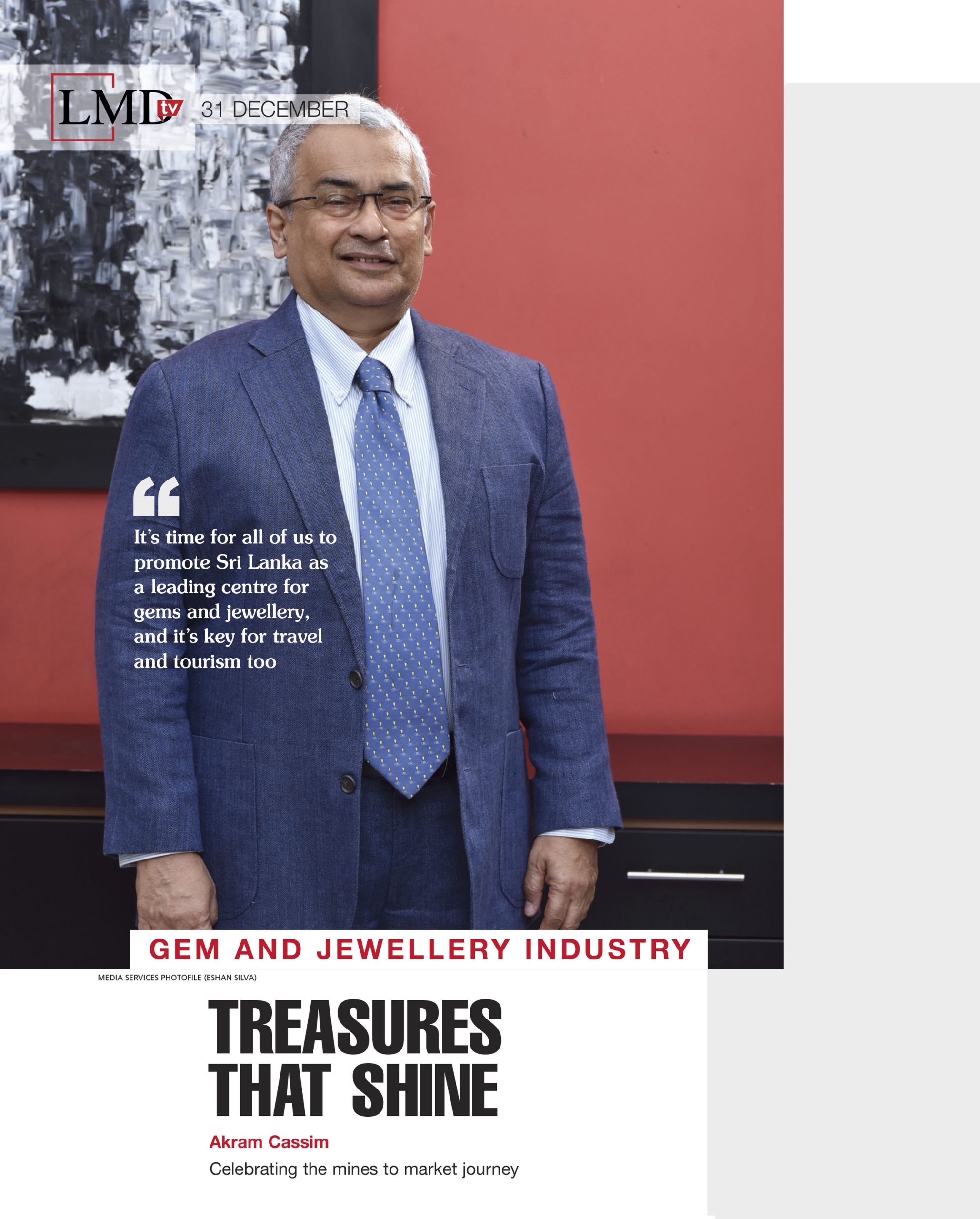
“Sri Lanka is the oldest known continuous source of sapphires and other gemstones in the world,” said the President of SLGJA Akram Cassim, on a recent airing of LMDtv
He shared how gems from Sri Lanka have been lauded throughout history – “from the ancient stories of Sinbad the sailor and Queen of Sheba gifting gemstones to King Solomon, to more contemporary settings where a blue sapphire adorned Princess Diana’s iconic engagement ring and the tiara that was stolen in the 2025 Louvre heist.”
Cassim continued: “Museums around the world have Sri Lankan gemstones in some of their largest collections, and royalty in many countries including Britain have worn and still wear Sri Lankan precious stones.”
Increasing awareness of what the gem and jewellery industry entails is key since multiple stakeholders are involved.
He elaborated: “So many people are involved in the industry from the gem mine to market – there are brokers, gem cutters, miners, burners,
lapidarists and designers. Then you have the traders, retailers, entrepreneurs, salespeople and everyone behind the scenes. Most often, you simply only see the jewellery in showcases but the industry itself is very big.”
One of the many unique aspects of the latest edition of FACETS was its focus on highlighting women in gems and jewellery by sharing their stories, Cassim noted: “Families that have showcased gems and jewellery have always had women in the background and foreground. So it’s important to open this industry to young women who want to venture into the business of gems and jewellery.”
Though the industry has historically revolved around family businesses, Cassim revealed that an increasing number of people want to enter the business and be a part of it.
This line of work has always been the domain of family owned businesses and passed down from generation to generation, he observed: “But the industry is opening up and becoming more inclusive. There are plenty of new people who are fascinated with gemstones and entering the business, and they have become some of the largest gem dealers and jewellers in the country.”
“Gems and jewellery isn’t a trade that’s easy for people who don’t know about it, to quickly learn and be skilled in it. They need to study the subject and gain expertise through experience. It’s not something you can read about or become an expert in by going to a gemmological school. True gemmologists need to be on the ground,” he declared.
Sri Lanka has always intertwined gems and jewellery in its “history, legacy, mystery and magic,” Cassim said.
He added: “It’s time for all of us to promote Sri Lanka as a leading centre for gems and jewellery, and it’s key for travel and tourism too. It is already a well-known trading hub since all the dealers are locals.”
“People make memories when they buy a precious stone or piece of jewellery in Sri Lanka, and their stories about the beauty of the island and its gems will have a cascading effect,” he maintained.
And Cassim summed up: “Every tourist who visits should buy a sapphire or gemstone as it will help our economic recovery,and also position Sri Lanka as the ideal destination to buy gems.”