YOUTH FORUM

Compiled by Nicola Jayasundera
REIMAGINING THE FUTURE
Emma Peiris reflects on society’s fault lines and the need for empathy
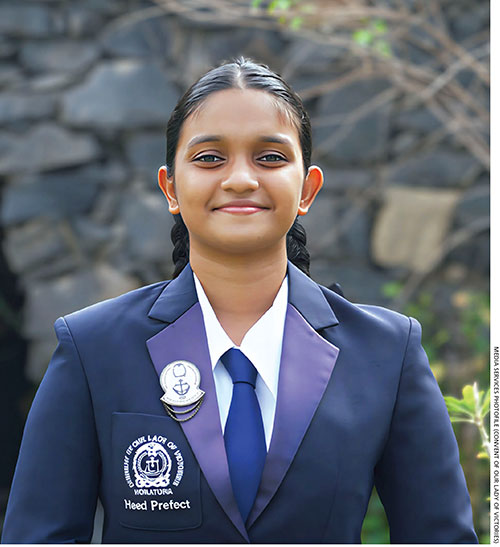
Q: What’s the good, the bad and the ugly in Sri Lanka?
A: The good is its people, whose warmth and hospitality are recognised globally. Despite various challenges, they continue to show kindness, generosity and resilience. That spirit makes Sri Lanka feel like home no matter where you are from.
And the bad lies in unjust social systems and inequality. Those struggling financially are often left behind while a privileged few benefit from political and other connections. Opportunities are shaped by privilege rather then merit, leaving many talented youth feeling unseen, unheard and unmotivated.
The ugly is the deep-rooted corruption embedded in our sociopolitical system. Corruption has been normalised, affecting everything from governance to public trust. Despite calls for change, Sri Lanka continues to grapple with a system that prioritises power over merit.
Q: And what are the challenges facing the nation at this time?
A: Brain drain is a major challenge. Many skilled youth leave the country in search of better opportunities, driven by limited prospects and instability at home. This loss of talent weakens key sectors and slows national progress.
To counter this, the public must unite in creating a prosperous and sustainable future.
Agriculture, the backbone of the economy, remains underdeveloped and neglected. Many farmers still rely on outdated methods with limited access to modern tools, sustainable technologies and reliable market information.
Without investment in innovation, training and climate resilient practices, this vital sector risks falling behind.
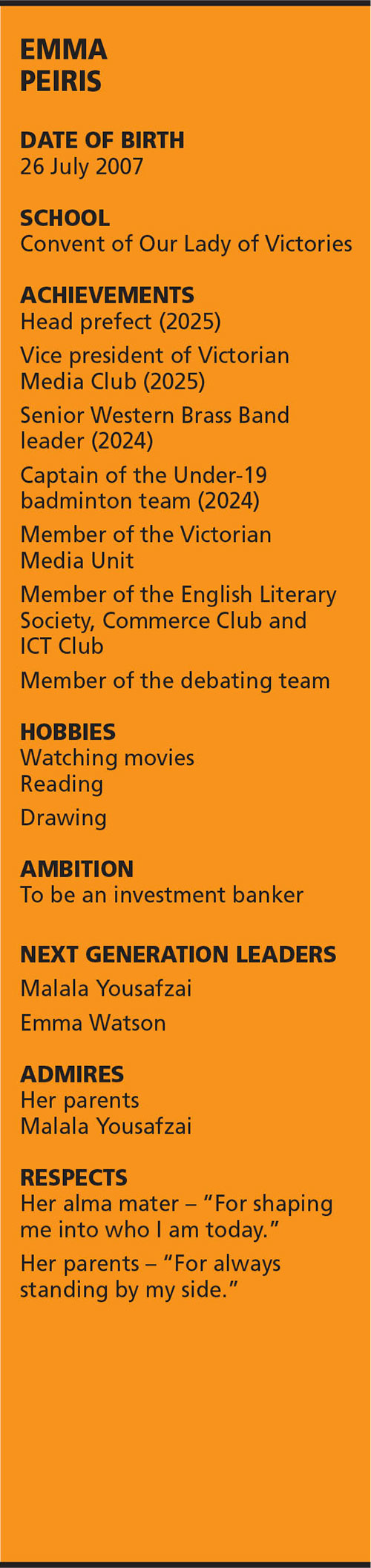
Q: What are the challenges facing young people in Sri Lanka today?
A: One main challenge is the limited space for youth voices. Young people often feel their perspectives are overlooked in decisions that shape their lives – from education to national policy.
Platforms for expression may exist but youth voices are not always included.
Mental health and education are deeply connected – and both require urgent attention. A balanced education system that encourages learning while affording time to enjoy our youth is the need of the hour.
Access to mental health support remains limited, particularly to counter the stress caused by economic instability and academic pressures. The stigma around seeking help only deepens the silence. In a society racing for success, emotional wellbeing is often overlooked, leaving many young people feeling unseen, frustrated and unsupported.
Q: How can our youth contribute to national progress?
A: Youth are central to progress. Through community service, innovation and bold advocacy, young people can shape a more inclusive and forward-looking society. With fresh perspectives, digital fluency and a strong sense of purpose, we have the power to challenge outdated systems and reimagine a better future.
Q: What type of leadership do you think the world needs right now?
A: The world needs genuine leadership that listens, learns and leads, with both head and heart.
In a time of global uncertainty, we need leaders who are empathetic, intelligent, inclusive and bold enough to challenge injustice. Leadership must be driven by purpose, not merely power.
Q: How has the advent of AI and technology shaped your view of the future?
A: The rise of AI and technology has reshaped how I see the future – faster, smarter and full of possibilities. It’s no longer about traditional careers or systems but adaptability, creativity and learning to work alongside machines.
It also makes me wonder if we would lose control or forget the human side of things. I believe the future depends on how wisely we use these tools, and whether we remain grounded in empathy, ethics and purpose.
Q: As a young person, what are your hopes for and concerns about the future?
A: I hope for a future that is fair, kind and peaceful – where kindness is instinctive, helping others is part of who we are and compassion guides our choices. My concern is that society’s race for success, recognition and wealth may cause us to forget our human nature.
Q: If you could launch a project or movement in Sri Lanka, what would it be – and why?
A: I would launch a youth led initiative to amplify unheard voices and talents, and spark community action. It would focus on empathy, inclusion and leadership, encouraging young people to respond with purpose.
From school level projects to national campaigns, the initiative would remind society that progress begins when we truly see one another – not only with our eyes but with our hearts as well.