LMDtv 3
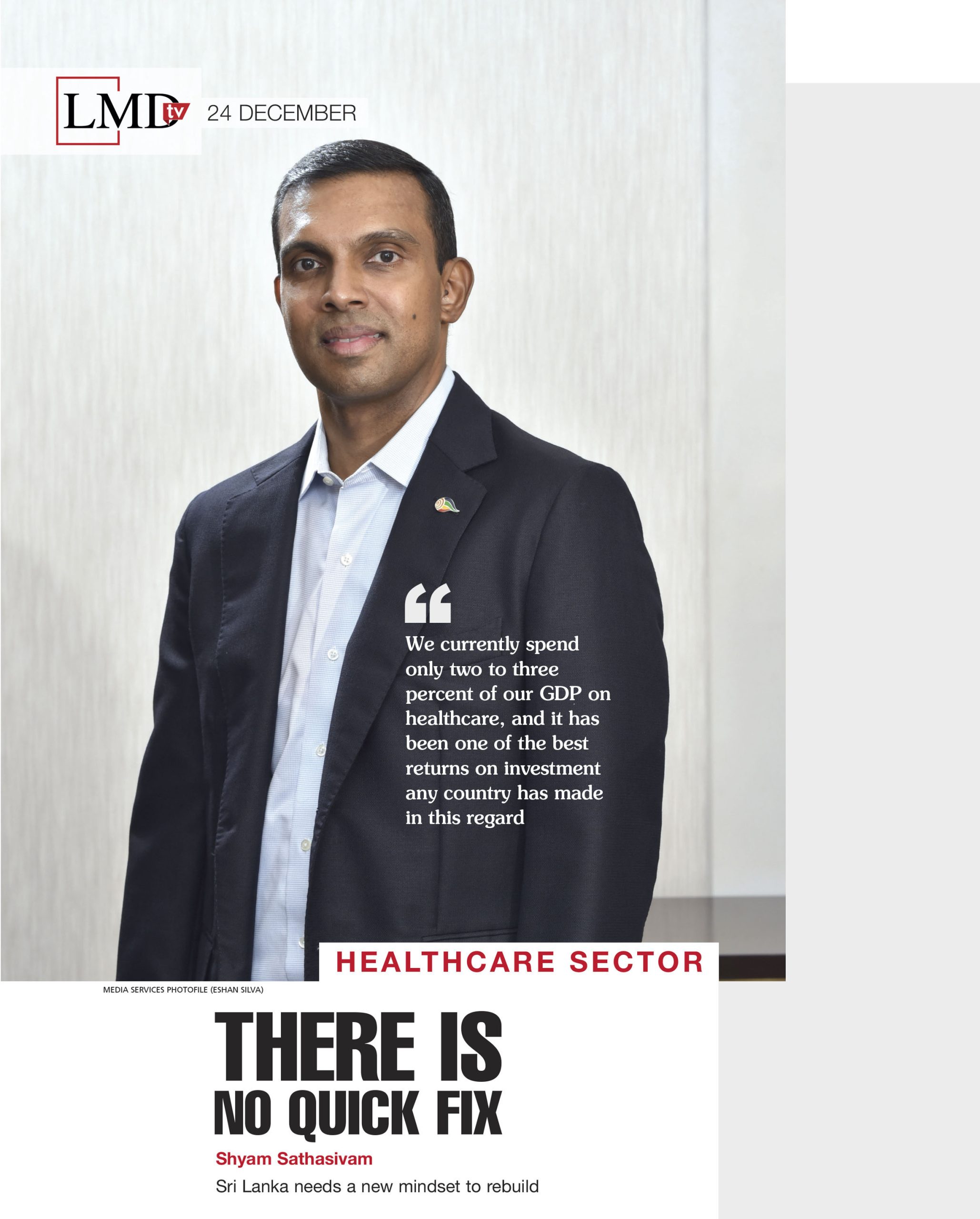
Sri Lanka boasts commendable health indicators that exceed regional norms – a clear testament of the country’s strengths in terms of healthcare. Yet, the sector is not without its share of challenges, which have been worsened by Cyclone Ditwah.
“The cyclone exposed existing vulnerabilities in the healthcare system in addition to adversely impacting multiple infrastructure systems,” said the Group CEO of Sunshine Holdings Shyam Sathasivam, during a recent LMDtv interview.
He cited these vulnerabilities as the result of “chronic underinvestment over many years,” and added that Sri Lanka hasn’t prioritised sufficient investments in the healthcare system and “this is coming to bear now.”
While short-term national priorities would need to focus on providing medical care to those who have been unable to access treatment and resume normalcy with chronic care, which has been disrupted, the mid to long-term focus would need to revolve around addressing systemic weaknesses.
And Sathasivam stressed the need for proper planning: “We can’t fix what has taken so many years to break. There is no short fix to go back to how life was in a couple of weeks. There are some systemic weaknesses that have been exposed and they will take planning to address.”
“We shouldn’t go back and simply patch it up. This is an opportunity to rebuild and do things differently. Sri Lanka needs a new mindset, and it must be adopted by both the government and private sector,” he added.
Good healthcare is non-negotiable… and so is a robust healthcare system.
Sathasivam continued: “I think we have to understand that Sri Lanka has underinvested in its healthcare system. We currently spend only two to three percent of our GDP on healthcare, and it has been one of the best returns on investment any country has made in this regard. Our infant and maternal mortality rates, and life expectancy, are phenomenally good considering the very low level of investment.”
Emphasising the need for both the private and public sector to increase investments in healthcare, he highlighted the need for a collaborative partnership between the two sectors. “It must always be a partnership. I think the private sector succeeds when there’s good governance, clarity,
policy stability and communication.,” he added.
However, these two sectors must reassess and revise their expectations of each other.
As Sathasivam explained, “we probably expect too much from each other. The government can’t solve every problem so that the private sector can make profits. Nor can the government expect the private sector to resolve matters independently.”
“We have to find a middle ground,” he asserted, adding that primary care will continue to be the responsibility of government but tertiary care can be a place where the private sector leads the way because it requires substantial investments.
Sathasivam continued: “There can and definitely will be changes. For example, from what we are seeing today, AI is going to impact everything. So we can’t have consistency that overcomes technological advancements. Both the private and government sectors will have to change, and also leapfrog because some of our ideas are outdated today – perhaps they were dated maybe years ago.”
“Digital infrastructure is going to roll out in a phenomenally different way and patients will want access to their electronic medical records – so we have to go past all paper documents such as vaccine cards,” he explained.
Sathasivam elaborated: “We are late in terms of digitalisation. And we must admit that we’re late and take significant steps to increase investments so we can progress. Most of our citizens now have expectations of digital [processes] and this is a good thing; and it’s very probable that they will opt to use those services.”
And he concluded: “We must be bold enough to make certain changes since we can’t try to keep everything from the past the way it is – it’s necessary to move forward now.”