LMDtv 2
Sri Lanka achieved over 72 percent of its annual export target by the end of the third quarter of last year. However, Cyclone Ditwah brought with it a trail of destruction, and caused extensive damage to exporters and a range of other stakeholders.
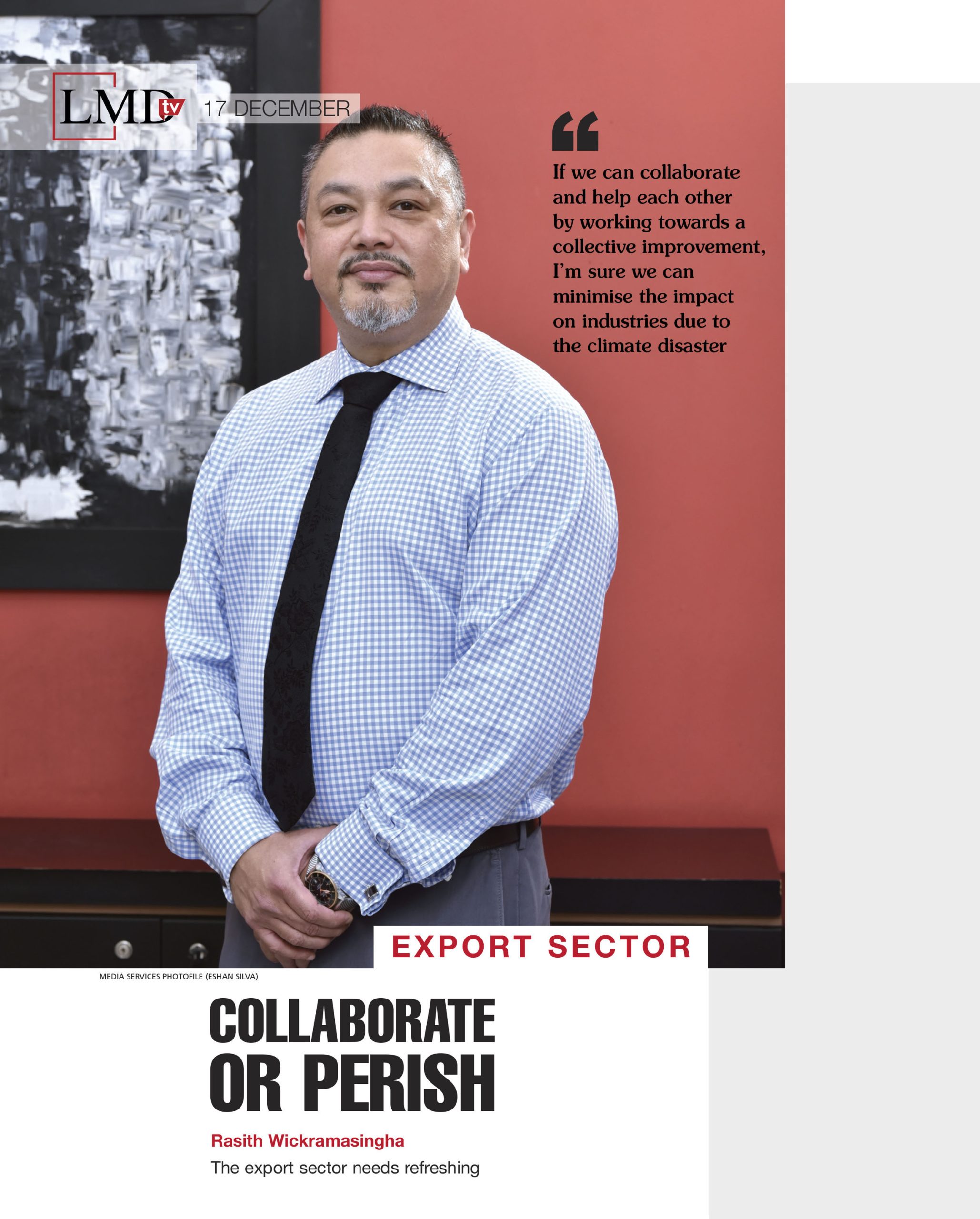
The export sector has survived many disruptions over the years. As the Group Director of CBL Group Rasith Wickramasingha pointed out during a recent LMDtv interview, “local exporters have been absorbing shocks both internally as well as externally, and shown tremendous resilience.”
Exporters will face a series of challenges including but not limited to working capital, insurance and access to credit. “A comprehensive loss assessment must be undertaken and we need to look at providing relief packages urgently to help exporters extricate themselves out of this nightmare,” he declared.
Wickramasingha continued: “If you look at the short-term impact, supply chain disruptions are likely to be evident because factories are inoperable and have to be repaired. Then you have logistics and infrastructure issues.”
“The medium-term impact includes soil erosion and landslides. For instance, the agriculture sector will lose yield and productivity. And the displaced labour population will be another challenge that we are going to see in the medium term.” He added.
As Wickramasingha said, this is an opportunity for us to work together rather than a time to compete. If we can collaborate and help each other by working towards a collective improvement, I’m sure we can minimise the impact on industries due to the climate disaster.”
Ensuring buyer trust and confidence is also key, he emphasised: “Trust is built with transparency and communication, and that’s the first step that exporters need to take.”
“Exporters need to be transparent and communicate quickly if their facilities have been affected – and if they’re having supply chain issues. This will ensure that buyers are also involved in the recovery process and emotionally vested in it,” Wickramasingha stated.
It’s important that we arm ourselves with the necessary quality certifications and standards, and ensure that our audit mechanisms are up-to-date to build consumer confidence, he added.
“Buyers aren’t heartless individuals; they will definitely be very concerned – especially about our labour population. So if we are able to share our contingency plans regarding the health, safety and wellbeing of employees, and show that we’re working together to bring workers’ livelihoods and living standards up to par, I think consumers will be extremely motivated to come back and work with us,” he asserted.
Wickramasingha observed: “When we consider the long term, the focus should be on how to restructure the country so that it can scale operations while considering climate risks. Climate change is inevitable and we’re likely to see more disasters happening in the future.”
“So the authorities and private sector should have an open dialogue to plan an aligned strategy that can be followed to restore the country at scale. We need to take climate risks into consideration, and look at initiatives such as active zoning, environmental policies and the enforcement of those policies,” he urged.
While many factors need to be prioritised to help Sri Lanka and its export sector move forward, he outlined the importance of having capacity and bandwidth in terms of people.
Wickramasingha noted that “traditionally, we have viewed human resources, qualified and semi-skilled graduates, and skilled workers as export resources. But if we’re to think about the country’s development over the next 10 years, we need to revise this thinking.”
“We should treat qualified professionals and skilled workers not simply as labour but strategic human resources,” he emphasised, and added that since it’s people who drive the development of an organisation or a country, the former perception requires a complete change.