BUSINESS SENTIMENT
CONFIDENCE FINDS ITS FOOTING
The business barometer rebounds following a short-lived weather related setback
With the impact of Cyclone Ditwah waning to some degree, a measure of stability appears to have returned, buoyed in part by the reset that accompanies the dawn of a new year.
And the shift from disruption to recovery has helped replace lingering pessimism with a more hopeful outlook, setting the stage for cautious optimism in business circles – or so it seems.
Sri Lanka’s economy is projected to grow by four to five percent this year. Governor of the Central Bank of Sri Lanka Dr. Nandalal Weerasinghe has noted that authorities are seeking to consolidate the economic momentum built over the past two years.
Weerasinghe emphasised that following a prolonged period of unprecedented challenges, Sri Lanka is entering the year with broadly stabilised macroeconomic conditions.
While the recovery has been notable – and on many counts, faster than initially anticipated – he stressed that safeguarding these hard-won gains will require a continued commitment to prudent policymaking and implementing economic reforms.
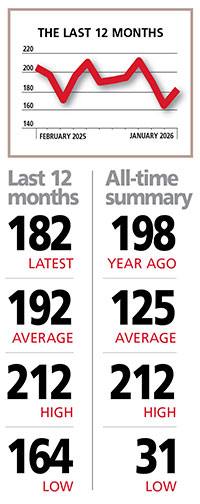
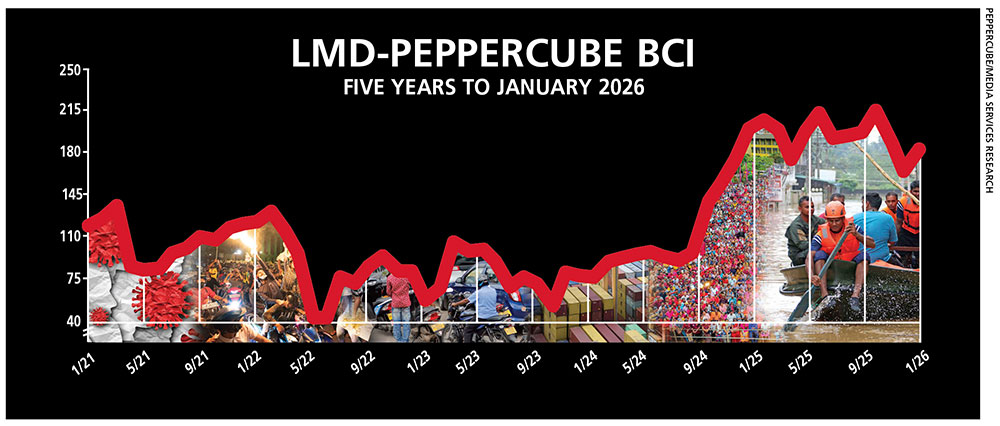
THE INDEX Against this backdrop, the start of the new year – and a collective desire among businesses to move forward, following the challenges of 2025 – is reflected in the latest LMD-PEPPERCUBE Business Confidence Index (BCI).
The index rose by 18 basis points, climbing from 164 in December to 182 in January.
In terms of key benchmarks, the barometer is now 57 points higher than its historic median of 125 but sits 10 points short of the 12 month average (192). By comparison, the index stood at 198 in January last year – that’s 16 points higher than the current reading.
According to PepperCube Consultants, the January BCI signals a country that is gradually regaining stability, following the recent climate related disruptions. But while business resilience is evident and confidence has spiked, short-term decision making continues to be influenced by uncertainty, it adds.
PepperCube says that sustaining the recovery will hinge on strong government support, rebuilding affected sectors such as tourism and agriculture, strengthened supply chains and improved preparedness for future climate related events.
PROJECTIONS Thankfully, sentiment has turned cautiously optimistic, following what proved to be a brief reversal triggered by the aftereffects of Cyclone Ditwah in December.
That said, this recovery comes against a backdrop of a still fragile resurgence in confidence that has unfolded gradually over the past 12 months.
Following a volatile 2025 on the global economic front, questions linger over what the year ahead may bring. Persistent challenges such as the US led tariff wars, the prospect of the return of an inflationary milieu and ongoing geopolitical tensions among major economic powers – and civil unrest in some parts of the world – continue to pose downside risks.
Against this uncertain backdrop, whether business confidence continues to firm or the pendulum swings back and forth will only become clearer in the months ahead.
In a sense, we are back in ‘wait and see’ mode!