THE BIG PICTURE

CHOREOGRAPHED CHAOS
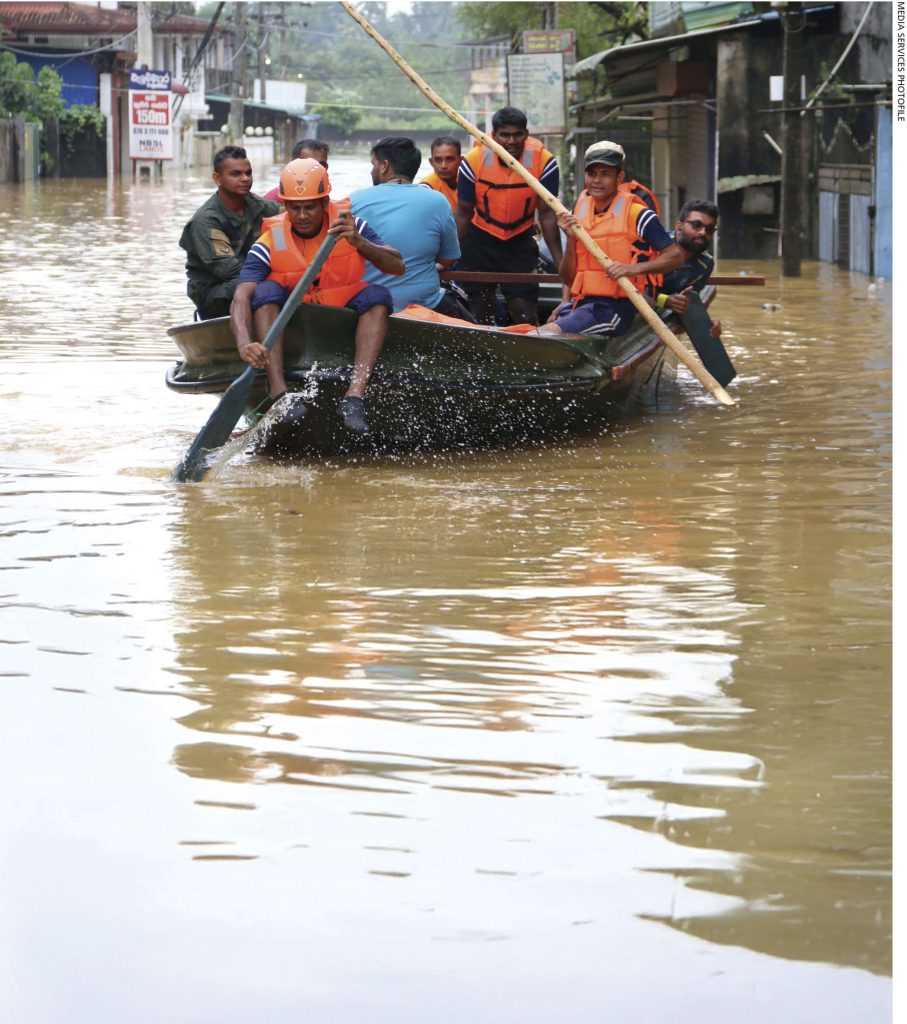
A nation in distress – for the fourth time in six years, following the Easter Sunday attacks in April 2019, the COVID-19 pandemic and an unprecedented economic crisis in 2022 – was to witness chaos and mayhem beyond the destruction as governing and opposition types, with more than a little help from politically motivated keyboard warriors, traded insults and half-truths on social media platforms as the year drew to an inauspicious close.
Thankfully, there were others (friendly nations, NGOs and the citizenry, for example) who swung into action with aid, soft loans and assistance in many forms.
And bona fide volunteerism played its part in delivering what were the dire needs of the hours, days and weeks that followed the devastation caused by Cyclone Ditwah at the tail end of November.
According to early estimates, more than 2.1 million people (that’s 10% of the population) have been affected by the catastrophic cyclone.
So as the nation welcomes a new year that by all accounts was to see a continuation of a slow but steady economic revival, the impact of the stormy weather is only partially known as analysts, economists and lending institutions burn the midnight oil to pick up the pieces of what may well turn out to be a fractured economy – at best.
Guesstimates of the cost to the economy at this time range from US$ 3 billion to as high as seven billion dollars, which is substantial when viewed against a backdrop of Sri Lanka’s economic output (GDP) of around US$ 100 billion.
Not even the president’s proposed supplementary estimate of Rs. 550 billion to finance urgent disaster relief, the likelihood of the IMF releasing 200 million dollars from its Special Drawing Rights (SDR) window to meet immediate foreign exchange needs and the now deferred disbursement of the International Monetary Fund’s fifth tranche of around US$ 300 million under the Extended Fund Facility (EFF) – not to mention the donations flowing in from overseas for the government’s Rebuilding Sri Lanka initiative (according to a finance ministry official, 700 million rupees and counting – in early December), together with aid flows – are likely to cushion an expected hard landing that the national economy is seemingly heading towards.
Meanwhile, the World Bank’s last forecast of GDP growth of 3.5 percent in 2026 could be in jeopardy as what was a “moderate but sustained recovery” will be undermined by the fallout from Mother Nature’s wrath.
Also under the radar is how all of this will affect Sri Lanka’s foreign exchange reserves (slightly over US$ 6 billion at the end of November), as forex inflows from tourism and exports are at risk of dipping while imports of essential foods in the wake of likely plummeting agricultural production could see an erosion of what we have accumulated in the last 12 months or so.
So yes, the signs are ominous. And yet another moment of truth is upon us.